Xi holds welcome ceremony for Serbian President Aleksandar Vucic
Chinese President Xi Jinping held talks with Serbian President Aleksandar Vucic in Beijing on Monday.
Chinese President Xi Jinping held talks with Serbian President Aleksandar Vucic in Beijing on Monday.
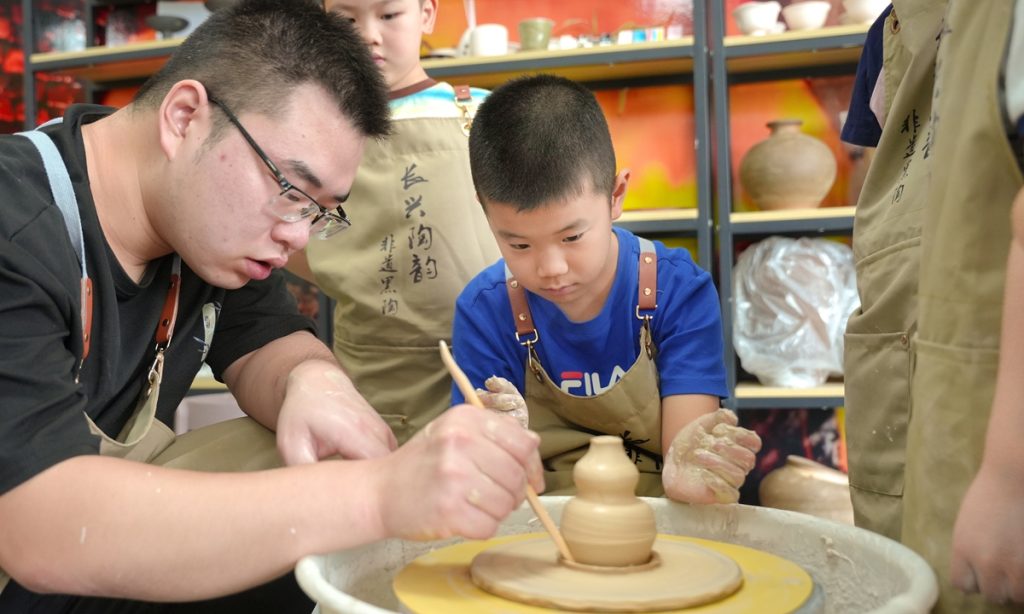
From county‑town coffee shops and rural homestays to livestreams helping local farmers sell produce and endeavors to revitalize intangible cultural heritage, profound transformations are reshaping the entrepreneurial and employment patterns of young Chinese.
In addition to traditionally seen "golden career" in big corporations or public service system, and striving for better future in top-tier cities, young Chinese are also increasingly favoring integrating personal passions, local endowments, digital technologies and lean low‑cost operations to explore more flexible, diversified and sustainable professional paths, in many cases in a modest town or rural areas.
Fresh ways
Citing official data, the Xinhua News Agency reported on February 24, 2025 that over 12 million people across China have launched diverse rural‑based ventures. In recent years, a growing number of young university graduates and urban white‑collar professionals have returned to or relocated to rural areas to start up their own business.
Peng Bailing, once worked in Nanchang, East China's Jiangxi Province, has returned to the Hubei village where she grew up, and opened the village's first coffee shop.
"Life here offers more freedom - it's the kind of life I wanted to live," Peng shared with the Global Times on Tuesday, explaining her decision to return to her hometown for work. She added, "Some of the villagers watched me grow up, and I also hope to create a space where they can try new trends and chat."
Now, during the week, the cafe has become the villagers' communal living room, where locals gather to chat and catch up over a cup of coffee. On weekends, the village - just a 40-minute drive from provincial capital Nanchang - draws scores of tourists, and the cafe has become a must-visit destination, selling around 200 cups on a single weekend day.
Apart from launching her new venture in the countryside, Peng has, with support from local authorities, encouraged more young people to return and start up their own business to become "new villagers."
For instance, Liu Hanye, who was born in the 90s, rented an abandoned old house and renovated it into a handcrafted jewelry studio; Zhang Feihua, a young entrepreneur who once ran a coffee shop in a scenic area, brought his cafe business to the village, integrating pottery making and tie dye experiences. Other young innovators have repurposed idle structures in the village into bookstores, bakeries, dessert parlors, study‑tour bases and glamping sites.
These establishments also sell handcrafted artworks and local agricultural produce made and grown by villagers. Peng said that elderly residents no longer need to travel to fairs, as they can earn an income right on their doorstep.
The collective income of Hubei village reached 700,000 yuan ($96,000) in 2024, a 14-fold increase from 2016, local media outlet jxnew.com reported.
In addition to launching hometown startups, young people draw inspiration from short‑video platforms - one of their favorite pastimes - and pivot to become livestream hosts, fueling economic growth through digital and innovative approaches. Livestream host was officially listed among 19 new occupations announced by three authorities including the Ministry of Human Resources and Social Security on July 31, 2024.
Xu, born in Southwest China's Chongqing, earned her degree in computer science and stepped into the e‑commerce sector in Hangzhou in East China's Zhejiang Province, China's "hub of e-commerce, where she gained hands‑on live‑streaming experience. Drawn to the relaxed vibe of live‑stream interaction, she thought there was no reason not to give it a try, and thus returned to her hometown of Chongqing to embark on her journey of livestream sales for local produce.
Over the past two years, Xu has hosted or taken part in more than 100 rural revitalization livestreaming sessions, selling nearly 4,000 orders of local dried radish strips. She also mentioned that once, 55 jin (approximately 27.5 kg) of her family's yellow peaches had sold out in less than a minute after being listed. "A day of livestreaming can bring in more than 1,000 yuan in sales," Xu said.
'Lying flat' isn't youth's trait
While young Chinese are redefining work in a relaxed manner and generating social and economic values in a different way from previous generations, some Western media outlets smeared such career choices. For instance, the Associated Press claimed in a report on March 13 that a growing movement of young professionals opt to move to sparsely populated towns, amid a faltering property market and rising youth unemployment.
Xu and Peng, both of whom seemingly belong to the group some Western media falsefully labeled as "lying flat" - unanimously dismissed such reports as "utterly absurd." Xu said she did not return home to start a business due to unemployment. She gained valuable experience and enjoyed her life in a big city. "I simply wanted to see if there were more possibilities in my life….and embrace a new way of living," she said.
Addressing "lying flat" and "boomerang kid" stigma, Xu said she has not stopped working hard after returning to her hometown. She keeps thinking about how she can attract more viewers to her livestreams, engage with different groups to sell more, and better help local villagers earn higher incomes.
During live sessions, Xu estimates viewers' age and gender from their screen names to deliver tailored product explanations. "If I think a viewer is middle aged from their username, I will introduce preservation tips and practical cooking methods for farm goods. If I sense they are in their 20s or 30s, I incorporate internet slang to make my introductions lively and engaging," Xu shared.
Peng echoed Xu's views, saying that the "lying flat" has never been the inherent trait of Chinese young people. The Western anti‑China forces that hype up "lying flat" are, in essence, "distorting the choices of young Chinese through their own prejudice," she added.
"Our generation has never been afraid of hard work; We simply no longer blindly chase the monolithic equation that 'big city equals success.' Nor have we ever given up our passion for life. We can grow and succeed in places that suit us," Peng said.
"Those 'lying flat' labels can never define us," Peng said. Young people, through our efforts, bring a better life to ourself and our family, which also drives local employment and boosts consumption vitality - "this is our most powerful refutation against the stigma," Xu said.
Chinese President Xi Jinping held talks with visiting Russian President Vladimir Putin at the Great Hall of the People in Beijing on Wednesda

At the foot of a mock "Five Elements Mountain," a "monkey" struggles with only half his body visible above the ground. Nearby, several visitors line up holding rice crackers, eagerly feeding him one piece after another. After swallowing a few bites, the "Monkey King" finally protests in mock frustration:
"This stuff is way too dry! I'm not eating anymore - it scratches my throat. Hurry up and get me something with soup or water!"
The scene, captured in a short video that has spread across Chinese social media, features the now-famous "Xuebing Monkey," or "Rice-cracker Monkey" at the Changchun Zoological and Botanical Park. During the just-concluded May Day holidays, performer Wang Tiezhu, who plays the Xuebing Monkey, won over crowds from across the country with improvised stand-up comedy routines and remarkably lifelike monkey impersonations.
What began as a viral performance quickly turned the zoo into one of the country's hottest holiday destinations, while also giving many visitors a glimpse into what people are calling the essence of the "Northeast Disneyland."
If traditional Disney parks are built on polished fantasy and highly commercialized Western fairy tales, then this homegrown version in northeastern China offers something entirely different: a rough-edged but heartfelt folk fairy tale filled with warmth, humor, and human connection.
There are no sky-high ticket prices, no overwhelming luxury spending, and no carefully manufactured influencer aesthetics. Instead, visitors find affordable admission, budget-friendly food and drinks, and staff members known for their warmth and sincerity. Across the park, a distinctly northeastern style of hospitality is on full display: workers patiently comforting tourists, performers enthusiastically interacting with crowds, and local residents eagerly recommending hidden gems and travel tips.
Blunt yet welcoming, lively yet deeply genuine, the atmosphere allows visitors to experience a unique blend of northeastern China's trademark boldness and tenderness - the very quality many believe has transformed the zoo from an ordinary attraction into an unlikely cultural phenomenon.
Cultural tourism ambassador
During the recent May Day holidays, Wang sat down for an interview with the Global Times.
In front of a stage packed shoulder-to-shoulder with spectators, Wang appeared dressed as the legendary Monkey King. However, unlike the traditional solemn and majestic portrayal of Sun Wukong, his version came with a thick northeastern Chinese accent, playful movements, and an irresistibly goofy charm.
Feeding rice crackers to visitors, improvising comic interactions, and exchanging blunt yet hilarious banter with the crowd, Wang's spontaneous and authentic performance struck a chord with millions of online viewers, who found both humor and warmth in his act.
A journalist from Jilin told the Global Times that during the five-day May Day holidays, daily visitor numbers at the zoo nearly reached 100,000, with many people coming specifically to see the "Xuebing Monkey."
On Chinese social media platform Douyin, Wang has now amassed more than 4.5 million followers. In his profile description, he calls himself a "Changchun cultural tourism ambassador."
Yet beyond the laughter and viral fame, many online users say they have been especially moved by Wang's difficult personal journey and by the resilience and optimism he has shown in the face of life's hardships. His ability to confront adversity with humor and perseverance has become just as inspiring to fans as the performance itself.
When asked how he would introduce his hometown to the world, Wang spoke with pride and confidence about Changchun's future on the international stage.
"In 2027, Changchun will host the 33rd FISU Winter World University Games," he told the Global Times. "I believe the event will allow friends from all over the world to truly experience the city's charm, as well as the warmth, passion, and sincerity of the people here."
For Wang, the upcoming international sporting event is more than just a competition; it is an opportunity for the world to better understand northeastern China through the character and hospitality of its people.
'Its own Disney'
Behind the viral success of the "Xuebing Monkey" lies a new formula for tourism in northeastern China. For years, the region's tourism industry largely relied on snow-covered landscapes and natural scenery to attract visitors.
This time, however, Changchun has charted a different course - one built on human warmth, locally rooted cultural icons, and an affordable, down-to-earth atmosphere.
There are no extravagant amusement rides or flashy marketing campaigns. Instead, it is the city's authenticity, humor, and sincerity that have captured the imagination of millions online. Many social media users have joked that "Northeastern China has its own Disney" - one that may be less polished, but far more comforting and relatable.
The spirit behind the phenomenon extends far beyond Changchun itself.
Across China's northeast, visitors encounter the same blend of warmth and vitality: outgoing locals, inexpensive yet delicious food, and simple, genuine hospitality. Combined with gentle spring scenery and the region's iconic snowy winters, northeastern China is gradually shedding old stereotypes and presenting itself as vibrant, humorous, and deeply welcoming.
Amid the tightly packed crowds, the wildly popular Xuebing Monkey frequently delivers unforgettable moments infused with unmistakable northeastern Chinese flavor. Dressed in a golden-and-red Monkey King costume embroidered with ornate patterns, he playfully twirls a bright red handkerchief emblazoned with the bold statement: "Revitalize Northeast China."
The fluttering red handkerchief is far more than a simple stage prop. It has become a striking symbol of the region's ongoing reinvention, embodying the grounded vitality of northeastern China and the people's sincere hopes for renewal and revitalization across the country's historic black-soil heartland.
The economic and trade teams of China and the United States will work to expand two-way trade under a reciprocal tariff reduction framework, China's top diplomat Wang Yi said on Friday.
The two sides have also agreed to establish a trade council and an investment council and address each other's concerns over market access for agricultural products, Wang said when briefing the press on the just-concluded Xi-Trump meeting in Beijing.

Spring sunlight spilled across the green pitch at Shanghai University of Sport (SUS), where colorful flag belts fluttered in the breeze. Wei Yundi, 19, ran his route with precision, caught the ball, and sprinted forward, carrying the ball into the end zone to the roar of the crowd. In that adrenaline-charged moment, Wei clenched his fist and embraced his teammates tightly.
The first-year student had only formally encountered flag football a few days earlier. Before that, his impression of the sport - still relatively niche in China - was limited to, as he put it, "a retired NBA player I liked happened to play it."
The event that had so many beginners buzzing with excitement was SUS' "class super league," or "ban chao" in Chinese, which, according to the university, is the first campus-wide, class-based league of its kind at a Chinese higher education institution.
A total of 100 class teams across the university signed up enthusiastically, with participation approaching half of the student body, as sports majors and non-sports majors compete side by side.
China's 2026 Report on the Work of the Government calls to "fully implement the Healthy Schools Initiative, strengthen physical, aesthetic, labor skills and mental health education, and improve the school-family-society collaboration mechanism to ensure that students are physically and mentally healthy and realize well-rounded development." As the country's "village super leagues" has gradually gained popularity, the wave of mass sports has flowed into campuses in a younger, more nuanced form, seeking to bridge the "last mile" of youth sports.
At SUS, the starting point of that "mile" is flag football, a sport mainly popular in the West but still relatively obscure in China. The reason for choosing such an unfamiliar event is, as Liu Jiayu, secretary of the Communist Youth League Committee of SUS and a main organizer of the event, explained, quite simple.
"Most people don't know how to play the game, which means everyone is in the same boat," Liu told the Global Times with a smile.
Stand on the field
The story of the university's "class super league" in flag football began in late 2025.
At the time, Liu was chatting with colleagues when a shared observation emerged: at institutions such as SUS, students at sports universities generally tend to have fewer psychological problems, in part because sport plays a clear role in relieving depressive moods. Yet even on this campus, where roughly half of the students are majoring in sports, traditional sports competitions often see championship titles claimed by a small group of elite performers.
If the goal was to get as many students as possible moving through the "class super league" event, then the organizers needed to find the "greatest common denominator" for all. After several rounds of brainstorming, an unexpected sport emerged: flag football.
Why flag football? Liu explained that, while many traditional popular sports, such as football, basketball and table tennis, enjoy broad participation, they often fail to expand beyond their existing player base. Flag football, by contrast, is lesser-known, but particularly well suited to young people, let alone it will be added to the 2028 Los Angeles Games. "There's no intense physical collision, the rules are simple and it's a lot of fun," Liu told the Global Times.
In early March this year, notice of the school's flag football "class super league" spread across campus. Liu had initially worried that the niche sport might not draw much interest, but within the 10-day registration period, all 100 team slots were quickly filled, covering nearly half of the classes on campus.
Wei and his classmates, first-year students in rehabilitation studies, who, in their daily lives, rarely exercised, let alone took part in team sports, signed up straight away. Joining the "class super league," Wei said, was a chance to work out more and interact with classmates outside of the classroom.
From the registration deadline there was only about one week until the first match. The university invited members of the Shanghai Flag Football Association and players from the school's flag football team to train the participants. Throughout that week, the large lawn in the dormitory area was dotted with students practicing.
According to Liu, students like Wei - non-athletes admitted through gaokao (the national college entrance examinations) - make up about 50 percent of the student body at SUS. Zhang Xixuan, a sophomore majoring in broadcasting and hosting, is one of them. Her program is designed to train sports event commentators, yet many of her classmates rarely play any sport.
Still, despite their unfamiliarity with and initial hesitation toward flag football, they were ultimately inspired by the "class super league" to sign up. Of all the 39 students majoring in broadcasting and hosting in the year, nearly 20 formed two teams to compete. With some experience in flag football, Zhang became a team captain, leading her classmates from learning the rules and practicing tactics to stepping onto the field. They were involved every step of the way, and fully experienced the joy of sport and the power of collective activity.
"For us, just being able to stand on the field means we've already won," Zhang told the Global Times.
From trend to culture
If the university-level "class super league" is still a relatively new trend, then in the broader world of basic education, where there are fewer classes and students within each class tend to be more closely connected, the "class super league" has reportedly already taken root in many primary and secondary schools across China, becoming a popular part of campus culture, the Global Times found.
On May 9, an intense football match unfolded on the soccer field of the middle school section of The Experimental School Affiliated to the Ocean University of China in Qingdao, East China's Shandong Province. Student from Grade 7 of the school were competing enthusiastically against each other. Early May in Qingdao is relatively cool, yet the students are filled with extraordinary passion for the game.
Li Shengzhe (pseudonym), a Grade 7 student who had just been taken off the field, sat on the sidelines, anxiously watching his teammates. Despite a clear strength gap with the opposite side and a high chance of defeat, Li told the Global Times that he and his teammates responded actively, stuck to tactical arrangements, cooperated closely and did their best to withstand wave after wave of attacks.
"I tell myself that sometimes we don't have to care too much about the result. What matters is to step onto the field and give it our all. In this football match, though our class lags behind the other two in football skills, I value far more the experience of our classmates uniting as one and striving relentlessly," Li said.
Zhang Nianyi, a Grade 7 teacher at the school, told the Global Times that the school had been holding football tournament for three consecutive years.
The original purpose of holding the campus football tournament is not only to spark students' interest in football through matches, but also foster a love for the game and sports in general. Education through sports helps students build physical fitness, develop mental acuity, establish a sound awareness of rules and a healthy mindset toward competition, and achieve all-round development, according to a report the school released in July 2024.
The tournament is more than just a match. It is an educational process involving everyone, according to Zhang.
Over the past three years, each tournament lasts only a short week. Nevertheless, there are diverse roles for everyone: team flag designers and coaches before the matches, athletes, cheerleaders and spectators during the games, as well as staff providing logistical support and psychological counseling. Even those who do not play, cannot play or have no interest in football can find their own place in the league. Students, parents and teachers all devote themselves wholeheartedly, giving full play to their strengths and showing their love for sports, she said.
Zheng Jiakun, a professor at School of Economics and Management of SUS, has long focused on the development of mass sports and youth sports in China. He believes that low-threshold competitions such as "class super league" help young people overcome psychological barriers to sports participation.
"We often say that the biggest challenge in youth sports, is not finding a place for those who already love sports, but getting people to try sport for the first time," Zheng told the Global Times.
A symbol of youth sports
In recent years, the "class super league" craze has swept across campuses nationwide, emerging as a symbol of youth sports development.
This year, for instance, Beijing will host 400,000 primary and secondary school "class super league" matches, with more than 10 million students participating, reported CCTV News on March 18. In Rongjiang County of Southwest China's Guizhou Province, local organizers have held more than 4,800 campus football "class super league" matches, involving more than 48,300 people in total, according to the Rongjiang government website on February 10.
Behind this wave of enthusiasm lies strong policy guidance and strategic support from the country. In November 2025, five government departments, including the Ministry of Education, jointly issued a document, calling for promoting the high-quality development of school sports. The Recommendations of the Central Committee of the Communist Party of China for Formulating the 15th Five-Year (2026-2030) Plan for National Economic and Social Development also stresses that, recreational and competitive sports should be developed through a coordinated approach to see that we make faster progress in building China into a country strong in sports.
Zheng said the "class super league" model, with its low barrier to entry and high level of participation, holds great value in improving the physical and mental health of young people. "It turns exercise into a process in which a group of people strive together toward a shared goal, and through passing the balls, running and teamwork, it builds genuine, warm social connections," the expert said.
Foreign Ministry Spokesperson announces:
At the invitation of President Xi Jinping, Tajikistan’s President Emomali Rahmon will pay a state visit to China from May 11 to 14.

China's Ministry of State Security (MSS) on Thursday disclosed five national security-related cases via its official WeChat account, including an incident in which two foreign nationals, under the guise of academic exchange, illegally collected butterflies, posing potential risks to China's biosecurity. The individuals were eventually reported by a local fishing enthusiast and handled in accordance with the law by relevant authorities.
According to the ministry's WeChat account, the case began when a fishing enthusiast surnamed Zhang was angling by a lakeside and noticed two foreign nationals on the shore catching butterflies with insect nets. Their noisy activity startled the fish, prompting Zhang to pay closer attention to their behavior.
Zhang soon observed that the pair appeared highly professional and well-coordinated. One was responsible for catching the butterflies, while the other recorded data. Each specimen was carefully placed into a specialized container, a practice that differed markedly from that of ordinary tourists.
Recalling similar public reporting cases shared by national security authorities, Zhang promptly called the national security reporting hotline, 12339, to report the situation, according to the ministry's WeChat account.
Upon receiving the report, national security authorities swiftly coordinated with relevant departments to handle the case. On-site inspections revealed that the two individuals' backpacks contained hundreds of neatly arranged butterfly specimens, while their notebooks were filled with detailed records.
Further investigation found that the two foreign nationals were overseas biological researchers who had entered China under the pretext of academic exchange but collected wild species without authorization. The actions violated relevant Chinese regulations and could lead to the outflow of China's unique biological resources, posing a threat to China's biosecurity. National security authorities, in coordination with relevant departments, have handled the case in accordance with the law, according to the ministry.
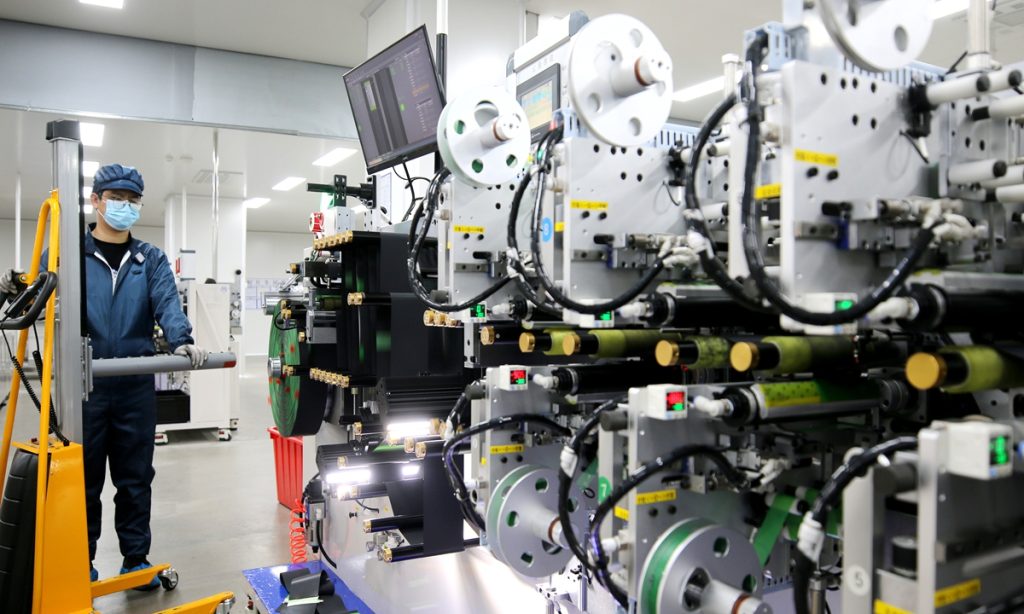
The profits of China's major industrial enterprises grew at a faster pace in the first quarter, rising 15.5 percent year-on-year and accelerating by 0.3 percentage points compared with the January-February period, the National Bureau of Statistics (NBS) announced on Monday.
NBS statistician Yu Weining said that during the first quarter, facing a complex global economic environment, the Chinese government front-loaded the implementation of more proactive and effective macro policies. As a result, overall industrial activity steadily rebounded, and profits in the equipment manufacturing and high-tech manufacturing sectors grew rapidly.
In March, the profits of major industrial enterprises expanded by 15.8 percent, accelerating by 0.6 percentage points compared with the January-February period, according to the NBS.
In the first quarter, state-controlled enterprises realized total profits of 619.61 billion yuan ($90.64 billion), up 10.1 percent year-on-year. Shareholding enterprises recorded total profits of 1.30 trillion yuan, up 20.9 percent. Foreign-invested enterprises and those funded by investors from Hong Kong, Macao and Taiwan region achieved total profits of 383.73 billion yuan, up 1.2 percent. Private enterprises posted total profits of 430.53 billion yuan, increasing 25.4 percent, the official data showed.
"Industrial profit growth in the first quarter accelerated, which will lay a solid foundation for the economy. The center of profit growth is rapidly shifting toward equipment manufacturing and high-tech manufacturing, driven by the combined effect of macro policy support and the rapid growth of new economic drivers," Wang Peng, an associate researcher at the Beijing Academy of Social Sciences, told the Global Times on Monday.
Yu noted that the equipment manufacturing sector played a prominent role. In the first quarter, profits of equipment manufacturing enterprises grew by 21.0 percent. Driven by factors such as improved production and rising selling prices, the electronics industry's profits surged by 124.5 percent, becoming the main driver behind the rapid profit growth of the equipment manufacturing sector, said Yu.
High-tech manufacturing registered rapid profit growth. In the first quarter, profits of high-tech manufacturing enterprises rose 47.4 percent year-on-year, contributing 7.9 percentage points to the overall profit growth of all industrial enterprises.
Rapid development in artificial intelligence and semiconductor-related sectors drove strong profit growth in related fields, with fiber optic manufacturing surging 336.8 percent, and optoelectronic device manufacturing expanding 43.0 percent. Rising demand for intelligent products boosted profits in smart unmanned aerial vehicle manufacturing by 53.8 percent and in other intelligent consumer equipment manufacturing by 67.3 percent, said Yu.
The profit growth of electronics, semiconductors, and intelligent manufacturing was mainly boosted by the global semiconductor industry's recovery and the explosive growth of China's domestic artificial intelligence industry, Wang said, adding that surge in demand for intelligent products indicates a significant improvement in the market's capacity to absorb mid-to-high-end products.
Profits of raw materials producers increased by 77.9 percent year-on-year, maintaining strong momentum with high-speed growth. Driven by the rapid development of strategic emerging industries such as aerospace, new energy, and next-generation information technology, profits in the non-ferrous metals sector surged 116.7 percent. The petroleum processing industry swung from losses to profits, recording total profits of 22.94 billion yuan, Yu said.
Wang said that Chinese industrial upgrading led to the higher profit growth, which has strengthened the resilience of the economy. Moreover, profit growth achieved through technological upgrading can enhance enterprises' willingness to invest in research and development, forming a virtuous cycle of "technological progress - improved profitability - reinvestment," Wang said.
Overall, industrial enterprises recorded relatively rapid profit growth in the first quarter. However, it should also be noted that external uncertainties have increased, and the domestic imbalance between strong supply and weak demand needs to be resolved, the NBS statistician said.
In the coming months, China should continue to focus on improving quality and efficiency, in a bid to promote effective qualitative improvement and reasonable quantitative growth, Yu said.
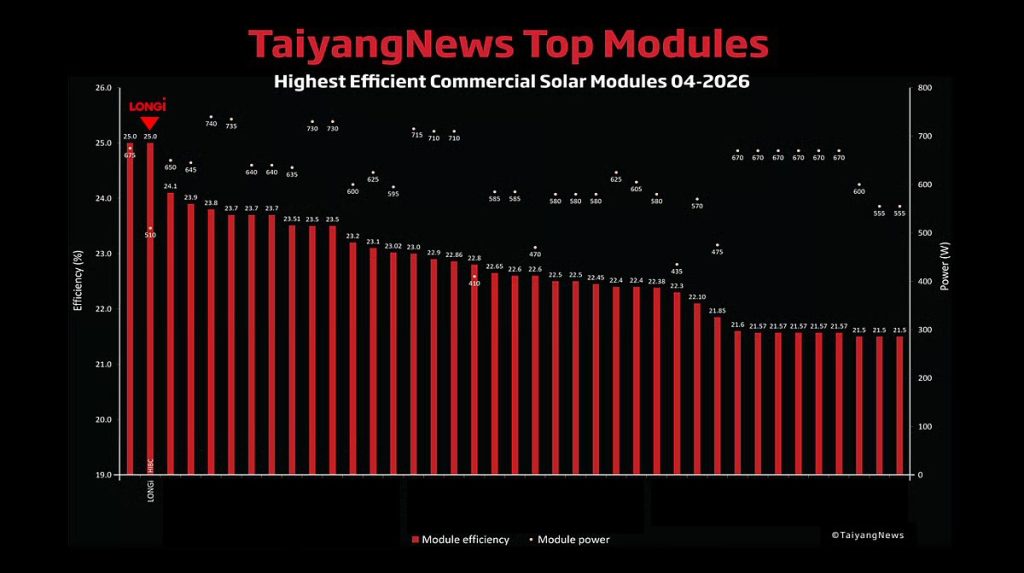
Taiyang News, a globally authoritative photovoltaic media outlet, officially released its April 2026 edition of the "TOP SOLAR MODULES LISTING" on April 23, 2026. LONGi's EcoLife series modules (LR7-54HJD-510M), built on HIBC technology, have firmly claimed the top spot with a mass production efficiency of 25%. This milestone marks international recognition of LONGi's innovation strength in the back-contact (BC) technology pathway and ushers in a new "25%+" era for PV module efficiency.
Since 2022, Taiyang News has published its monthly "TOP SOLAR MODULES Listing," now widely recognized as an authoritative efficiency ranking in the global PV industry. The ranking imposes stringent inclusion criteria: only products that have achieved large-scale mass production, have complete technical data, and deliver conversion efficiency of ≥21.5% are considered. Moreover, all data must come from commercial products already delivered to end customers. With "real and deliverable" as its baseline, the ranking holds high industry reference value and credibility, serving as a barometer for global PV module efficiency levels. LONGi's top position proves that its HIBC products have reached the world's highest efficiency in real mass production.
Behind this achievement lies LONGi's persistent efforts in BC technology. HIBC (High-temperature/Low-temperature Hybrid Interdigitated Back-Contact) cell technology is a major innovation along LONGi's BC roadmap. It combines the high passivation performance of heterojunction (HJT) technology with the superior light utilization of the back-contact structure, achieving the world's first mass production of such modules. In April 2025, the Institute for Solar Energy Research in Hamelin (ISFH) certified LONGi's HIBC cell efficiency at 27.81%, setting a new world record for this technology and approaching the theoretical limit of single-crystalline silicon cells.
Li Zhenguo, Founder and Chief Technology Officer of LONGi, commented: "This is another peak that LONGi has reached in technological innovation, as well as another major breakthrough in our BC technology journey. We have taken PV module efficiency to a significantly higher level, fully demonstrating the high scalability of BC technology and the substantial room for further efficiency gains."
The EcoLife series modules, designed specifically for residential applications, deliver a maximum power output of up to 510W. The EcoLife series modules increase the cell-to-module area ratio from 93.2% to 95.1%, thereby significantly enhancing light absorption. To address shading issues, the modules feature a unique quasi-bypass diode structure that enables current routing. Under shading, power loss is reduced by more than 70% compared to TOPCon products, making them highly resistant to soiling and shadows. With a leading power density of 250W/m², the modules effectively solve the challenge of generating more power on limited roof areas, substantially reducing household electricity costs.
Martin Green, known as the "Father of PV" and a professor at the University of New South Wales in Australia, has praised the technology: "On the 'Solar Cell Efficiency Tables' list, LONGi's HIBC technology dominates, taking the number one spot. This is also attributable to LONGi's persistent efforts on the BC technology track."
To date, LONGi's HIBC and BC series modules have gained extensive market validation worldwide. In January 2026, the LONGi EcoLife won the German Excellence Award 2026 in the "Energy & Environment" category. The jury's citation read: "LONGi EcoLife: Higher Power Generation, Higher Safety - Modules for an Uncertain Climate Future," specifically acknowledging the product's technical leadership and application value. In February, LONGi renewed a three-year framework agreement with Energy 3000, a well-known European energy solutions provider, to continuously supply a total of 2GW of high-efficiency PV modules, focusing on HPBC 2.0 and LONGi EcoLife modules based on HIBC technology.
At present, HIBC cell technology has already achieved large-scale mass production. LONGi has built a complete BC technology matrix ranging from HPBC 2.0 to HIBC. Moving forward, LONGi will continue to drive technological innovation, further boost module efficiency and power density through its BC technology platform, deepen global market applications of high-efficiency products such as HIBC, and strive to deliver more valuable clean energy solutions to customers worldwide, contributing to the global energy transition and the realization of carbon neutrality goals.