The economic and trade teams of China and the United States will work to expand two-way trade under a reciprocal tariff reduction framework, China's top diplomat Wang Yi said on Friday.
The two sides have also agreed to establish a trade council and an investment council and address each other's concerns over market access for agricultural products, Wang said when briefing the press on the just-concluded Xi-Trump meeting in Beijing.
Spring sunlight spilled across the green pitch at Shanghai University of Sport (SUS), where colorful flag belts fluttered in the breeze. Wei Yundi, 19, ran his route with precision, caught the ball, and sprinted forward, carrying the ball into the end zone to the roar of the crowd. In that adrenaline-charged moment, Wei clenched his fist and embraced his teammates tightly.
The first-year student had only formally encountered flag football a few days earlier. Before that, his impression of the sport - still relatively niche in China - was limited to, as he put it, "a retired NBA player I liked happened to play it."
The event that had so many beginners buzzing with excitement was SUS' "class super league," or "ban chao" in Chinese, which, according to the university, is the first campus-wide, class-based league of its kind at a Chinese higher education institution.
A total of 100 class teams across the university signed up enthusiastically, with participation approaching half of the student body, as sports majors and non-sports majors compete side by side.
China's 2026 Report on the Work of the Government calls to "fully implement the Healthy Schools Initiative, strengthen physical, aesthetic, labor skills and mental health education, and improve the school-family-society collaboration mechanism to ensure that students are physically and mentally healthy and realize well-rounded development." As the country's "village super leagues" has gradually gained popularity, the wave of mass sports has flowed into campuses in a younger, more nuanced form, seeking to bridge the "last mile" of youth sports.
At SUS, the starting point of that "mile" is flag football, a sport mainly popular in the West but still relatively obscure in China. The reason for choosing such an unfamiliar event is, as Liu Jiayu, secretary of the Communist Youth League Committee of SUS and a main organizer of the event, explained, quite simple.
"Most people don't know how to play the game, which means everyone is in the same boat," Liu told the Global Times with a smile.
Stand on the field
The story of the university's "class super league" in flag football began in late 2025.
At the time, Liu was chatting with colleagues when a shared observation emerged: at institutions such as SUS, students at sports universities generally tend to have fewer psychological problems, in part because sport plays a clear role in relieving depressive moods. Yet even on this campus, where roughly half of the students are majoring in sports, traditional sports competitions often see championship titles claimed by a small group of elite performers.
If the goal was to get as many students as possible moving through the "class super league" event, then the organizers needed to find the "greatest common denominator" for all. After several rounds of brainstorming, an unexpected sport emerged: flag football.
Why flag football? Liu explained that, while many traditional popular sports, such as football, basketball and table tennis, enjoy broad participation, they often fail to expand beyond their existing player base. Flag football, by contrast, is lesser-known, but particularly well suited to young people, let alone it will be added to the 2028 Los Angeles Games. "There's no intense physical collision, the rules are simple and it's a lot of fun," Liu told the Global Times.
In early March this year, notice of the school's flag football "class super league" spread across campus. Liu had initially worried that the niche sport might not draw much interest, but within the 10-day registration period, all 100 team slots were quickly filled, covering nearly half of the classes on campus.
Wei and his classmates, first-year students in rehabilitation studies, who, in their daily lives, rarely exercised, let alone took part in team sports, signed up straight away. Joining the "class super league," Wei said, was a chance to work out more and interact with classmates outside of the classroom.
From the registration deadline there was only about one week until the first match. The university invited members of the Shanghai Flag Football Association and players from the school's flag football team to train the participants. Throughout that week, the large lawn in the dormitory area was dotted with students practicing.
According to Liu, students like Wei - non-athletes admitted through gaokao (the national college entrance examinations) - make up about 50 percent of the student body at SUS. Zhang Xixuan, a sophomore majoring in broadcasting and hosting, is one of them. Her program is designed to train sports event commentators, yet many of her classmates rarely play any sport.
Still, despite their unfamiliarity with and initial hesitation toward flag football, they were ultimately inspired by the "class super league" to sign up. Of all the 39 students majoring in broadcasting and hosting in the year, nearly 20 formed two teams to compete. With some experience in flag football, Zhang became a team captain, leading her classmates from learning the rules and practicing tactics to stepping onto the field. They were involved every step of the way, and fully experienced the joy of sport and the power of collective activity.
"For us, just being able to stand on the field means we've already won," Zhang told the Global Times.
From trend to culture
If the university-level "class super league" is still a relatively new trend, then in the broader world of basic education, where there are fewer classes and students within each class tend to be more closely connected, the "class super league" has reportedly already taken root in many primary and secondary schools across China, becoming a popular part of campus culture, the Global Times found.
On May 9, an intense football match unfolded on the soccer field of the middle school section of The Experimental School Affiliated to the Ocean University of China in Qingdao, East China's Shandong Province. Student from Grade 7 of the school were competing enthusiastically against each other. Early May in Qingdao is relatively cool, yet the students are filled with extraordinary passion for the game.
Li Shengzhe (pseudonym), a Grade 7 student who had just been taken off the field, sat on the sidelines, anxiously watching his teammates. Despite a clear strength gap with the opposite side and a high chance of defeat, Li told the Global Times that he and his teammates responded actively, stuck to tactical arrangements, cooperated closely and did their best to withstand wave after wave of attacks.
"I tell myself that sometimes we don't have to care too much about the result. What matters is to step onto the field and give it our all. In this football match, though our class lags behind the other two in football skills, I value far more the experience of our classmates uniting as one and striving relentlessly," Li said.
Zhang Nianyi, a Grade 7 teacher at the school, told the Global Times that the school had been holding football tournament for three consecutive years.
The original purpose of holding the campus football tournament is not only to spark students' interest in football through matches, but also foster a love for the game and sports in general. Education through sports helps students build physical fitness, develop mental acuity, establish a sound awareness of rules and a healthy mindset toward competition, and achieve all-round development, according to a report the school released in July 2024.
The tournament is more than just a match. It is an educational process involving everyone, according to Zhang.
Over the past three years, each tournament lasts only a short week. Nevertheless, there are diverse roles for everyone: team flag designers and coaches before the matches, athletes, cheerleaders and spectators during the games, as well as staff providing logistical support and psychological counseling. Even those who do not play, cannot play or have no interest in football can find their own place in the league. Students, parents and teachers all devote themselves wholeheartedly, giving full play to their strengths and showing their love for sports, she said.
Zheng Jiakun, a professor at School of Economics and Management of SUS, has long focused on the development of mass sports and youth sports in China. He believes that low-threshold competitions such as "class super league" help young people overcome psychological barriers to sports participation.
"We often say that the biggest challenge in youth sports, is not finding a place for those who already love sports, but getting people to try sport for the first time," Zheng told the Global Times. A symbol of youth sports
In recent years, the "class super league" craze has swept across campuses nationwide, emerging as a symbol of youth sports development.
This year, for instance, Beijing will host 400,000 primary and secondary school "class super league" matches, with more than 10 million students participating, reported CCTV News on March 18. In Rongjiang County of Southwest China's Guizhou Province, local organizers have held more than 4,800 campus football "class super league" matches, involving more than 48,300 people in total, according to the Rongjiang government website on February 10.
Behind this wave of enthusiasm lies strong policy guidance and strategic support from the country. In November 2025, five government departments, including the Ministry of Education, jointly issued a document, calling for promoting the high-quality development of school sports. The Recommendations of the Central Committee of the Communist Party of China for Formulating the 15th Five-Year (2026-2030) Plan for National Economic and Social Development also stresses that, recreational and competitive sports should be developed through a coordinated approach to see that we make faster progress in building China into a country strong in sports.
Zheng said the "class super league" model, with its low barrier to entry and high level of participation, holds great value in improving the physical and mental health of young people. "It turns exercise into a process in which a group of people strive together toward a shared goal, and through passing the balls, running and teamwork, it builds genuine, warm social connections," the expert said.
China's Ministry of State Security (MSS) on Thursday disclosed five national security-related cases via its official WeChat account, including an incident in which two foreign nationals, under the guise of academic exchange, illegally collected butterflies, posing potential risks to China's biosecurity. The individuals were eventually reported by a local fishing enthusiast and handled in accordance with the law by relevant authorities.
According to the ministry's WeChat account, the case began when a fishing enthusiast surnamed Zhang was angling by a lakeside and noticed two foreign nationals on the shore catching butterflies with insect nets. Their noisy activity startled the fish, prompting Zhang to pay closer attention to their behavior.
Zhang soon observed that the pair appeared highly professional and well-coordinated. One was responsible for catching the butterflies, while the other recorded data. Each specimen was carefully placed into a specialized container, a practice that differed markedly from that of ordinary tourists.
Recalling similar public reporting cases shared by national security authorities, Zhang promptly called the national security reporting hotline, 12339, to report the situation, according to the ministry's WeChat account.
Upon receiving the report, national security authorities swiftly coordinated with relevant departments to handle the case. On-site inspections revealed that the two individuals' backpacks contained hundreds of neatly arranged butterfly specimens, while their notebooks were filled with detailed records.
Further investigation found that the two foreign nationals were overseas biological researchers who had entered China under the pretext of academic exchange but collected wild species without authorization. The actions violated relevant Chinese regulations and could lead to the outflow of China's unique biological resources, posing a threat to China's biosecurity. National security authorities, in coordination with relevant departments, have handled the case in accordance with the law, according to the ministry.
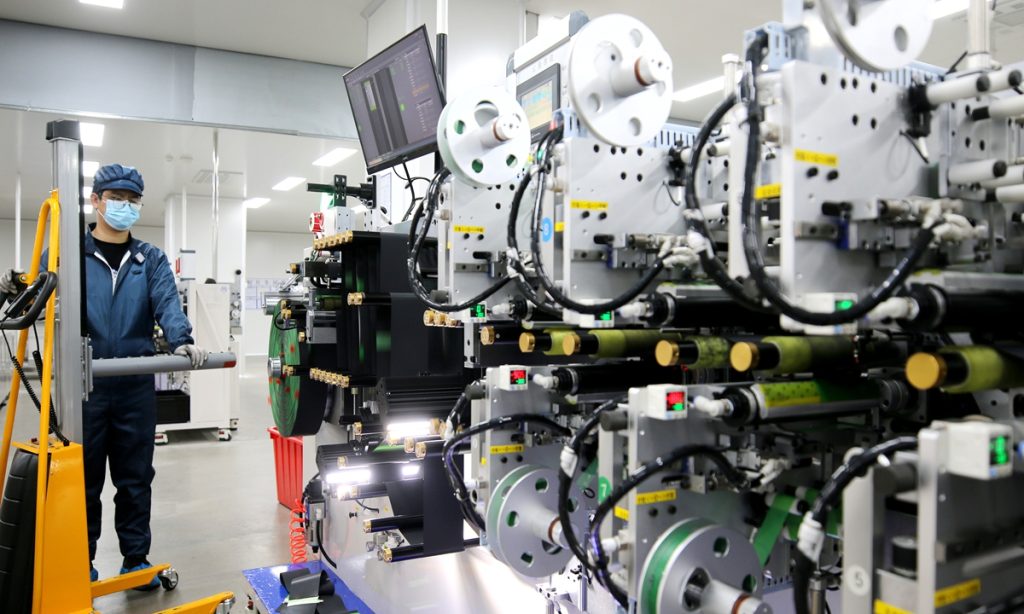
The profits of China's major industrial enterprises grew at a faster pace in the first quarter, rising 15.5 percent year-on-year and accelerating by 0.3 percentage points compared with the January-February period, the National Bureau of Statistics (NBS) announced on Monday.
NBS statistician Yu Weining said that during the first quarter, facing a complex global economic environment, the Chinese government front-loaded the implementation of more proactive and effective macro policies. As a result, overall industrial activity steadily rebounded, and profits in the equipment manufacturing and high-tech manufacturing sectors grew rapidly.
In March, the profits of major industrial enterprises expanded by 15.8 percent, accelerating by 0.6 percentage points compared with the January-February period, according to the NBS.
In the first quarter, state-controlled enterprises realized total profits of 619.61 billion yuan ($90.64 billion), up 10.1 percent year-on-year. Shareholding enterprises recorded total profits of 1.30 trillion yuan, up 20.9 percent. Foreign-invested enterprises and those funded by investors from Hong Kong, Macao and Taiwan region achieved total profits of 383.73 billion yuan, up 1.2 percent. Private enterprises posted total profits of 430.53 billion yuan, increasing 25.4 percent, the official data showed.
"Industrial profit growth in the first quarter accelerated, which will lay a solid foundation for the economy. The center of profit growth is rapidly shifting toward equipment manufacturing and high-tech manufacturing, driven by the combined effect of macro policy support and the rapid growth of new economic drivers," Wang Peng, an associate researcher at the Beijing Academy of Social Sciences, told the Global Times on Monday.
Yu noted that the equipment manufacturing sector played a prominent role. In the first quarter, profits of equipment manufacturing enterprises grew by 21.0 percent. Driven by factors such as improved production and rising selling prices, the electronics industry's profits surged by 124.5 percent, becoming the main driver behind the rapid profit growth of the equipment manufacturing sector, said Yu.
High-tech manufacturing registered rapid profit growth. In the first quarter, profits of high-tech manufacturing enterprises rose 47.4 percent year-on-year, contributing 7.9 percentage points to the overall profit growth of all industrial enterprises.
Rapid development in artificial intelligence and semiconductor-related sectors drove strong profit growth in related fields, with fiber optic manufacturing surging 336.8 percent, and optoelectronic device manufacturing expanding 43.0 percent. Rising demand for intelligent products boosted profits in smart unmanned aerial vehicle manufacturing by 53.8 percent and in other intelligent consumer equipment manufacturing by 67.3 percent, said Yu.
The profit growth of electronics, semiconductors, and intelligent manufacturing was mainly boosted by the global semiconductor industry's recovery and the explosive growth of China's domestic artificial intelligence industry, Wang said, adding that surge in demand for intelligent products indicates a significant improvement in the market's capacity to absorb mid-to-high-end products.
Profits of raw materials producers increased by 77.9 percent year-on-year, maintaining strong momentum with high-speed growth. Driven by the rapid development of strategic emerging industries such as aerospace, new energy, and next-generation information technology, profits in the non-ferrous metals sector surged 116.7 percent. The petroleum processing industry swung from losses to profits, recording total profits of 22.94 billion yuan, Yu said.
Wang said that Chinese industrial upgrading led to the higher profit growth, which has strengthened the resilience of the economy. Moreover, profit growth achieved through technological upgrading can enhance enterprises' willingness to invest in research and development, forming a virtuous cycle of "technological progress - improved profitability - reinvestment," Wang said.
Overall, industrial enterprises recorded relatively rapid profit growth in the first quarter. However, it should also be noted that external uncertainties have increased, and the domestic imbalance between strong supply and weak demand needs to be resolved, the NBS statistician said.
In the coming months, China should continue to focus on improving quality and efficiency, in a bid to promote effective qualitative improvement and reasonable quantitative growth, Yu said.
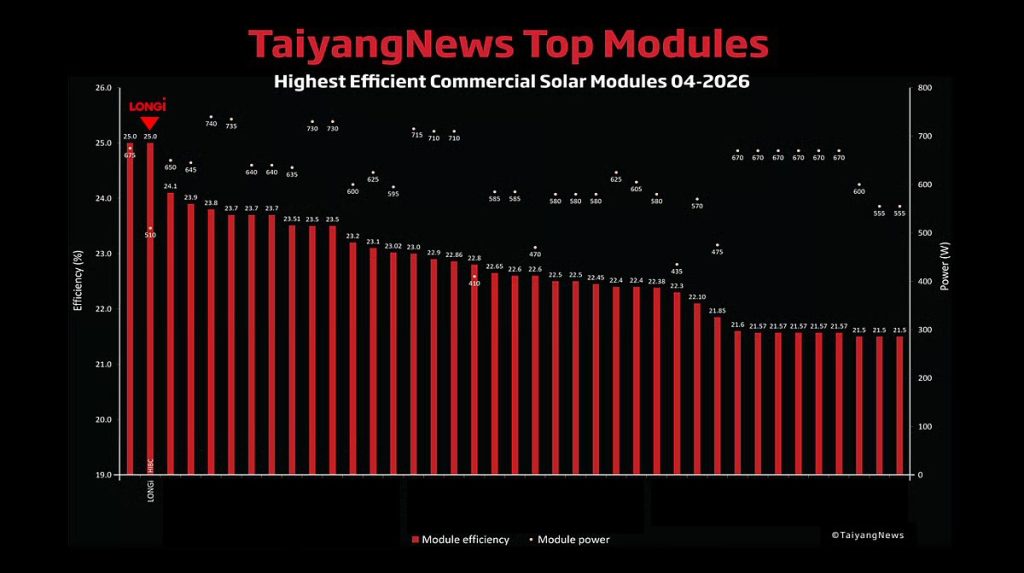
Taiyang News, a globally authoritative photovoltaic media outlet, officially released its April 2026 edition of the "TOP SOLAR MODULES LISTING" on April 23, 2026. LONGi's EcoLife series modules (LR7-54HJD-510M), built on HIBC technology, have firmly claimed the top spot with a mass production efficiency of 25%. This milestone marks international recognition of LONGi's innovation strength in the back-contact (BC) technology pathway and ushers in a new "25%+" era for PV module efficiency. Since 2022, Taiyang News has published its monthly "TOP SOLAR MODULES Listing," now widely recognized as an authoritative efficiency ranking in the global PV industry. The ranking imposes stringent inclusion criteria: only products that have achieved large-scale mass production, have complete technical data, and deliver conversion efficiency of ≥21.5% are considered. Moreover, all data must come from commercial products already delivered to end customers. With "real and deliverable" as its baseline, the ranking holds high industry reference value and credibility, serving as a barometer for global PV module efficiency levels. LONGi's top position proves that its HIBC products have reached the world's highest efficiency in real mass production.
Behind this achievement lies LONGi's persistent efforts in BC technology. HIBC (High-temperature/Low-temperature Hybrid Interdigitated Back-Contact) cell technology is a major innovation along LONGi's BC roadmap. It combines the high passivation performance of heterojunction (HJT) technology with the superior light utilization of the back-contact structure, achieving the world's first mass production of such modules. In April 2025, the Institute for Solar Energy Research in Hamelin (ISFH) certified LONGi's HIBC cell efficiency at 27.81%, setting a new world record for this technology and approaching the theoretical limit of single-crystalline silicon cells.
Li Zhenguo, Founder and Chief Technology Officer of LONGi, commented: "This is another peak that LONGi has reached in technological innovation, as well as another major breakthrough in our BC technology journey. We have taken PV module efficiency to a significantly higher level, fully demonstrating the high scalability of BC technology and the substantial room for further efficiency gains."
The EcoLife series modules, designed specifically for residential applications, deliver a maximum power output of up to 510W. The EcoLife series modules increase the cell-to-module area ratio from 93.2% to 95.1%, thereby significantly enhancing light absorption. To address shading issues, the modules feature a unique quasi-bypass diode structure that enables current routing. Under shading, power loss is reduced by more than 70% compared to TOPCon products, making them highly resistant to soiling and shadows. With a leading power density of 250W/m², the modules effectively solve the challenge of generating more power on limited roof areas, substantially reducing household electricity costs.
Martin Green, known as the "Father of PV" and a professor at the University of New South Wales in Australia, has praised the technology: "On the 'Solar Cell Efficiency Tables' list, LONGi's HIBC technology dominates, taking the number one spot. This is also attributable to LONGi's persistent efforts on the BC technology track."
To date, LONGi's HIBC and BC series modules have gained extensive market validation worldwide. In January 2026, the LONGi EcoLife won the German Excellence Award 2026 in the "Energy & Environment" category. The jury's citation read: "LONGi EcoLife: Higher Power Generation, Higher Safety - Modules for an Uncertain Climate Future," specifically acknowledging the product's technical leadership and application value. In February, LONGi renewed a three-year framework agreement with Energy 3000, a well-known European energy solutions provider, to continuously supply a total of 2GW of high-efficiency PV modules, focusing on HPBC 2.0 and LONGi EcoLife modules based on HIBC technology.
At present, HIBC cell technology has already achieved large-scale mass production. LONGi has built a complete BC technology matrix ranging from HPBC 2.0 to HIBC. Moving forward, LONGi will continue to drive technological innovation, further boost module efficiency and power density through its BC technology platform, deepen global market applications of high-efficiency products such as HIBC, and strive to deliver more valuable clean energy solutions to customers worldwide, contributing to the global energy transition and the realization of carbon neutrality goals.
US tech company Apple has announced a major leadership reshuffle, with Tim Cook set to step down as chief executive in September and hardware veteran John Ternus taking over the top role. Industry analysts said that the new leadership will likely place greater emphasis on product-driven innovation, and it is expected to keep attaching great importance to China's market and the role of its supply chain in innovation.
Apple revealed a landmark leadership shuffle on Monday. Effective September 1, Cook will serve as executive chairperson of Apple's board, while John Ternus, senior vice president of hardware engineering, will become the new CEO, according to a release on Apple's official website.
Cook will continue in his role as CEO through the summer as he works closely with Ternus on a smooth transition. As executive chairperson, Cook will assist with certain aspects of the company, including engaging with policymakers around the world, according to the release.
A long-time Apple insider, Ternus joined the firm's product design team in 2001. He was promoted to vice president of hardware engineering in 2013 and entered Apple's top executive team in 2021. Over the years, he supervised hardware development for Apple devices, played a vital role in launching iPad and AirPods, and oversaw successive generations of the iPhone, Mac and Apple Watch, according to the release.
Cook joined Apple in 1998 and became CEO in 2011. Under his leadership, Apple's market capitalization surged from $350 billion to $4 trillion. Its annual revenue nearly quadrupled from $108 billion in fiscal year 2011 to more than $416 billion in fiscal year 2025, according to the release.
The leadership transition quickly drew widespread attention on Chinese social media platform Weibo. Some acknowledged Cook's achievements as a seasoned executive, while many netizens wondered whether Ternus can revive Apple's innovative spirit.
"Cook can be regarded as one of the greatest professional enterprise managers in history, who drove an explosive surge in Apple's market value. However, if there are drawbacks, Apple has lacked innovative sprit in recent years. Besides, Apple lagged behind peers in the artificial intelligence (AI) era and failed to keep pace with the global automotive manufacturing trend," commented one Chinese netizen.
"With a new CEO at the helm, can Apple regain its innovative momentum and recreate the miracles seen in Jobs' era?" asked another Chinese netizen.
China remained a key market for Apple. According to its first-quarter fiscal 2026 results for the period ended on December 27, 2025, the company recorded revenue of $143.8 billion, a 16 percent year-on-year increase. Revenue in greater China grew 38 percent year-on-year, driven by the iPhone, which had record upgraders and double-digit growth on switchers, Cook said in Apple's results call.
That said, Apple also faces fierce competition in the Chinese market. Its greater China revenue totaled $64.4 billion in fiscal year 2025, down 11 percent from 2023. Nonetheless, greater China remains Apple's third-largest revenue region worldwide, Yicai reported.
Liu Dingding, a veteran technology industry expert, told the Global Times on Tuesday that Apple has faced some notable challenges in recent years. It has yet to launch a cross-era revolutionary new product, its progress in AI technology has not kept pace with its own scale, and its autonomous driving project encountered difficulties before eventually being discontinued. The promotion of a senior executive with a product and technology background to take over as CEO also signals that Apple will adhere to its product-centric strategy.
Now that Ternus has taken the baton, he faces both opportunities and challenges. Apple maintains a steady overall market trend, but the global smartphone industry has long hit a growth ceiling, with shipments of major brands generally declining. Whether Apple will continue to focus on incremental upgrades of the iPhone or actively expand into new areas such as smart cars and AI and build a new long-term growth engine, will all be the biggest tests for the new CEO, Liu added.
Experts said that while focusing on global product layout, Ternus will likely continue to attach great importance to the Chinese market, just as Cook did.
Cook visited China multiple times every year. During a trip in March, he emphasized the importance of the Chinese market and local supply chains to Apple. He said that Apple focuses not only on supply chains and manufacturing, but also on automating and putting AI into factories as much as possible.
It is highly likely that Ternus will follow Cook's approach and maintain regular, close and friendly interactions with the Chinese market, as Apple's products rely heavily on manufacturing in China, and China is also one of Apple's top three consumer markets globally, Liu said.
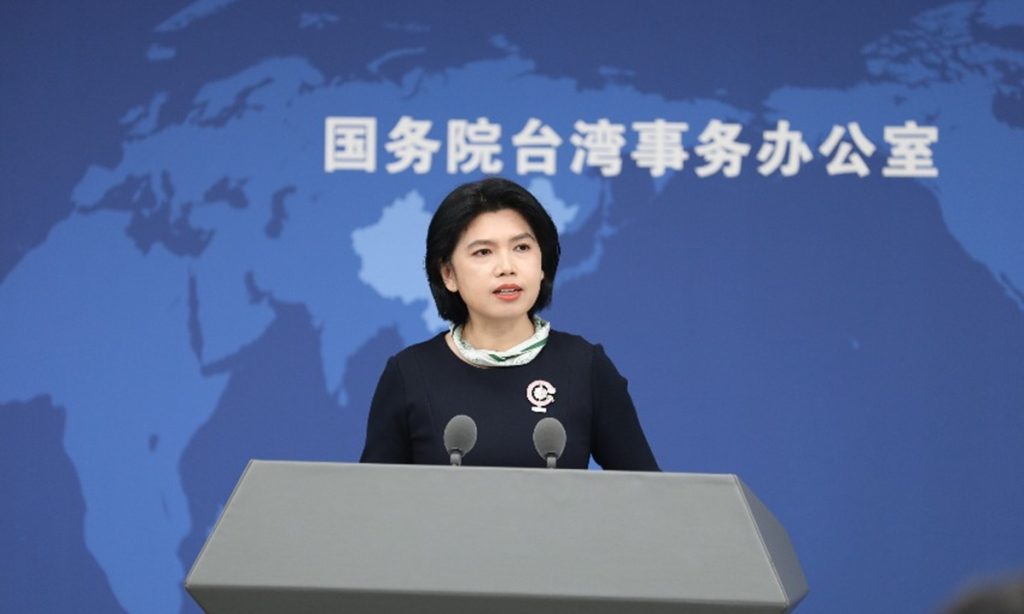
The Chinese mainland provides fertile ground for innovation and entrepreneurship and offers broader space for cross-Straits industrial cooperation, a spokesperson for the Taiwan Affairs Office of the State Council said on Wednesday, expressing a warm welcome to Taiwan compatriots and Taiwan-funded enterprises to establish themselves and develop on the mainland.
The remarks came in response to a media question about the mainland motorcycle brand ZXMOTO, which made history with its first double victory in the World Supersport (WorldSSP) category at the Portuguese round of the Superbike World Championship. The spokesperson was asked to comment on the victory, which has sparked heated discussion among netizens on the island, with many saying that mainland manufacturing quality has reached a world-class level and that cross-Straits industrial cooperation should be deepened to strengthen national manufacturing brands.
Zhu Fenglian, spokesperson for the Taiwan Affairs Office of the State Council, told a press briefing that "it can be seen that in areas such as robots, drones, new-energy vehicles and motorcycles, more and more outstanding mainland brands and products are going global, attracting worldwide attention, gaining broad recognition, and becoming the preferred choices of consumers."
"Relying on a complete industrial system and a solid industrial foundation, mainland manufacturing continues to set new records. During the 15th Five-Year Plan (2026-30) period, we will continue to focus on promoting high-quality development and building a modern industrial system with advanced manufacturing as its backbone," Zhu said.
"The mainland is indeed fertile ground for innovation and entrepreneurship, opening up broader space for cross-Straits industrial cooperation. We warmly welcome Taiwan compatriots and Taiwan-funded enterprises to establish themselves and develop on the mainland, deepen cross-Straits exchanges and cooperation, advance integrated development, and jointly strengthen the Chinese nation's economy," she added.
The Chinese brand's victory broke decades of dominance by international names such as Ducati and Yamaha, and is widely seen as not only a sporting triumph but also a sign of China's motorcycle industry moving from low-end contract manufacturing toward independent control of high-performance powertrain technologies, the Xinhua News Agency reported.
The winning 820RR-RS race bike of ZXMOTO is powered by a self-developed 819cc (cubic centimeter) inline three-cylinder engine producing more than 130 horsepower, delivering class-leading performance in its category with top power output, a lightweight build and a low center of gravity, according to Xinhua.
Mainland companies' ability to win international competitions and expand their brands overseas is underpinned by a complete industrial chain and sustained strategic investment, while Taiwan manufacturers retain distinct strengths in areas such as precision engines and electronic control systems, Xinhua reported, citing a Taiwan scholar.
Taiwan region, where motorcycles are deeply ingrained in daily life and local culture, has one of the highest motorcycle ownership rates in the world. According to data from Taiwan island's transportation authorities, the island had approximately 14.67 million registered motorcycles as of May 2025, or roughly 62 for every 100 people, Xinhua reported.
The scholar was quoted in the report as saying that deeper cross-Straits coordination would help offset Taiwan region's constraints, including its limited market size and policy restrictions, while enabling mainland firms to accelerate breakthroughs in core technologies and jointly enhance their standing in global high-end manufacturing.
"China's vote represents a choice responsible for peace and for the people of the region. It stands on the right side of history and will stand the test of history," China's Permanent Representative to the United Nations Fu Cong said on Thursday local time, as he reaffirmed Beijing's veto of a Security Council draft resolution on the Strait of Hormuz at a tense UN General Assembly meeting. Fu said the move helped prevent further escalation, created conditions for a temporary ceasefire, and opened the door to dialogue and negotiations.
China and Russia vetoed the draft on April 7 in the Security Council. The initial Bahrain-backed proposal would have authorized countries to use "all necessary means" to ensure transit through the Strait of Hormuz and deter attempts to close it, wording seen by many as potentially legitimizing the use of force and risking further escalation, according to media reports.
While on Friday, Iran's Foreign Minister Araghchi said on X that "in line with the ceasefire in Lebanon, the passage for all commercial vessels through Strait of Hormuz is declared completely open for the remaining period of ceasefire."
After Iran's announcement on Friday, US President Donald Trump thanked Iran. "Iran has just announced that the Strait of Hormuz is fully open and ready for full passage. Thank you," Trump wrote on Truth Social.
The UN General Assembly on Thursday held the tense session to examine the April 7 vetoes cast by China and Russia on a Security Council draft resolution concerning the Strait of Hormuz, a strategic waterway whose instability has rattled global markets.
Addressing the meeting, Fu said Beijing attaches great importance to the draft resolution submitted by Bahrain on behalf of Gulf States and fully understands their concerns. At the same time, he stressed that any Security Council action should serve de-escalation, not provide a veneer of legitimacy for unauthorized military operations or grant a license for the use of force, which could further inflame tensions and add fuel to the fire, leading to an escalation of the conflict.
Russian Deputy Permanent Representative to the UN Anna M. Evstigneeva also explained Moscow's veto, saying the Council had been invited "to give a green light" to certain protective measures under the pretext of ensuring freedom of navigation. She warned that such language would have amounted to "a carte blanche" for the continuation of current actions and further escalation. Iran's Ambassador Amir Saeid Iravani said the vetoes cast by China and Russia were "timely, justified and necessary," according to the UN release.
China and Russia were justified in vetoing the UN Security Council resolution, as the move helped prevent the Strait of Hormuz crisis from spiraling further. The root of the crisis lies in the conflict itself, and the key to resolving it is a ceasefire and an end to the fighting. By contrast, the US and some states treated Iran's blockade of the strait as the core issue, when it was only a symptom rather than the cause, Sun Degang, director of the Center for Middle Eastern Studies at Fudan University, told the Global Times.
The subsequent temporary US-Iran ceasefire, brokered by Pakistan with broad support, quickly eased tensions around the strait, further showing that the blockade was a result of the conflict, Sun said. He added that the veto also helped prevent the Security Council resolution from being misused, reflecting the sense of responsibility expected of major powers.
The Thursday meeting was convened pursuant to Resolution 76/262, adopted on April 26, 2022, which mandates that the President of the General Assembly convene a formal meeting within 10 working days whenever a permanent member of the Security Council casts a veto, according to a release from the UN website.
According to Yuyuan Tantian, a social media account affiliated with state broadcaster CCTV, China last exercised its veto two years ago, when the US tabled a draft Security Council resolution on a Gaza ceasefire. UN statistics showed that China has used its veto only 22 times out of 329 in the UN's history, accounting for less than 7 percent.
The account also cited Gong Xiaosheng, China's former special envoy on Middle East affairs, as saying that Security Council authorization carries the highest level of endorsement under international law, and that Beijing is extremely cautious whenever it chooses to use its veto. China does not lightly deny any party the opportunity to make its voice heard at the United Nations.
Since the outbreak of the conflict, China has continued to push for de-escalation while maintaining an objective and impartial stance, calling for space to be preserved for peace and negotiations. As the world's largest oil importer, China has a vital interest in safe passage through the Strait of Hormuz, but has held its ground based on the merits of the issue and the broader regional situation, Ding Long, a professor at the Middle East Studies Institute of Shanghai International Studies University, told the Global Times.
The tensions in the Strait of Hormuz did not arise from Iran alone, but from Iranian retaliation following US and Israeli military actions. In such a highly sensitive situation, any attempt to use force to contest control of the strait would be counterproductive, harming all parties, jolting the global economy, and undermining both navigational safety and regional stability, said Ding.
Also on Friday, French President Emmanuel Macron and British Prime Minister Keir Starmer co-chaired a meeting of around 40 so-called "non-belligerent" countries on Friday to discuss efforts to secure the Strait of Hormuz, AFP reported.
The closure of the vital waterway — now subject to both an Iranian blockade and a retaliatory US one — has triggered what some describe as the worst oil price shock in history. The Paris meeting, attended in part via video conference, was the latest effort by countries not directly involved in the conflict to limit the fallout from a war they neither started nor joined, per AFP.
Ding also noted that convening the meeting underscores the urgency surrounding the Strait of Hormuz, while focusing only on the surface issue of navigation security, without addressing the root causes and while continuing to fuel tensions, will only make a solution to the strait's security and freedom of navigation more elusive. Only by addressing both the symptoms and the root causes, as China has advocated, can the problem be truly resolved.
At the invitation of the Ministry of Foreign Affairs of the DPRK, Member of the Political Bureau of the CPC Central Committee and Minister of Foreign Affairs Wang Yi will visit the DPRK from April 9 to 10, Chinese Foreign Ministry spokesperson announced on Wednesday.