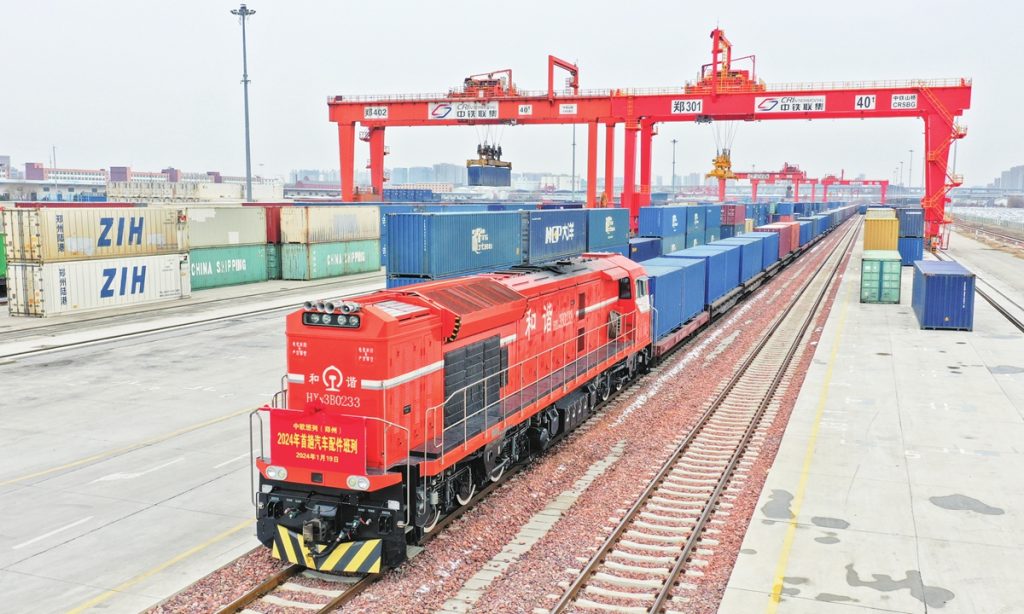
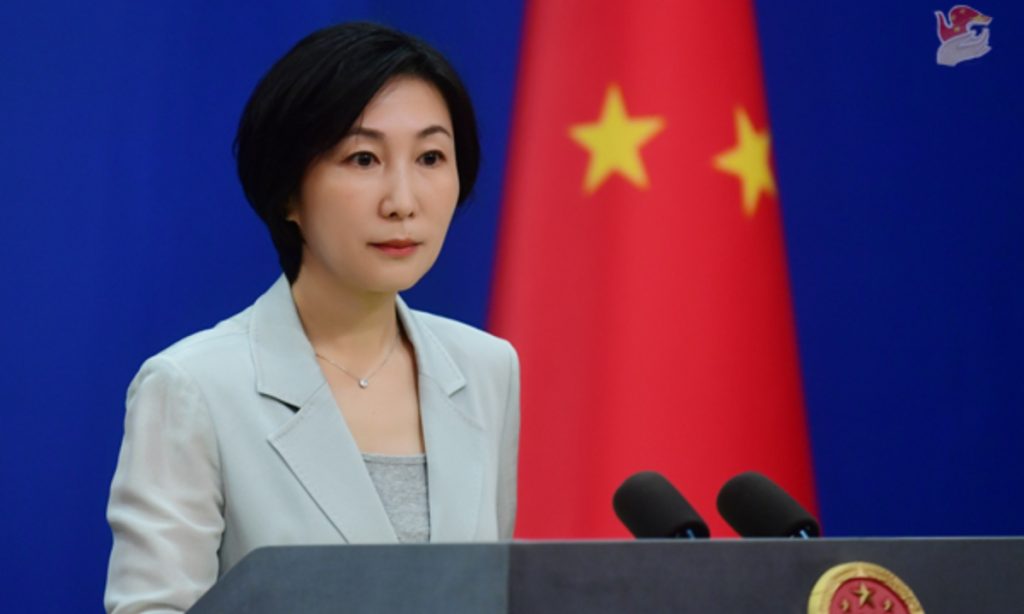
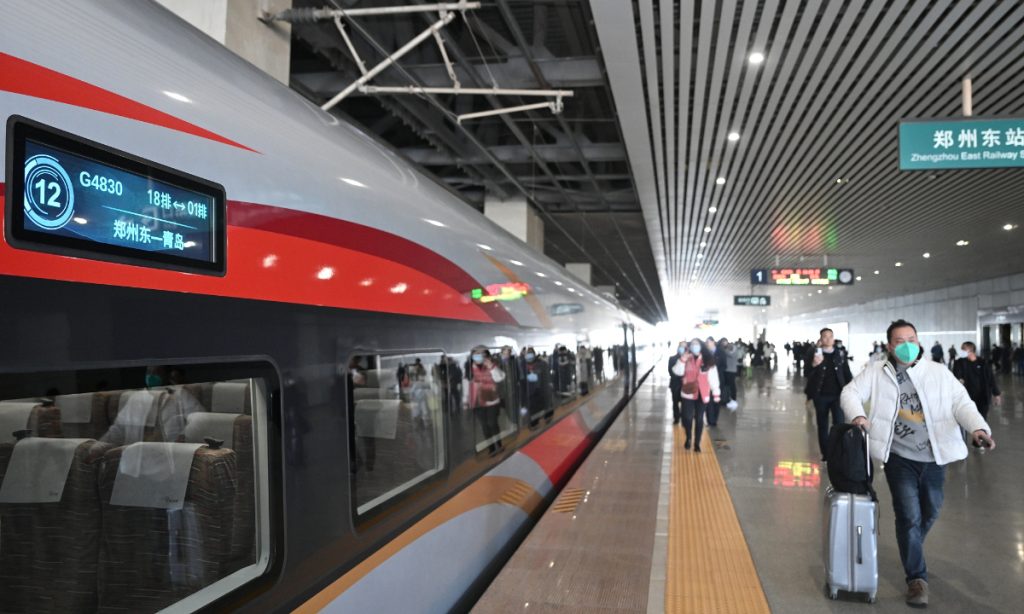
The cumulative number of China-Europe freight trains has exceeded 85,000, and it has opened a new bridge for economic and trade cooperation for Eurasian continent, Mao Ning, spokesperson of Chinese Foreign Ministry, said on Thursday.
The routes of the freight trains have grown from scratch, and the transportation capacity has grown "from small to large," and it has opened a new bridge for economic and trade cooperation for Eurasian continent, Mao said.
In the past decade, the customs clearance and inspection along the China-Europe freight trains have become more convenient, the business environment at ports has continued to be optimized, and international transportation regulations have become more standardized, Mao said.
Relying on the freight train service, China has achieved closer cooperation with Central Asia and Europe, and its economy and trade have become more prosperous. A large number of companies of international trade, intelligent manufacturing and supply chain have taken root in areas along the route, and industries such as manufacturing, commerce, finance and information are continuously being upgraded, making products welcomed in China and European countries, Mao said.
China-Europe freight trains will continue to operate at full capacity, injecting new impetus into the development of the Eurasian continent, Mao said.
CCTV.com reported that, since 2024, more than 2,600 China-Europe freight trains have been completed, a year-on-year increase of 5.3 percent, and more than 1,000 trains have been operated in a single month for 46 consecutive months.
At present, China-Europe trains have reached 25 countries in Europe, and the number of connected cities has increased from 217 in 2023 to 219.
China's Foreign Ministry urged the US to stop slandering and smearing China on data security, and maintain an open, fair and non-discriminatory business environment, spokesperson Mao Ning told a press conference on Thursday.
Mao's remarks came after the Biden administration on Wednesday unveiled an executive order barring genomic data transfers to China, Reuters reported, claiming that the US is seeking to protect American personal data over so-called national security concerns.
The order will curb bulk transfers of Americans' geo-location, biometric, health and financial information to specific "countries of concern."
This is the first time the US has taken such measures, and the US executive order is also seen as the latest escalation of the "digital cold war" between the two countries.
In response, Mao noted that the US has generalized the concept of national security by falsely claiming that China is purchasing sensitive data of US citizens and engaging in malicious activities. "Banning the flow of data to the so-called countries of concern, including China, is a discriminatory practice clearly targeting a specific country, which China firmly opposes," she said.
The Chinese government has always placed great importance on the protection of data privacy and security, and has never, and will never, ask its enterprises or individuals to collect or provide data information and intelligence located in foreign countries for the Chinese government in a manner that violates local laws, Mao said.
China has taken the lead in proposing a global data security initiative, and if the US is truly concerned about data security, it could publicly support China's initiative or make a similar commitment, she noted.
"We asked the US to stop slandering and smearing China, effectively maintain an open, fair and non-discriminatory business environment and work with all parties to formulate universal data security rules, in order to promote the orderly and free flow of global data," said Mao.
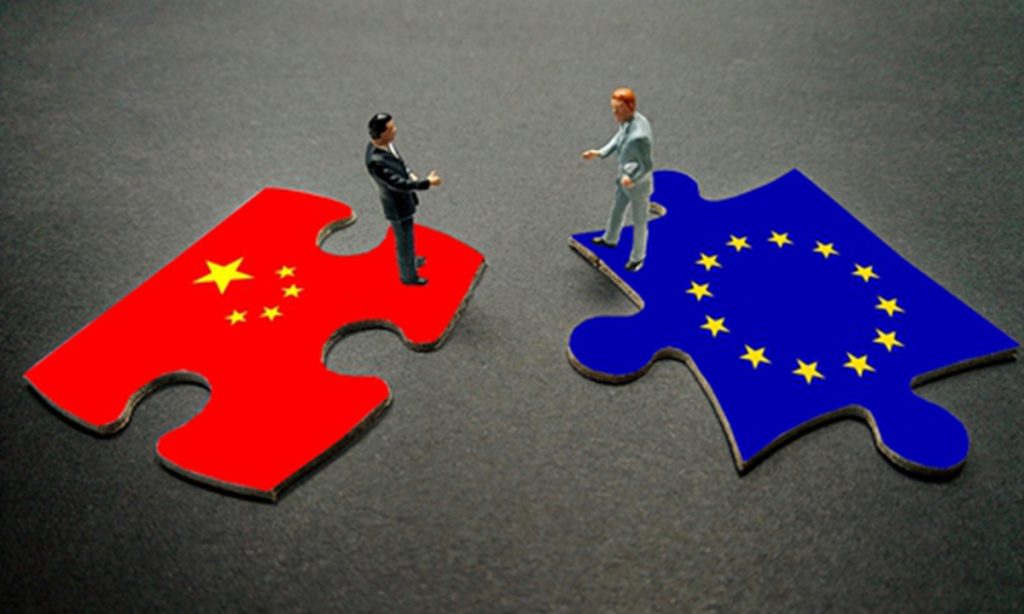
Chinese President Xi Jinping met with Belgian Prime Minister Alexander De Croo in Beijing on Friday. De Croo's visit to China is one of the most important high-level contacts between China and the EU this year, following the visits to China by European Council President Charles Michel and European Commission President Ursula von der Leyen in December.
The visit highlights the ongoing dialogue and interaction between China and the EU, especially as Belgium recently assumed the rotating presidency of the Council of the European Union and De Croo will be in a pivotal position to coordinate the EU's policy agenda for the next six months.
EU's relationship with China is complex and multifaceted, with differences between the two sides in a number of areas, including trade imbalances and subsidies, and the conflict in Ukraine. However, these specific issues are set against the backdrop of broader geopolitical and global power shifts that have caused unease in the EU.
Europeans are increasingly aware of China's growing presence on the global stage, not only in the economic sphere but also in the technological and geopolitical spheres.
The changing relationship between the three poles of China, the US and Europe is not a new phenomenon. While the US continues to lead, China and the EU are playing an increasing role on the global stage, which has become more pronounced in the wake of the advancement of Europe's strategic autonomy and the rise of China.
As an ally of the US, the EU continues to be highly concerned about China's rise. This is well illustrated by comparing the covers of two issues of The Economist, a British weekly newspaper, which in 2013 featured the threat of China's carbon emissions to the World. In 2024, the cover showed the new threat of China's lead in green technologies.
If you imagine China, the US and the EU as three runners on a track, the US is still leading, and China is occasionally ahead of the EU, but most of the time, it is the other way around. It's often the second-place runner that's more anxious.
This race scene also shows us the difference between US and European policy toward China.
The EU is currently focused on decreasing reliance on foreign high-end technology suppliers, particularly to avoid being surpassed or replaced by China in critical areas, while also implementing protective measures to counter the impact of Chinese manufacturing on the European market. In contrast, the US strives to uphold its global dominance in high-tech fields and key manufacturing areas by constraining China.
The outcome of this competition is different from what the US expected: Rather than rebuilding supply chains to exclude Chinese manufacturing, each player seeks to consolidate and strengthen its position in existing supply chains.
"Decoupling" and "breaking the chain" are not feasible. It is improbable that either party can construct a new, fully independent global supply chain. If the EU adopts the US approach toward China, it may end up more reliant on the US and suffer the most damage among the three parties.
As the EU follows the US containment policy toward China, especially in semiconductor manufacturing equipment, it risks losing a lucrative market with the strongest end-product manufacturing capacity, widening the gap with the US.
The EU's strategic dilemma with China also reflects its strategic dilemma with the US. The EU aims to be the leading global economy but also wants to maintain reliance on the US, strategically using the alliance to build its own influential position globally.
The EU needs to define its approach to China independently. This doesn't mean the EU should draw a clear line with the US, but there is a need for a more pragmatic, rational and comprehensive attitude when considering its relationship with China. It should not always focus on competition with China and ignore the widening gap with the US.
If the EU can more frequently consider its relationship with China from a different perspective, then both China and Europe have competitive and cooperative aspects, with the latter potentially reducing the gap between the two sides and the US, thereby bringing stability to the world's multipolarization.
Therefore, creating more connections between the EU and China is crucial. With more bridges, there will be more roads, improved communication and better understanding. China and EU can establish a new relationship that will support balanced global development.
Multiple places in Central China’s Henan Province suspend classes and transportation on Tuesday due to continuous snowstorms which are expected to last until Thursday.
The Henan Meteorological Service issued a yellow alert for snowstorm at 11 pm on Monday, warning that snowfalls of 5 millimeters or above were forecast in multiple cities across the province including Jiyuan, Jiaozuo, Xinxiang, Luoyang and some parts of Zhengzhou between 2 pm and 10 pm. In particular, snowfalls in Jiyuan, western part of Jiaozuo, western part of Xinxiang, Sanmenxia and northwestern part of Luoyang reached 10 millimeters or above. The most extreme snowfall of 20.1 millimeters occurred in Shaoyuan town in Jiyuan city.
The meteorological observatory in Qinyang city upgraded the snowstorm alert to red at 10:25 pm on Monday, notifying residents of continuous snowfall of 15 millimeters over the past six hours in the city, warning the impact of the snowfalls on the traffic and agricultural production.
Affected by the snowstorms, primary and middle schools in Jiaozuo downtown suspended classes on Tuesday morning and kindergarten will suspend class for the whole day.
Sanmenxia also issued an emergency notice to suspend classes at primary schools, kindergarten and training institutions on Tuesday.
Kindergartens in Qinyang will suspend class for the whole day on Tuesday while primary schools and junior middle schools suspended classes on Tuesday morning. Schools in the mountainous areas in the northern part of the city will suspend classes the whole Tuesday.
In Jiyuan, non-boarding primary schools and kindergartens will suspend classes on Tuesday and the training institutions and sports venues will suspend operation. Construction projects at schools will also be suspended.
Meanwhile, highway services across Henan will be subject to traffic control measures. Toll stations along some sections of the highways in Sanmenxia, Luoyang, Xinxiang, Jiyuan, Jiaozuo, Xuchang, Hebi, Zhengzhou, Pingdingshan will prohibit the pass of all kinds of vehicles.
Several sections of road in Zhengzhou will prohibit the passage of the vehicles transporting dangerous goods.
In Xin’an and Luoning counties in Luoyang, public transportation and shuttle buses are being suspended.
Since many roads in mountainous areas and plains have been frozen or covered by snow in Jiyuan, all the public transportation in these areas has been suspended.
In Zhengzhou, the snowfall has been forecast to last until Tuesday night and the freezing alert for roads in the city remains in effect.
Seven railway trains departing from Zhengzhou on Tuesday have been suspended as of 9:50 am and dozens of bus lines in the city were also suspended.
Bus stations across the city will issue alerts of changing weather conditions and warnings of safe driving as well as launch emergency response plans against the rainy and snowy weather conditions.
The first extensive rain and snow in 2024 has been predicted to last for an extended period of time with severe intensity in some areas. It is forecast that the rain and snow will extend to more than 20 provinces and cities such East China’s Shandong and Anhui provinces.
Over coming days, mixed rain and snow will continue in Xi'an, Zhengzhou and other places with rain and snow days lasting for three days or longer. Rainfall in Chongqing, Wuhan, Changsha and other places is expected to continue, with rainfall lashing each city for large parts of each day.
In North China’s Shanxi Province, 59 counties, cities or district were hit by rain and snow weather on Monday. The local meteorological disaster emergency headquarters launched a level-4 emergency response for major meteorological disasters.
The local meteorological bureau in Shanxi expects that most parts of Shanxi will still have rain and snow in the next three days, and the lowest temperature in areas experiencing extreme cold will drop to near minus 18 C, which will impact transportation, public travel, energy supply, agriculture production and animal husbandry.
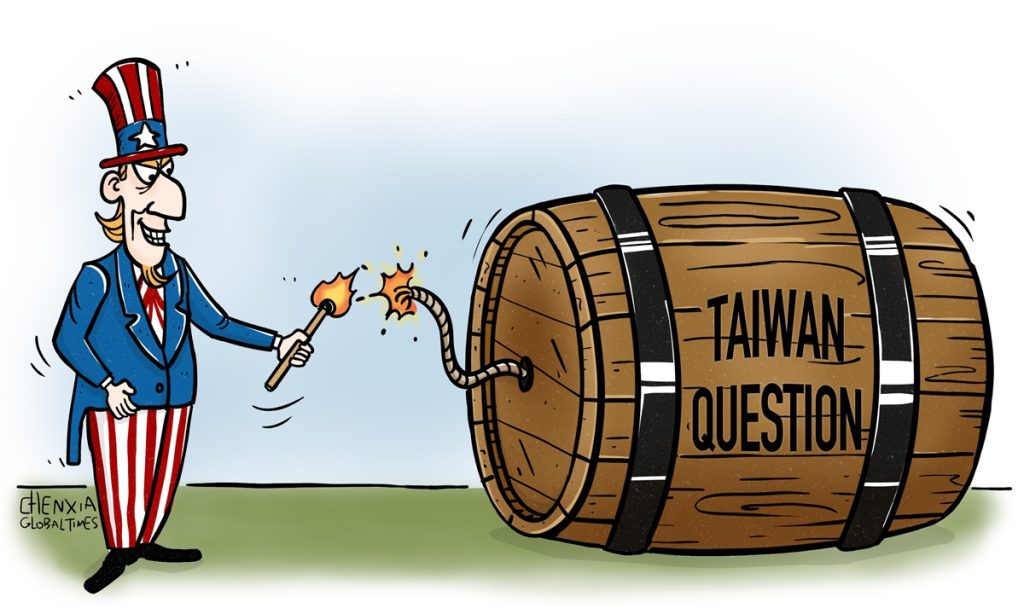
China's Foreign Ministry on Thursday urged the US to abide by the one-China principle, stop sending wrong signals to Taiwan secessionists, and refrain from interfering in the Taiwan's regional leader election in any form, after reports disclosed that the Biden administration will dispatch a delegation comprised of former senior officials to the island of Taiwan shortly after the island's regional leader election to be held on Saturday.
Chinese experts noted that the US' scheme would be destructive to China-US relations, and is highly likely to trigger countermeasures from the Chinese side, which has reiterated the core significance of the Taiwan question.
Citing people familiar with the plan, the Financial Times (FT) said in a Wednesday report that the White House has tapped James Steinberg, a former Democratic deputy secretary of state, and Stephen Hadley, a former Republican national security adviser, to lead the bipartisan delegation to Taiwan island.
The FT report said that the purpose of sending the delegation is to ensure Washington was "communicating clearly" with the winning and losing candidates about US policy and the "uniqueness of the unofficial relationship" between the US and Taiwan island.
The Associated Press (AP) said sending the delegation is the "most effective way" to engage the newly-elected authorities and convey US policy.
One senior administration official said that the delegation "will convey the importance of ties" between the US and Taiwan island and also reiterate Washington's "one-China policy," CNN reported, noting that exact composition of the delegation was still being determined, per senior administration officials it reached.
"Taiwan is an inalienable part of China. China always firmly opposes any form of official exchanges between the US and Taiwan authorities," Mao Ning, a Chinese Foreign Ministry spokesperson said.
The US side should earnestly abide by the one-China principle, prudently and properly handle the Taiwan question, stop sending any wrong signals to Taiwan secessionists, and refrain from interfering in the Taiwan regional elections in any form, so as to avoid causing serious damage to China-US relations and peace and stability across the Taiwan Straits, Mao said.
She added that China will take resolute and forceful measures to safeguard national sovereignty and territorial integrity.
Lü Xiang, an expert on US studies at the Chinese Academy of Social Sciences, told the Global Times that the US releasing such a message a few days before the Taiwan regional election is a move apparently aimed at appeasing secessionists on the island, and encouraging voters "not to be afraid to support secessionists."
US tricks cannot change the overall situation of the Chinese mainland seizing the initiative of the cross-Straits situation, Lü said, "China stays focused and will make all kinds of contingency plans. If the US crosses the red line, China will definitely take firm countermeasures."
Citing one former US official, the FT report noted that sending the delegation to Taipei right after the election was a "risky move that could backfire."
Diao Daming, an expert on US studies at the Renmin University of China in Beijing, told the Global Times on Thursday that disclosing the planning of the trip ahead of the Taiwan regional leader election may suggest that the US believes that whoever takes office can be used by the White House to implement the US' "Indo-Pacific" strategy.
"If secessionist Lai Ching-te is elected, it will carry out more risk management, and if KMT's Hou Yu-ih is elected, the US will hold him back from getting too close with the mainland," he explained.
But Washington should be aware that if there is any reaction from the Chinese side, it is the result of US actions, said Diao, "Instead of being concerned about the China's countermeasures, the US should follow through on its promise [on Taiwan question]."
The US move also came amid recent increased interactions between China and US to stabilize strained ties.
Liu Jianchao, head of the International Department of the Communist Party of China (CPC) Central Committee, visited the US this week, urging it to abide by its commitment to not support "Taiwan independence."
At the Carter Center Forum commemorating the 45th anniversary of the establishment of China-US diplomatic relations on Tuesday, Xie Feng, Chinese Ambassador to the US, reiterated that the Taiwan question is the most important and sensitive question in China-US relations.
China hopes to maintain stability in the Taiwan Straits and does not want to see a conflict between China and the US over the Taiwan question, but the premise is that the US cannot cross the red line, otherwise China will definitely respond in a "tit for tat" manner, Lü said
China's communication with the US on the Taiwan question is entirely a manifestation of goodwill,Lü said,"If one day China no longer talks about the Taiwan question with the US, it means that China does not consider Washington to be a factor, then the situation will be irreversible."
The latest COVID-19 variant JN.1 is spreading around the world, leading to growing concerns in Chinese society, following a recent severe wave of respiratory infections. Chinese experts estimate that the variant will cause more infections in the near future, but it is not likely to seriously worsen the current situation.
Named JN.1, this variant was first identified in Luxembourg, before spreading to the UK, Iceland, France, and the US.
By the end of October, JN.1 made up less than 0.1 percent of SARS-CoV-2 viruses circulating in the US. But as of December 8, 2023, the ratio climbed to 15-29 percent, according to the US Centers for Disease Control and Prevention (CDC).
The US estimated that COVID-19 infections are likely to increase in the next month.
Data in the UK also suggested that the variant is spreading more than every other known strain, making up one in 13 cases in England last month.
The JN.1 variant is part of the BA.2.86 variant of the SARS-CoV-2 virus, with an additional L455S mutation in the RBD region. Early studies have shown that BA.2.86 has similar immune escape capabilities as the XBB variants. However, recent research has found that the L455S mutation in the JN.1 variant further enhances its immune evasion ability, allowing it to partially escape the humoral immune response induced by XBB.1.5 breakthrough infections, Lu Hongzhou, head of the Third People's Hospital of Shenzhen, told the Global Times on Tuesday.
According to current research, BA.2.86, first identified in August 2023, carries more than 30 mutations in the spike (S) protein compared to the XBB and BA.2 variants, indicating high potential for immune evasion.
Another name of JN.1 is BA.2.86.1.1 and there is only a single change between JN.1 and BA.2.86 in the spike protein, according to current research.
A recent study by Japanese scientists published on bioRxiv on December 8 evaluated the virological characteristics of the omicron subvariant JN.1, which shows robust immune evasion ability compared to other variants. This could be due to the acquisition of the L455S mutation in the spike protein. The study noted that JN.1 has the ability to become a dominant variant worldwide in the future.
But so far, there is no evidence that JN.1 presents an increased risk to public health compared to other variants, according to the US CDC.
Currently, the XBB variant of COVID-19 is still the main strain of the local infections in China. Many clinical doctors told the media that they had witnessed an increase in COVID-19 infections recently and they predicted this wave of infections will last till late January 2024 with mortality and severe illness rates likely to increase.
"Since December last year, SARS-CoV-2 has been co-circulating with other respiratory pathogens in China, leading to many domestic residents in the country having experienced two or even three infections. Existing research data indicates that such infection experiences can generate strong and broad-spectrum neutralizing antibodies against different subvariants of Omicron. Furthermore, although JN.1 has increased immune escape ability, there is currently no evidence to suggest an increase in the pathogenicity of the JN.1 variant," Lu explained.
"Therefore, we speculate that the future prevalence of JN.1 in our country may temporarily increase the number of COVID-19 patients and burden hospitals, but it will not significantly worsen the ongoing respiratory disease outbreaks," he said.
Lu reiterated the necessity of vaccination as it is an effective method to improve the speed and intensity of antibody production, providing better protection for the body.
Authorities in multiple cities across China such as Shanghai and Tianjin have sent notices to advise local residents to take COVID-19 vaccines targeting the XBB variant, urging eligible individuals to get the vaccine in a timely manner to enhance their protection against the virus.
Train tickets for the first day of the upcoming New Year's Day holidays went on sale on Saturday, with some popular routes sold out within seconds, data from online travel platforms showed.
As of 10 am, multiple train services departing from Beijing to cities of Zhengzhou and Wuhan, from Nanjing to Hefei and Hangzhou, among others, were already sold out. Notably, tickets for several popular routes were sold out within seconds, Tongcheng Travel Holdings said in a statement it sent to the Global Times.
This year's New Year's Day holidays extends from December 30, 2023, to January 1, 2024.
According to an analysis by the Tongcheng Research Institute, the combination of family visits and tourism during the upcoming holidays, coupled with the popularity of "ice and snow" tourism, is expected to increase traffic on high-speed rail routes from cities such as Beijing, Shanghai, Hangzhou, Nanjing, and Zhengzhou to popular winter destinations including Harbin, Shenyang, Urumqi, and Hulun Buir.
Additionally, there is anticipated high demand for dedicated "ski trains" from Beijing to Zhangjiakou in North China's Hebei Province during the holiday period, Tongcheng said.
An earlier report released by Tongcheng showed that travel enthusiasm for the New Year's Day holidays has seen a year-on-year increase of 465 percent in the seven days leading up to Monday.
In addition, higher hotel booking volumes for the New Year's Eve were observed in cities like Harbin, Nanjing, Wuhan, Shanghai, and Beijing, travel platform Qunar said in a statement it sent to the Global Times on Saturday.
Over the past few days, many travelers have already begun making reservations for tickets through third-party platforms. As of Friday, the pre-booked travel orders for 2024 New Year's Day holidays' train tickets have shown a remarkable 194-percent year-on-year increase compared to the same period last year, according to data from the online travel agency Trip.com.
With the holidays approaching and the "ice and snow" tourism season gaining momentum, enthusiasm for travel remains unabated despite falling temperatures, promising to further stimulate consumption growth, experts said.
A Beijing resident surnamed Yao told the Global Times that he had booked tickets for his family to Harbin, Northeast China's Heilongjiang Province. The primary purpose is to visit his parents at home, and additionally, they plan to take their four-year-old son to the Harbin Ice-Snow World. He said that this would be his son's first visit to the theme park, with the entire family eagerly anticipating the trip.
Another Beijing-resident surnamed Fu said that she plans to go skiing in Zhangjiakou with her friends during the upcoming holiday. "Skiing, hot springs, and gourmet food will be the three main themes of our trip," Fu told the Global Times.
The New Year's Day holidays is a traditional golden season for consumption. Meanwhile, it is the first complete winter consumption season after the pandemic, and it is expected to extend retail spending momentum of consumption in the year, driving a spike in winter-themed spending, Zhang Yi, CEO of iiMedia Research Institute, told the Global Times on Saturday.
Per data released by the National Bureau of Statistics (NBS) on Friday, the service industry experienced rapid growth in November, as year-on-year growth of the national service industry production index came in at 9.3 percent, accelerating 1.6 percentage points compared to the previous month.
Breaking down by industry, the production index of the accommodation and catering industry increased by 30.6 percent year-on-year, showing a 9.3 percentage point acceleration compared to the previous month.
Total retail sales of consumer goods reached 4.25 trillion yuan in the month, representing a year-on-year growth of 10.1 percent, accelerating by 2.5 percentage points compared to October, NBS data showed.
In recent years, the "ice and snow" consumption season has been rapidly growing across China, especially in the northern regions. It typically kicks off in winter and extends through to the following spring, Zhang said.
China's "ice and snow" consumption market has now developed a relatively complete consumer ecosystem, including tourism, sports, related equipment, and culture, he said, noting that compared to summer consumption, the development of "ice and snow" consumption has only recently gained steam but it possesses strong potential for future growth.
South Korean soccer star Son Heung-min's goal celebration in their 3-0 away win over China on Tuesday aroused controversy on Chinese social media.
Chinese team was defeated by South Korea in their second group match of the second stage of 2026 World Cup Asian Zone qualifiers held in Shenzhen, South China's Guangdong Province.
Spurs star Son, who captains South Korean national team, bagged a first half brace before setting up teammate Jung Seung-hyun to add a third, putting South Korea on top of the group and in pole position to a secure spot at the 2026 World Cup.
However, Son's goal celebration caused uproars on Chinese social media with fans saying his gesture is highly disrespectful to the crowd.
Playing in front of a sell-out crowd of more than 40,000 in Shenzhen, Son opened the scoring with a penalty on the 11th minute. In celebration, the man of the match rushed close to the stand and made a gesture of shushing to the Chinese fans. The gesture was met with jeers from the crowd.
Chinese strikers Wu Lei and Tan Long immediately went to argue with Son on the pitch over his provoking gesture.
"We need to respond to Son's disrespectful gesture by scoring and winning the match," said one user on China's Twitter-like platform Sina Weibo.
"It was a really difficult game today and obviously coming to China, it's a great experience and they have amazing fans," said Son after the match.
Having defeated Thailand 2-1 in the first match, China now stands third in Group C, level on points with the second-placed Thailand.
The top two teams from the nine groups progress to the third qualifying stage for the 2026 World Cup in North America.
The first leg of the 8th EU-China Literary Festival took place at the Xi Yue Tang Library, Cultural, and Creative Park in Beijing, on Tuesday, to further deepen contemporary literary dialogue between China and Europe.
With the theme "Voices of the Present: Contemporary Literature," and an emphasis on the diversity of the contemporary literary landscape, the festival aims to depict the perspectives and cultural nuances of contemporary European writers.
Renowned Greek author Amanda Michalopoulou, participated in the 8th EU-China Literature Festival along with well-known Chinese writer Sheng Keyi. Together they engaged in a literary dialogue, on issues related to "Identity and Belonging" in contemporary European literature. Diplomats from the Greek Embassy attended the event.
Michalopoulou also discussed "Gender and Sexuality" with the Chinese writer and literary critic Wang Hongtu on Thursday at Shanghai's Fandeng Bookstore - C·PARK.
Aside from the writer dialogue, people have the opportunity to enjoy reading Greek books and participate in the "European literature reading corners" in six well-known bookstores throughout the country in cities such as Beijing, Shanghai, Chengdu, and Guangzhou, in a series of events that promoted cultural and literary exchanges between China, Greece, and Europe.
The reading corners activity runs until November 30.
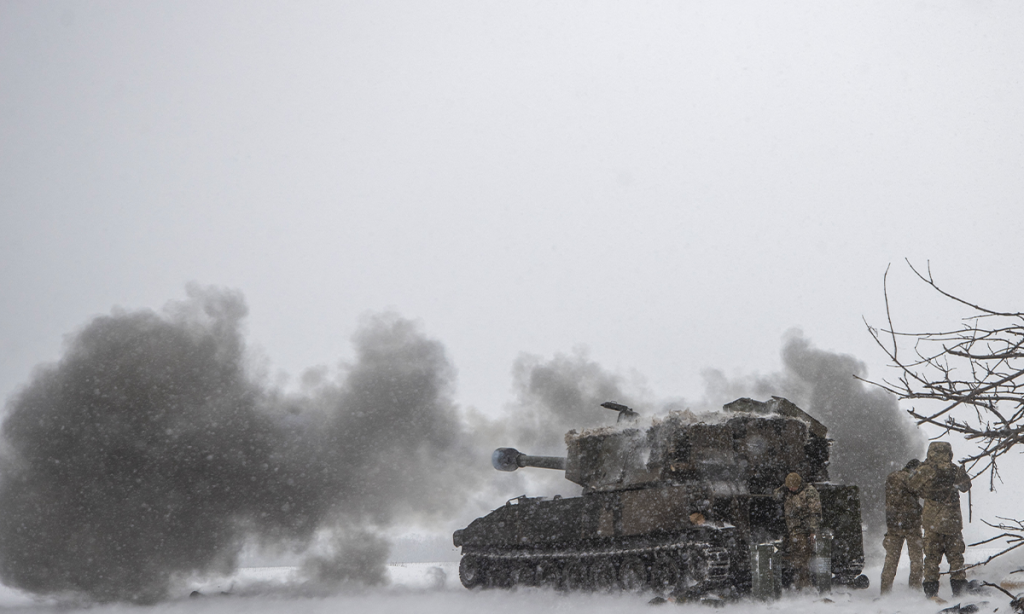
The Biden administration's approval of the transferring of cluster munitions to Ukraine has sparked widespread criticism and worry. While the bombs, along with the numerous deadly weapons the US and its Western allies have provided to Ukraine, put civilians and children there in grave danger, their manufacturers are probably busy counting money they've made from the Russia-Ukraine crisis while hoping that the conflict doesn't end any time soon.
War is "good for business," a recruiter for BlackRock told the O'Keefe Media Group in June, acknowledging how such turmoil can create opportunities for profit. BlackRock is one of the world's largest asset management company and holds shares in several defense industry enterprises.
The recruiter's words exposed the fact that Ukraine has unfortunately become a gold mine for the US military-industrial complex (MIC). Having seldom bought weapons abroad before the crisis, Ukraine became the world's third biggest arms importer in 2022, ranking fifth among the US' main arms export destinations, according to data from Statista.
It's hard to know exactly know how much money have flowed from the Ukraine frontline into the pockets of US weapon manufacturers. But the Global Times found that most of the MIC giants in the US have enjoyed an income surge or (and) market value increase amid the Russia-Ukraine conflict.
The US is the biggest beneficiary of the conflict. By utilizing proxy war between Russia and Ukraine, the US continues to consolidate its geopolitical interests in Ukraine, and its military industrial enterprises make huge profits by selling weapons, said Yuan Zheng, a research fellow and deputy director of the Institute of American Studies at Chinese the Academy of Social Sciences.
"The US doesn't seem to mind the weapons bringing great loss and safety hazards to Ukraine and the rest of the world," Yuan told the Global Times.
A fruitful year
The US used to have dozens of defense contractors before the post-Cold War merger boom. Nowadays, there are only five MIC giants that jointly dominate the US' huge arms industry - Boeing, General Dynamics, Lockheed Martin, Northrop Grumman, and Raytheon.
The "Big Five" alone routinely split more than $150 billion in Pentagon contracts annually, or nearly 20 percent of the total Pentagon budget, said an article published by The Nation in May.
Ongoing Russia-Ukraine crisis has brought the "Big Five" even more contracts. Lockheed Martin, for instance, won a $4.8 billion deal from the US Army for Guided Multiple Launch Rocket Systems, which "the US has sent in large numbers to Ukraine," reported Defense News in April.
Previously, the US Army had awarded Raytheon Missiles and Defense a contract worth "as much as $1.2 billion" to "deliver six National Advanced Surface to Air Missile System batteries for Ukraine," Defense News said in December 2022. In the same month, website Defense One quoted Greg Hayes, CEO of RTX (Raytheon), as saying that the company expected some $2.5 billion in replenishment weapons deals "over the next 12 months."
The disastrous year of 2022 was a fruitful one for the US MIC. Except for Boeing's market value shrinking because of its alleged "supply chain problems," the other four companies in the "Big Five" all increased by more than $10 billion in annual market value - Northrop Grumman added $16.4 billion, Lockheed Martin $16 billion, Raytheon Technologies $14.8 billion, and General Dynamics $10.8 billion, the Global Times found.
Except Boeing, the four aforementioned giants enjoyed good stock market performance in 2022. The share prices of Northrop Grumman, General Dynamics, Lockheed Martin, and Raytheon Technologies respectively grew by 37 percent, 26 percent, 24 percent, and 17 percent in that year.
The future looks promising as well for the US MIC, as the US House and Senate recently approved the 2024 National Defense Authorization Act, which earmarked a record $886 billion in spending. Some media sources predicted that almost half of the money will go to the arms manufacturers, so that the US government can "sustain its military advantage over China" and pay constant attention to the Russia-Ukraine crisis.
The Russia-Ukraine crisis is "a huge profit center for the big companies: Lockheed Martin and Raytheon and Boeing," says William Hartung, a senior research fellow at the Quincy Institute for Responsible Statecraft (Quincy Institute), where he focuses on the global arms trade and Pentagon spending. "At the moment, I think they're riding the wave," he told nonprofit news organization Analyst News in May.
Lobbying for profits
The US MIC continues to profiteer from the Russia-Ukraine conflict as it heads into its second year. The country's weapons and defense contractors reportedly received nearly half - $400 billion - of the $858 billion earmarked in the 2023 defense budget.
It's not a secret that to put more money into its pockets, US arms industry has maintained deep connections with the country's government officials and opinion leaders through several ways, such as funding lobbyists and think tanks and hiring former government officials through the "revolving door" of the government lobby industry.
Through various lobbying measures, the US weapons industry has acquired more "tools of influence" over the government, the Analyst News quoted Hartung as saying.
An interesting phenomenon that's emerged during the conflict is that some famous lobbying companies are representing Ukraine pro bono, pushing for greater US military support for the Ukrainian military.
Behind their so-called humanitarian care excuses for "aiding" Ukraine are some lobbying firms with obvious financial incentives - they also have arms manufacturers as clients.
In an article published in The Guardian titled They're lobbying for Ukraine pro bono - and making millions from arms firms, the authors mentioned a lobbying and communications firm called BGR Government Affairs (BGR), which started working pro bono for Ukrainian in May 2022. And earlier in February, a BGR adviser was publicly calling for increased military aid to Ukraine in the face of Russia's recognition of the Luhansk and Donetsk People's Republics as independent states.
A probable main reason behind BGR's enthusiasm is that lobbying for increased military aid to Ukraine benefits its arms manufacturing clients, which will eventually be beneficial to BGR itself. Raytheon, for instance, paid BGR $240,000 to lobby on its behalf in 2022, according to The New York Times.
Driven by private interests, there has been a surge in pro-bono Ukraine lobbying since the conflict erupted. Media sources reported that 25 foreign lobbying and consultant companies have agreed to represent Ukrainian interests pro bono. The number was only 11 before the crisis.
Funding think tanks is another method by which the US MIC amplifies its voice. A report released by the Quincy Institute in June found that of the 27 think tanks in the US whose donors could be identified, 21 received funding from the defense industry, accounting for 77 percent of all funding.
The Quincy Institute report also found that US media outlets "disproportionately rely on" commentary from the defense sector funded think tanks. It said that in articles related to the US military's involvement in Ukraine, media outlets have cited these think tanks seven times as think tanks "that do not accept funding from Pentagon contractors."
The "revolving door" mechanism also has a hand in the flow of high-level employees from the defense departments of the US government to the private arms contractors and vice versa.
The perpetually spinning "revolving door" provides current members of Congress, their staff, and Pentagon personnel with a powerful incentive to play nice with said giant contractors while still in government, said The Nation. "After all, a lucrative lobbying career awaits once they leave government service," it noted.
Nearly 700 former high-ranking government officials in the US now work for defense contractors, including former generals and admirals, revealed a report released by the office of Senator Elizabeth Warren in April. Boeing, Raytheon, and General Electric respectively hired 85, 64, and 60 former government officials as their high-ranking executives or lobbyists, according to the report. World security risk
The US' continued transfer of weapons to Ukraine favors the Zelensky and Biden governments as well as the US MIC. Nonetheless, the steady flow of numerous deadly weapons and AI-tech equipment and systems into Ukraine, may pose a serious threat to the security and privacy of Ukrainian people in the long term, military experts warned.
At least 38 human rights organizations have publicly opposed the transfer of cluster munitions to Ukraine, where the weapons have already been used in the conflict with Russia to devastating effect, reported US media.
Cluster bombs are banned by more than 100 countries for the huge security risk they may bring in the long run. "Cluster bombs remain as explosive hazards for decades, and are likely to cause more innocent casualties in the future," Yuan told the Global Times. "Russia and Ukraine may have to face the troubles of the bombs for long."
Moreover, with an increasing number of weapons being sent to Ukraine, people found that many of the weapons have trickled into the local black market, said Yuan.
"That will be bring great uncertainty to the security of Ukraine and even the whole world, as no one can't guarantee that the weapons won't fall into the wrong hands," he noted.
Sadly, with the "geopolitical tension" hype from numerous lobbyists, think tanks, and the media, the US military departments and industry jointly keep pouring oil on the flames of the ongoing Russia-Ukraine conflict. And they will continue to increase tensions on the international stage and demonize "rivals" like Russia and China, so as to secure higher military profits, said some international relations observers reached by the Global Times.
The size of the US military and its arsenal are beyond what are needed to keep any country safe and maintain world peace, said Zhang Jiadong, a professor at the Center for American Studies at Fudan University.
The great importance the US attaches to the military industry will unfortunately lead to an even more intense arms race, and destabilize the already fragile relations between the great powers, Zhang said. "That puts world peace and stability at risk," he told the Global Times.