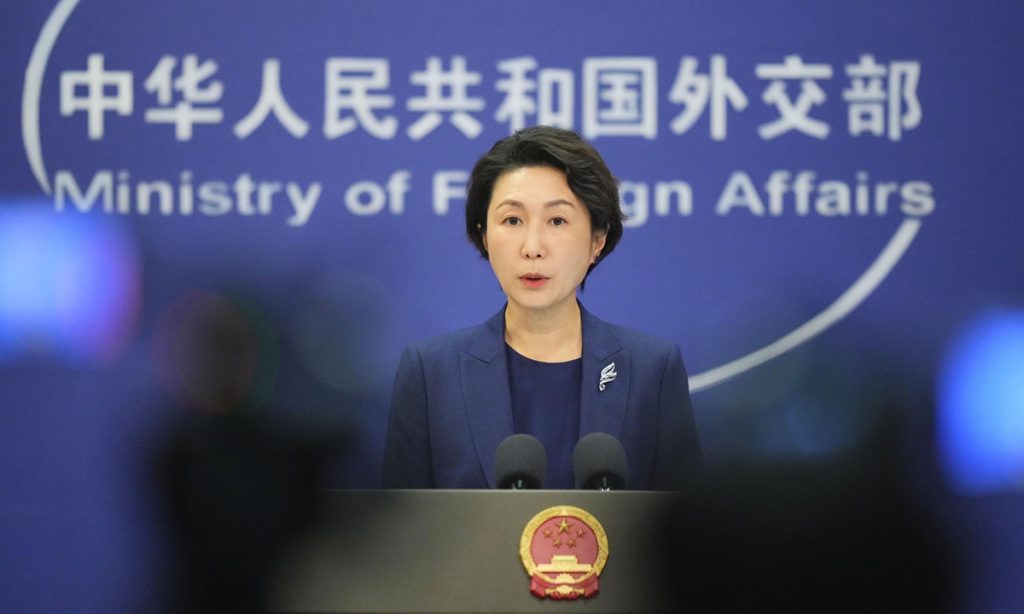
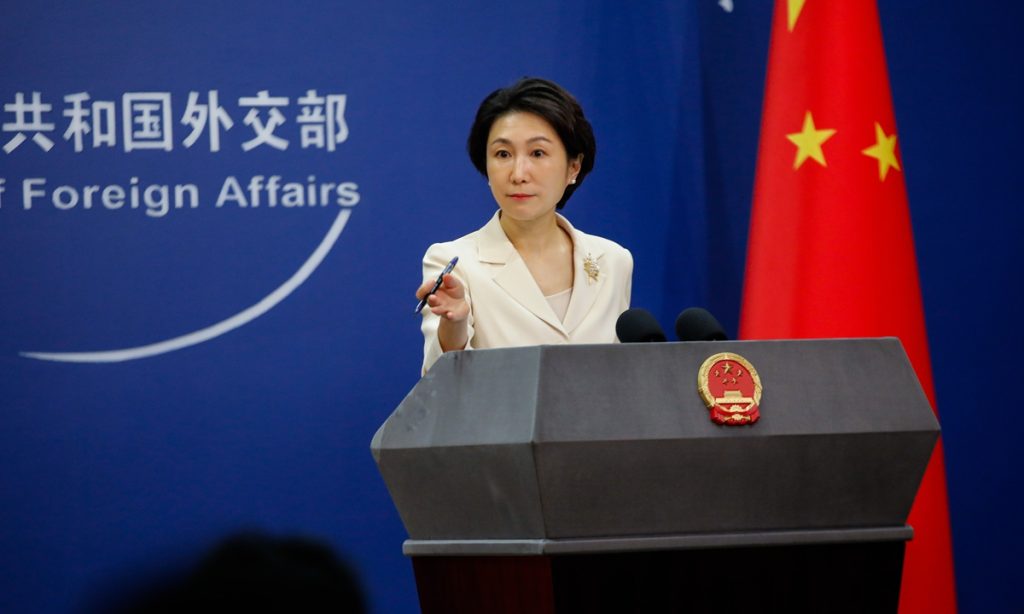
Huangyan Dao is China's inherent territory, and China has indisputable sovereignty over Huangyan Dao and its adjacent waters. Any activity China carries out on and around Huangyan Dao, including scientific research, falls within the legitimate rights of a sovereign state, Mao Ning, a spokesperson for Chinese Foreign Ministry, said at a regular press conference on Friday, when asked if China could provide more information on reports claiming satellite images showed the presence of a structure on Huangyan Dao, though later imagery suggests it is no longer there.
Chinese Vice President Han Zheng on Friday attended a plenary session of the 29th St. Petersburg International Economic Forum and delivered a speech on implementing the Global Governance Initiative and jointly working for a better future.
In his address, Han noted that momentous changes unseen in a century are accelerating across the world, and global challenges and governance deficits are becoming more prominent. The China-proposed Global Governance Initiative has won positive responses and support from nearly 160 countries and international organizations, he added.
The Group of Friends of Global Governance was established at the United Nations, sending a unified message for safeguarding the purposes and principles of the UN Charter, upholding genuine multilateralism and opposing unilateralism, Han said.
As the initiator of the Global Governance Initiative, China has delivered on its commitments with concrete actions to rally all parties and jointly advance the reform and improvement of the global governance system, Han noted.
As major countries and permanent members of the UN Security Council, China and Russia shoulder important responsibilities in the transformation of the global governance system, Han said.
He added that China stands ready to cooperate with Russia and all other sides to advance the implementation of the Global Governance Initiative and build an open, inclusive, equitable and just world of win-win cooperation.
Han put forward four proposals for advancing the Global Governance Initiative:
First, uphold equal cooperation and advocate a vision of global governance featuring extensive consultation, joint contribution and shared benefits. It is imperative to pursue genuine multilateralism, secure equal participation, decision-making and benefit-sharing for all countries in global governance, resolutely promote the democratization of international relations and raise the representation and voice of developing nations.
Second, stay committed to international fairness and justice and preserve the status and authority of the UN. All countries should safeguard international equity based on universally applicable international laws and regulations, oppose double standards and selective enforcement of laws, and back the UN in revitalizing its authority and vitality under new circumstances so it can serve as the primary platform for countries to coordinate actions and jointly tackle common challenges.
Third, boost common development to deliver greater gains for people across the globe. With the aim of improving well-being for all, countries should fully implement the UN 2030 Agenda for Sustainable Development to advance shared development and prosperity worldwide.
Fourth, strengthen coordinated actions to deliver more tangible outcomes. Countries, international organizations and multilateral institutions need to align development strategies and coordinate policies in a well-planned manner to create synergies in addressing global challenges and advancing shared development.
Han said this year is the first year of China's 15th Five-Year Plan. The plan charts an inspiring blueprint for China's development over the next five years and embodies China's aspiration for win-win cooperation with all nations across the world.
China is prepared to work alongside all sides to fully implement the Global Governance Initiative, build a global governance system that is more just and equitable, and jointly create a brighter future for humanity, Han said.
On the sidelines of the forum, Han also held brief exchanges with Uzbek President Shavkat Mirziyoyev, and Tanzanian President Samia Suluhu Hassan.
In pursuit of selfish political interests, the Taiwan regional Democratic Progressive Party (DPP) authorities have gone so far as to sell out the overall interests of the Chinese nation, betray their ancestry and abandon all bottom lines. This once again exposes that "Taiwan independence" forces have completely lost their national standpoint and degenerated into out-and-out scum of the nation. They will surely be spurned by compatriots on both sides of the Taiwan Straits and reckoned by history, Chinese Foreign Ministry spokesperson Mao Ning said on Tuesday.
Mao made the remarks when asked to comment that on May 31, in response to the Foreign Ministry spokesperson's earlier response on Japan and the Philippines announcing the launch of so-called maritime delimitation talks, the Taiwan regional authorities' so-called "external affairs" department issued comments expressing approval of the move by Japan and the Philippines and questioning the mainland's sovereign rights in the relevant waters.
Mao said that China has already stated its position on Japan and the Philippines' announcement of the launch of maritime delimitation talks. I would like to reiterate that the area the two countries announced they will delimit is east of China's Taiwan island. According to China's domestic law and international law including UNCLOS, China has exclusive economic zone and continental shelf in this area.
Under the UNCLOS, the delimitation of the exclusive economic zone and continental shelf between states with opposite or adjacent coasts shall be effected by agreement on the basis of the principle of equity.
Any delimitation talks involving waters east of Taiwan island must include Chinese side's participation. Japan and the Philippines' launch of so-called maritime delimitation talks while bypassing China seriously violates international law, including the UNCLOS, and the basic norms governing international relations, and seriously infringes on China's maritime rights and interests. China will never allow this, Mao said.
Both sides of the Taiwan Straits belong to one China. Safeguarding national territorial sovereignty and maritime rights and interests is the common responsibility of all Chinese people on both sides of the Straits, said Mao.
The planning of large-scale scientific facilities and basic research requires long-term perspective and more investment, said Wang Yifang, director of the Institute of High Energy Physics (IHEP) of Chinese Academy of Sciences (CAS), who is also a deputy to the 14th National People's Congress.
China has made remarkable achievements in the construction of large-scale scientific facilities after decades of development. If all projects planned in the 14th Five-Year Plan (2021-2025) are completed, China will have approximately 70 large scientific facilities, a number comparable to that of the US, Wang told the Global Times.
However, there is still a significant gap in terms of the investment scale for individual facility and the total investment scale compared to the US. Currently, China still lacks internationally leading specialized large scientific facilities, especially in the fields of particle physics, nuclear physics, and astronomy, he stressed.
"This puts us at a disadvantage compared to some other countries in certain areas, such as astronomical telescopes and particle accelerators. Therefore, I believe that in the future, we should focus on improving the quality of development rather than increasing the quantity of large scientific facilities in order to compete directly with advanced countries and strive to surpass them," Wang said.
"Without large scientific facilities, basic research would be just an idea on paper. We mustn't always be a recipient of knowledge, but should grow into a provider of knowledge and leader in global basic research," Wang said.
China has been paying more attention to strengthening basic research, as it is not only a cornerstone for achieving greater self-reliance and strength in science and technology, but the foundation for solving many bottleneck technologies. In the face of fierce international scientific and technological competition, Wang stressed that increasing funding for basic scientific research is a priority.
According to data from the National Bureau of Statistics, in 2022, the country's investment in basic research accounted for 6.57 percent of total research and development (R&D) spending, while the goal according to the 14th Five-Year Plan is 8 percent by 2025, which Wang said requires more efforts to realize.
Wang called for long-term perspective when planning research investment, looking ahead to the situation in 10, 15, or even 20 years.
Taking the construction of China's Circular Electron-Positron Collider (CEPC) as an example, we have to be clear that the construction period for the CEPC is 10 years. If we do not start now, China will lag behind others in this field in 10 years' time, Wang said. A window to new physical world
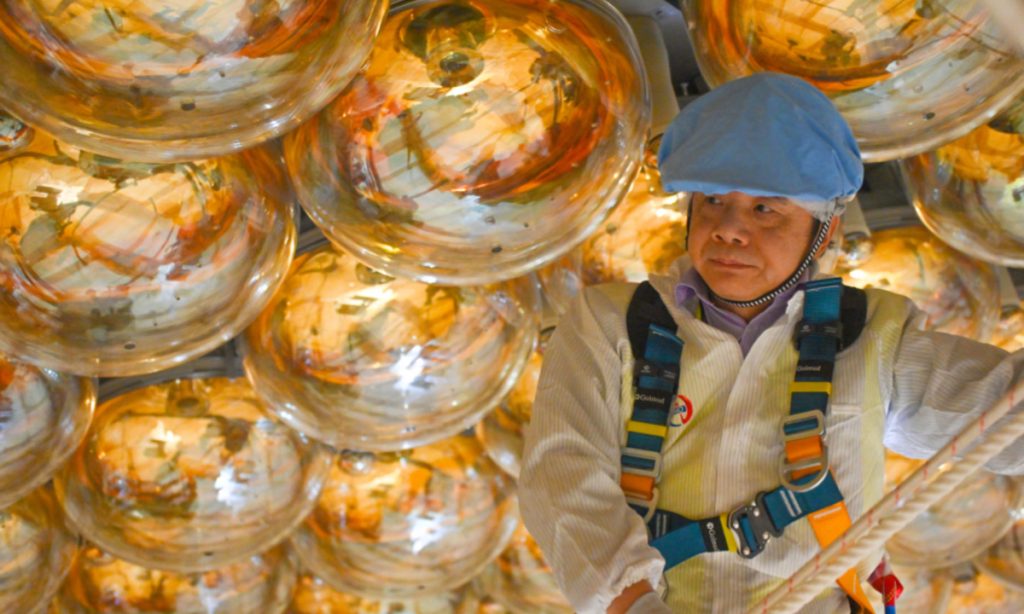
The CEPC is a large international scientific facility proposed by the Chinese particle physics community in 2012. The project, to be hosted in China in a circular underground tunnel of approximately 100 kilometers in circumference, is a double-ring collider with electron and positron beams circulated in opposite directions in separate beam pipes, and the detectors are installed at two interaction points, according to the CAS.
The CEPC's "Technical Design Report" has gone through international review and was officially published in December, 2023. Being able to independently design such a large scientific facility demonstrates Chinese scientists' capabilities, according to Wang.
In the next step, the scientists will proceed with the engineering design and integrate the completed components, according to Wang. "We have completed the construction of a single prototype, and the next step is to figure out how to mass-produce individual products. In addition, we will continue to conduct in-depth research on some key technical details to ensure that our facility achieves optimal performance and cost-effectiveness."
It will take about three more years before the CEPC can begin actual construction, with the entire construction period lasting approximately 10 years, Wang noted.
The location for the CEPC has not yet been decided, according to Wang. "The ideal construction site should meet the following conditions: first, geological conditions, the CEPC should be built on intact and solid underground rock. Second, the construction site of the CEPC should consider factors such as transportation conditions, humanistic environment and educational environment, as the CEPC will serve as an international research base in the future, it should have an open environment that attracts talents from various countries and regions to work there," Wang explained.
The CEPC project will reportedly cost 36 billion yuan ($4.9 billion) and will have a circumference of 100 kilometers, with center-mass energy of up to 240 giga electron-volts, both setting a world record.
The goal of the CEPC is to build a high-luminosity Higgs factory. The existing standard model of physics is imperfect and has many inconsistencies, we need to find the fundamental reasons for them and Higgs is believed by global physicists to be the best window to find these loopholes, Wang explained.
In terms of controversies over the project, Wang responded that "in terms of science, I think we have made relevant issues very clear; in terms of techniques, we have proven through a large amount of experimental data, prototypes and the high-energy synchrotron radiation light source we are building in Huairou, that we have the ability to design and construct such a large scientific facility."
As to the cost, Wang stressed that CEPC is a facility to be used by the whole community of high-energy physics. There will be thousands of scientists working for decades. Considering this, the average investment per scientist per year would be far from being high. "Thousands of high-energy physicists are willing to invest all their energy, funds and time in a single facility, the average cost will not be higher than that of other research fields," he said. 'It relies on human intelligence to drive scientific progress'
In recent years, the rapid development of artificial intelligence (AI) technologies and products have created a stir around the world, especially after the release of the up-to-one-minute-long realistic videos created by the text-to-video AI generator Sora in early February.
According to OpenAI's explainer, Sora is capable of generating complex scenes with accurate details, including multiple characters, specific types of movements, themes and backgrounds. It understands not only what the user requests in the prompts, but also how these things exist in the physical world.
In fact, there has been a long-existing debate over whether AI can really understand - rather than imitate - physical laws and whether they can help discover new laws.
As a top physicist in China, Wang said it may be difficult for AI to break this barrier.
The most fundamental cornerstone of AI technology is the ability to predict the future to some extent through learning, but this so-called prediction is linear and based on existing knowledge. However, physics rules, especially new discoveries and concepts, are not simple extension of existing knowledge and data, Wang said.
After all it still requires scientific research and human intelligence to drive scientific progress, Wang said.
Chinese President Xi Jinping and French President Emmanuel Macron had an in-depth engagement during a restricted meeting at Col du Tourmalet in the Pyrenees mountains in southwestern France, an area dear to Macron for being the birthplace of his maternal grandmother. The special arrangement allowed the two leaders to establish a more direct dialogue in a personal and friendly atmosphere.
Holding a meeting in the tranquil southern French mountains is also viewed a continuation of the pleasant memory when Xi and Macron held an informal talk in April 2023 in Guangzhou, the capital of South China's Guangdong Province. At that time, the two leaders listened to a live performance of the ancient Chinese music piece "High Mountains and Flowing Water" in the Pine Garden, which represents cherished friendship in Chinese culture.
Besides France, there are also many representative buildings and sites in Serbia and Hungary that have witnessed and serve as testimonies to their friendship with China.
After Xi embarked on a state visit to France, Serbia, and Hungary on May 5 - his first overseas trip of the year - these significant locations have once again captured people's attention.
The former site of the Lyon Sino-French Institute is located on a hill in Fourvière in the city of Lyon, France. After 100 years of wind and rain, the towering stone gate at the old site still bears a clear inscription of the institute's name in both Chinese and French.
The only overseas university that China founded in modern times, the Lyon Sino-French Institute was established in July 1921. It trained many Chinese who later became crucial leaders in the founding of the People's Republic of China (PRC), including Zhou Enlai and Deng Xiaoping. Since its resumption in the 1980s, the institute has continued to educate various talents for China's reform and opening-up.
During his first visit to France in March 2014, President Xi visited the Charles de Gaulle Foundation in Paris. He visited the office of General Charles de Gaulle, laid a wreath at his bronze statue and wrote "Paying Tribute to the Great Man and Composing a New Chapter in Chinese and French History" in the guest book.
In Serbia's capital Belgrade, people are easily captivated by a unique modern building - the China Cultural Center - that looks like a beautiful ancient Chinese landscape painting drawn along the banks of the Danube River.
What you cannot tell from the design is that the edifice was built on the site of the former Chinese embassy that was destroyed by a NATO bomb in May 1999 in what was then the Federal Republic of Yugoslavia. This special history makes the center not only an important bridge and bond for cultural exchanges between the two countries, but also a seal of approval for the ironclad friendship between China and Serbia amid the development of the times.
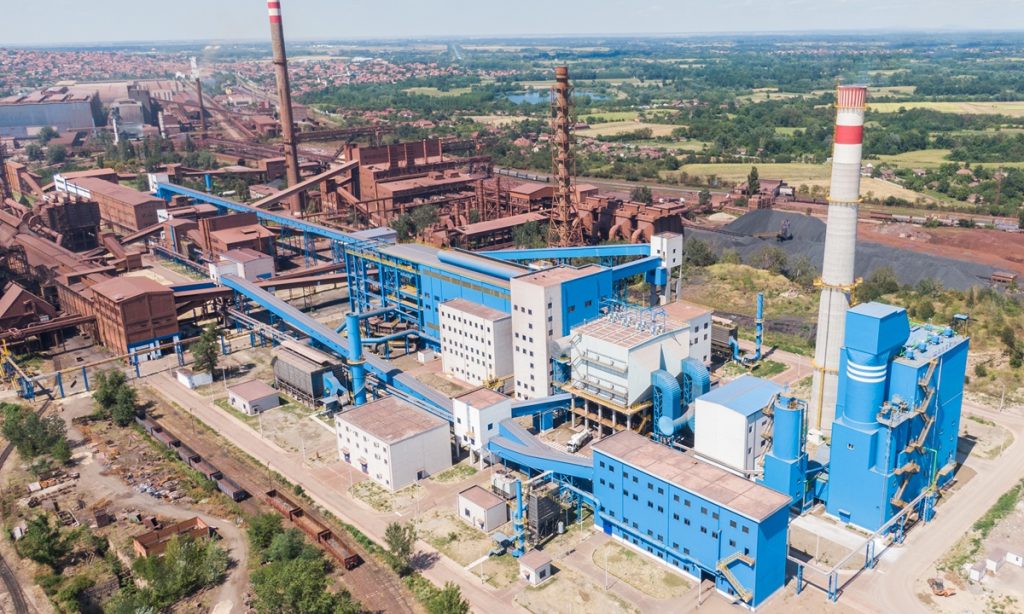
At the hot mill at HBIS Smederevo steel plant, or Hesteel Serbia, Nenad Cvetanovic and his colleagues were thrilled to get a reply letter from Xi at the end of April, a few days before the Chinese president's second state visit to Serbia after eight years.
Established in 1913, the steel plant used to be a pillar of former Yugoslavia's metal industry, but was on the verge of closure in the 1990s. It struggled for about two decades until China's Hesteel Group purchased it in 2016. President Xi made a trip to the steel plant in June 2016 and interacted with workers in the dining room, encouraging them to work hard to bring benefits to local residents.
In Budapest, the capital of Hungary that is dubbed the "Pearl of the Danube," nine unique bridges connect Buda and Pest across the river, enhancing the accessibility and charm of the city.
With a total length of 341.7 kilometers, the Hungary-Serbia railway, a flagship project of the China-proposed Belt and Road Initiative, is now bridging Budapest and Belgrade closer together, injecting new impetus into the economies of the two countries.
The special significance of bridges was also noted by President Xi during his first visit to Europe. "A bridge not only makes life more convenient, it can also be a symbol of communication, understanding and friendship," Xi said.
With President Xi's visit, the friendship between China and Europe is also warming up again. People on both sides hope that this visit will build more bridges of friendship and cooperation between China and France, Serbia and Hungary, and even the whole of Europe.
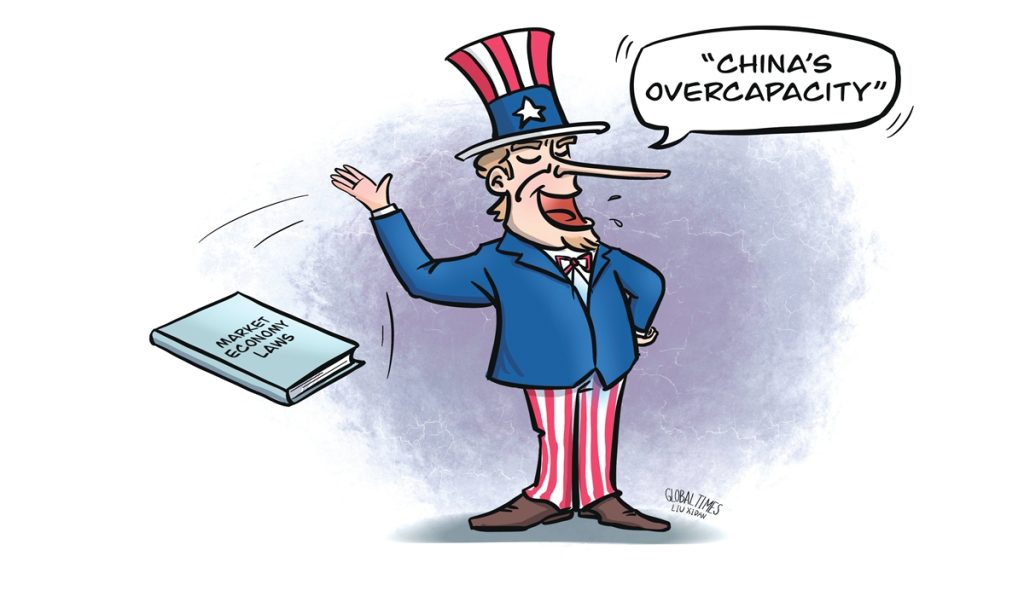
Recently, the West has been unreasonably hyping up the false narrative of "overcapacity" in China. Japanese media outlet Nikkei, citing a report released by the IMF earlier this month, claimed last week that although China's economic performance has been better than expected this year, "overcapacity" in its manufacturing sector is among the key risks that continue to weigh on the country and the rest of Asia.
Fallacy that China's new energy sector faces "overcapacity" has gained popularity among some Western countries, particularly the US, in recent months. Yet, whether or not China has excess capacity should be determined by economic rules and facts, not political agenda led by the US.
The current global distribution of production capacity is a result of the combined effects of industrialization and market-based economic activities over the past few decades. Cooperation based on comparative advantages is crucial for optimizing the resource allocation of global factors, also an important approach for improving productivity and well-being among countries.
From the perspective of economic principles, equating fluctuations in supply and demand with excess capacity goes against the normal rules of the market economy and actually works counter to the rationality of international division of labor and economic globalization. If a country with supply exceeding demand is recklessly considered to have excess capacity, then all export economies in the world, not only China but also the US, have overcapacity issues in terms of their exported products.
In this sense, the narrative of "overcapacity" and criticisms of industrial subsidies are merely rhetoric fabricated by the US to hinder China's competitiveness.
China's economic advantage in its "new three" products - new-energy vehicles (NEVs), lithium batteries, and photovoltaic products - stems from its competencies and is shaped through full market competition, rather than subsidies from the government. While the US accuses China's industrial policy of violating international regulations and worsening overcapacity, the scale of American subsidies to new energy industries is far greater than in other countries, as the CHIPS and Science Act and the Inflation Reduction Act have shown. For example, the detailed rules of the Inflation Reduction Act stipulate that only electric vehicles assembled in North America are eligible for a maximum subsidy of $7,500 through federal tax deductions, which is a blatantly discriminatory subsidy law.
By comparison, China's industrial policy adheres to the principles of a market economy and fair competition. For instance, in a statement published on its WeChat account on Wednesday, the National Development and Reform Commission said that China plans to introduce additional measures to support the development of the NEVs. These measures include fostering industrial innovation through scientific and technological advancements, encouraging enterprises to increase investment in research and development, and facilitating the optimization and restructuring of the new energy vehicle industry. Moreover, China will remove all restrictions on foreign investment in manufacturing, inviting global auto companies to participate in the Chinese market and industrial chain to benefit from the advancements in new energy vehicle technology.
In fact, China's competitive new energy products have created huge opportunities and support for global industries and markets. Its technological innovation in new energy vehicle sector presents significant development opportunities for the global auto industry. Also, China is the only country in the world that has all the industrial categories listed in the United Nations industrial classification system, including 41 industrial categories, 191 medium categories and 525 subcategories. Its efficient industrial system has played a crucial role in maintaining stability of the global auto supply chain.
Furthermore, China is a major driving force behind the world's rapid expansion of renewable power generation capacity. China's installed capacity of renewable energy exceeded 1.45 billion kilowatts in 2023, accounting for more than 50 percent of the country's total installed power generation capacity, according to data released by the National Energy Administration. Power generated from renewable energy sources such as wind and solar power now accounts for more than 15 percent of China's total electricity consumption.
China has always been committed to promoting high-level opening-up and offering opportunities for market access to other countries, with the aim of achieving mutually beneficial results. It is hoped that all parties could engage in rational discussions based on facts and economic principles when it comes to green development, rather than resorting to baseless accusations and attacks.
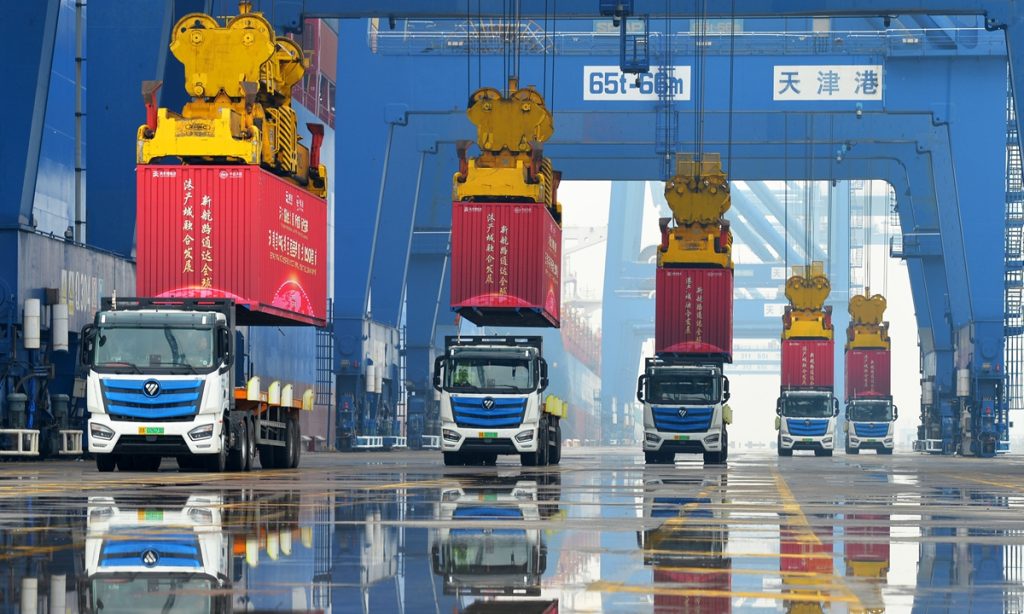
China's trade in goods in the first fourth months of 2024 recorded an increase of 5.7 percent year-on-year to reach 13.81 trillion yuan ($1.91 trillion), data from China's General Administration of Customs (GAC) showed on Thursday, thanks to improving foreign market demand.
Total goods exports recorded year-on-year growth of 4.9 percent to hit 7.81 trillion yuan from January to April, while imports increased by 6.8 percent to reach 6 trillion yuan, the administration said.
Notably, in April alone, China's imports and exports reached 3.64 trillion yuan, rising 8 percent year-on-year. In breakdown, exports stood at 2.08 trillion yuan with a year-on-year growth of 5.1 percent, while imports surged by 12.2 percent year-on-year to reach 1.56 trillion yuan.
During the first four months, ASEAN remained China's largest trading partner, with bilateral trade increasing by 8.5 percent year-on-year to hit 2.18 trillion yuan, accounting 15.85 percent of China's total foreign trade.
The EU and the US were China's second and third largest trading partners. China's imports and exports with the EU decreased 1.8 percent to 1.75 trillion yuan, while trade with the US increased by 1.1 percent to reach 1.47 trillion yuan. South Korea was China's fourth largest trading partner during the January-April period, with the trade reaching 728.7 billion yuan, up 5.5 percent year-on-year.
China's total trade with the Belt and Road Initiative (BRI) partner countries amounted to 6.54 trillion yuan with a yearly increase of 6.4 percent, of which, exports increased by 6.7 percent year-on-year to reach 3.64 trillion yuan, while the imports grew by 6 percent to 2.9 trillion yuan.
Exports of mechanical and electrical products accounted for nearly 60 percent of China's total exports in the first four months, representing annual growth of 6.9 percent to 4.62 trillion yuan. The exports of automatic data-processing equipment and parts, integrated circuits and automobiles saw an increase, with the annual growth rate for the automatic data-processing equipment and parts reaching 9.7 percent, 23.5 percent for integrated circuits, and 24.9 percent for automobiles.
Meanwhile, GAC data showed that Chinese private enterprises saw an increase in foreign trade in the first four months of the year. The trade of private firms totaled 7.54 trillion yuan, up 10.7 percent year-on-year, accounting 54.6 percent of China's total foreign trade and increased by 2.5 percentage points compared with the same time last year.
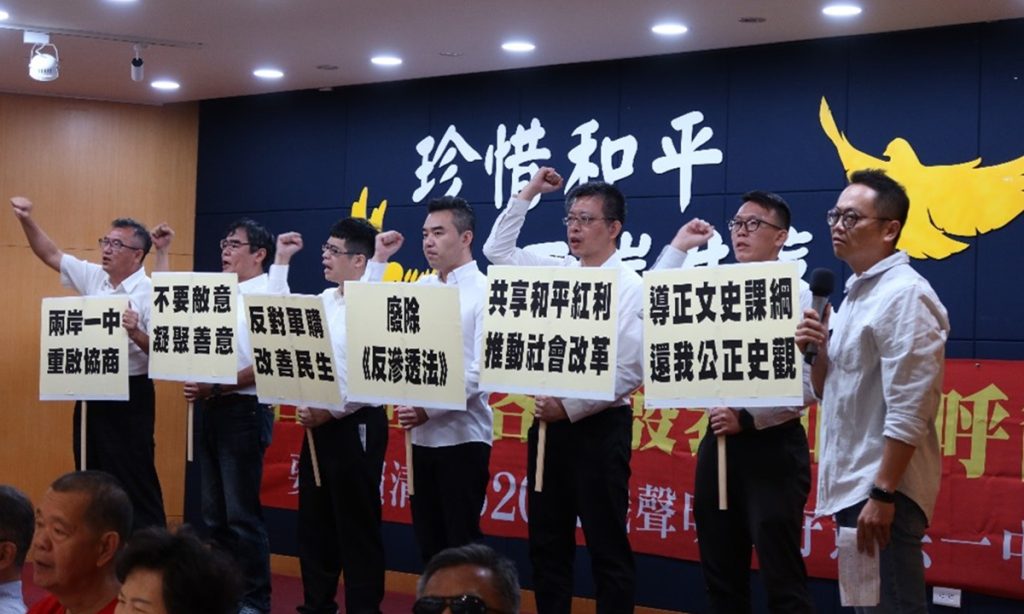
Multiple political and civilian groups on Taiwan island on Tuesday initiated a peace declaration signing activity, urging the Democratic Progressive Party (DPP) authorities to adhere to the one-China principle, and stop compromising cross-Straits relations or forcing the people on the island to face the existential choice between war and peace.
The Cross-Strait Peaceful Development Forum, together with more than 60 pro-reunification groups, including the Labor Party of Taiwan, the Reunification Alliance Party, and the Blue Sky Action Alliance, organized the Tuesday activity.
The initiators of the Tuesday activity urged Lai Ching-te, who will take office as the regional leader of the Taiwan island on May 20, to adhere to the one-China principle, respond to the majority of Taiwan people's advocacy for peace, take the window of goodwill opened by the mainland, and seize the opportunity to defuse the cross-Straits crisis, according to a release sent to the Global Times by the initiators.
The DPP authorities' eight-year policy of hostility toward the mainland has continuously worsened cross-Straits relations, with the situation across the Taiwan Straits becoming increasingly tense, forcing the Taiwan people to face the existential choice between war or peace, stability or turmoil, prosperity or decline, Wang Wu-lang, secretary-general of the Cross-Straits Peace Forum, told the Global Times on Tuesday.
With the situation of the Taiwan Straits becoming more perilous and people feeling insecure, Lai won't easily abandon the stance and advocacy for "Taiwan independence," said Wang, noting that his stance completely disregards the survival and development interest of the vast majority of the Taiwan people.
The DPP authorities may continue their strategy of rejecting reunification and seeking independence by relying on the US to pursue political gains, Wang said, noting that Lai may taunt the "promises" which the US and some Western countries made to Taiwan to continue to fool the public.
Aside from urging Lai to adhere to the one-China principle in his speech on May 20, the initiators of the Tuesday activity also put forward six appeals to urge the DPP authorities to resume various aspects of social, economic, and cultural exchanges and cooperation across the Straits, safeguard the legitimate rights of people from both sides of the Straits to communicate and interact.
They also oppose any arms purchases and cross-Straits policies that treat the mainland as a hostile entity, and required the DPP authorities to provide Taiwan's youth with a fair historical perspective and an environment conducive to cross-Straits peace and development.
Lai and those who seek "Taiwan independence" are going against the historical trend of the rejuvenation of the Chinese nation, and their path will not succeed, said Wang, calling for Taiwan people to unite and promote cross-Straits stability.
Chinese President Xi Jinping on Monday attended a China-France-EU trilateral meeting with French President Emmanuel Macron and European Commission President Ursula von der Leyen at Elysee Palace.
With the conclusion of COP28, or the 28th session of the Conference of the Parties to the UN Framework Convention on Climate Change on December 12, 2023, a "historic" climate deal was inked, which, for the first time, pledged to transition away from the use of fossil fuels while boosting renewable energy. Representatives from nearly 200 countries agreed, at the summit, to begin reducing the global use of fossil fuels, drawing worldwide attention. At the summit, China talked with every relevant party to find an acceptable solution to promote the success of the COP28. Over the years, the efforts that China has made in climate change have won wide recognition and the cooperation between China and the US is also of importance to the world. On the heels of COP28, Global Times reporter Xie Wenting (GT) spoke with Champa Patel (Patel), Executive Director for Governments and Policy at the Climate Group, an NGO dedicated to climate change, on issues related to COP28 and global cooperation on climate change among other topics. GT: What are your thoughts on the outcomes from COP28 and what are the key takeaways from conference? How do you believe this conference has contributed to global climate action?
Patel: The main takeaway from COP28 was the first explicit recognition that the world has to transition away from fossil fuels. While it did not go as far as saying "phase-out" from fossil fuels, this still sends a strong signal on what is expected of countries and that a fossil-fuel-free future is the only way forward. It sends an important message that fossil fuels are on their way out, and might not be worth investing in.
With that in mind, it was great to see commitments on tripling renewables and doubling down on energy efficiency, measures which earlier on in the year had been taken on by the G20 in its communique as well. There was also a welcome recognition that nation states should work closely with subnational governments - as the level of government often closest to impacted communities - to set climate action plans and ensure an integrated multi-level approach.
But there were significant gaps as well. Climate finance was not the focus as much as it should have been.
In many ways, we do not have a crisis of ambition - most countries are signed up to what needs to be done to achieve net zero - but for many developing economies this will require substantial investment and funding. Where will the money from? There is still much more that needs to be negotiated on new sources of climate finance and how existing funds can be scaled up - so there, we do see a crisis of ambition.
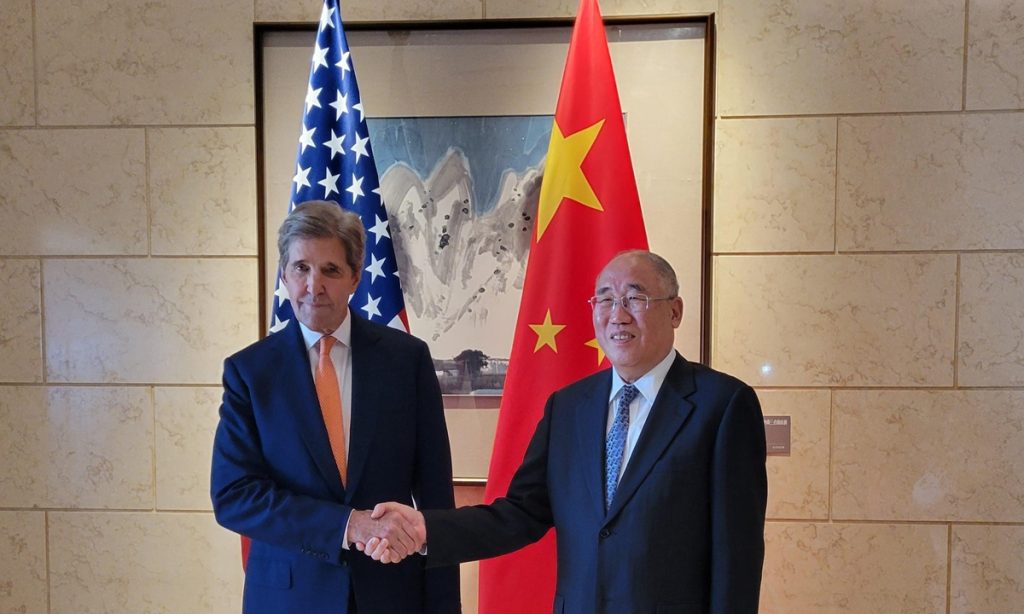
GT: The China-US climate cooperation has been a significant topic of discussion in recent years. In your opinion, what are the key areas in which China and the US can collaborate effectively to address climate change? How can this cooperation be strengthened further?
Patel: Prior to COP28, China and the US released "The Sunnylands Statement on Enhancing Cooperation to Address the Climate Crisis." The two sides have also agreed to establish a working group on enhancing climate action in the 2020s, to advance discussions on methane, the energy transition, and resource efficiency among others. This provides an important vehicle for enhanced cooperation. Interestingly, and for Climate Group more importantly, was an explicit recognition of the role of subnational cooperation bringing together states, regions, and cities in climate action. This is really important as local governments are often best placed to know the specific needs of their communities.
To drive real climate action, we need to have both China and the US on board - without them, action is meaningless. So it's great to see climate as one of the few areas which is not prey to the great power competition. The climate crisis has the opportunity to bring the great powers together. We need China and the US on board, not just because of political power or their large economies, but also because they are facing the devastating impacts of climate change within their own countries, whether heatwaves, flooding, or droughts. So these steps are a positive sign but much more needs to be done to drive action further and faster as time is critical to ward against a 1.5-degree rise in temperature.
GT: How can NGOs contribute toward fostering collaboration and driving impactful change? In light of recent COP28 commitments, what specific actions or policies do you believe the US and China should prioritize to accelerate their transition to a low-carbon economy?
Patel: NGOs have an important role to play as they can support and foster partnerships, encourage peer exchange and facilitate relationship building between China and the US. They can also help identify policy measures that can accelerate climate impact.
Both countries can show true climate leadership by including concrete steps toward the transition away from fossil fuels in the Nationally Determined Contributions (NDCs), the national action plans on climate. That would send an incredibly strong signal to the rest of the world.
GT: Looking ahead, what are your expectations for future China-US climate cooperation? How can this partnership evolve and expand to tackle emerging challenges and seize new opportunities in the fight against climate change?
Patel: Looking ahead, it is critical that the US and China identify concrete projects, initiatives, and funding that can help accelerate climate action. There is an opportunity to drive leadership not just from their respective countries but also to model what is needed from other major powers and developed economies.
The signal on action needed on methane sent through "The Sunnylands Statement on Enhancing Cooperation to Address the Climate Crisis" is important. It is the first time China has mentioned methane, as it focuses its mind on this short-lived pollutant that is often sidelined when considering decarbonization measures. But tackling methane emissions is essential as, arguably, we cannot stay within 1.5 degrees of temperature rise without also addressing methane emissions.
By coming together, the two countries can help unlock global ambition and provide a model of leadership that is sorely needed to drive forward faster climate action.