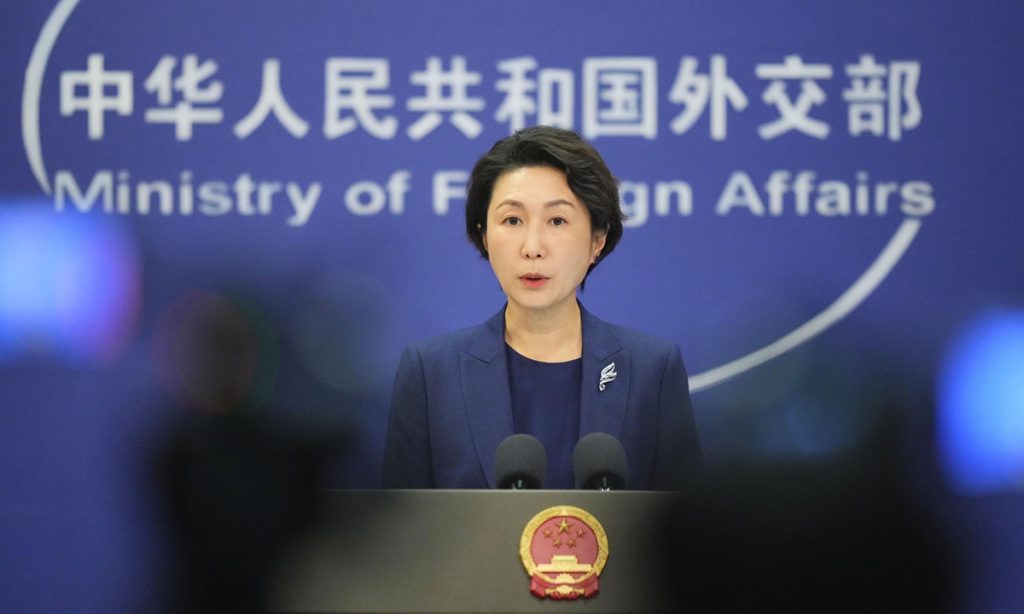
At the invitation of Premier of the State Council Li Qiang, Prime Minister of the People’s Republic of Bangladesh Tarique Rahman will pay an official visit to China from June 24 to 26.
A recent poll in Australia shows that more than half of Australians now consider relations with China more important than those with the US. The poll also found that 61 percent of Australians see China more as an economic partner than a security threat.
A Chinese observer said the outcome of the poll indicates that the shift does not reflect Australian society choosing sides between China and the US; rather, it shows that economic realities are outweighing security narratives in public perceptions of China.
A 2026 Lowy Institute poll, released on Monday, found that 61 percent of Australians see China more as an economic partner than a security threat, an 11-point increase from 2025, marking one of the largest swings in sentiment in this year's survey. Support for the bilateral trade relationship is accordingly strong, with a significant majority of Australians saying "we should be trading with China 'more' or at 'about the same' level as we are now (77 percent)," according to the poll.
The 2026 Lowy Institute Poll reports the results of a nationally representative survey of 2,013 Australian residents aged 18 and above, conducted from March 2 to 15, 2026 by the Social Research Centre (SRC) on behalf of the Lowy Institute, according to the PDF version of the poll. The poll reveals how Australians feel about the world and their place in it, and it was released on Monday, according to the Lowy Institute's website.
In terms of which country's relationship should be Australia's priority, Australians appear to be fairly divided. A bare majority of respondents (51 percent) said Australia's relationship with China is more important than its relationship with the US, an eight-point increase from 2025. By comparison, 45 percent said Australia's relationship with the US is more important, a seven-point drop from 2025, the poll showed.
Chen Hong, Director of the Australian Studies Center at East China Normal University, told the Global Times on Tuesday that as Australia's most important trading partner, China supports incomes and jobs across key sectors, including resources, agriculture, education and tourism. Australians are increasingly aware that while the US remains a security ally, military commitments cannot replace markets or generate export orders.
The stabilization of China-Australia relations has also reminded Australian businesses and the public of the tangible benefits of steady engagement, Chen said. Meanwhile, the US is increasingly becoming a source of uncertainty. The poll therefore reflects a pragmatic recognition that Australia cannot sustain its prosperity without China.
When asked about the relationship between the US and China, the poll showed that a clear majority (64 percent) said the US should place a greater priority on stabilizing ties with China.
Australia has benefited under the US security umbrella while benefitting from China's industrialization, according to Bloomberg. And according to the Australian Government Department of Foreign Affairs and Trade website, China is Australia's largest trading partner. It buys almost a third of all Australian exports, and is the top overseas market for many Australian goods and services. Trade and investment with China is a big part of Australia's future.
The poll found that public confidence in the US' ability to act responsibly has fallen to historic lows among respondents. According to the poll, although Australians are wary of both the US and China and place relatively low levels of trust in both countries, trust in the US to act responsibly in the world has fallen to 31 percent, the lowest level in the history of Lowy Institute polling.
The decline in Australians' trust in the US could be linked to the perception that, under the current US administration, the US has become less of a stable and predictable ally and more of a transactional power focused on its own interests. Tariffs on partners, conditional security commitments, and abrupt policy shifts have all contributed to this view, Chen said.
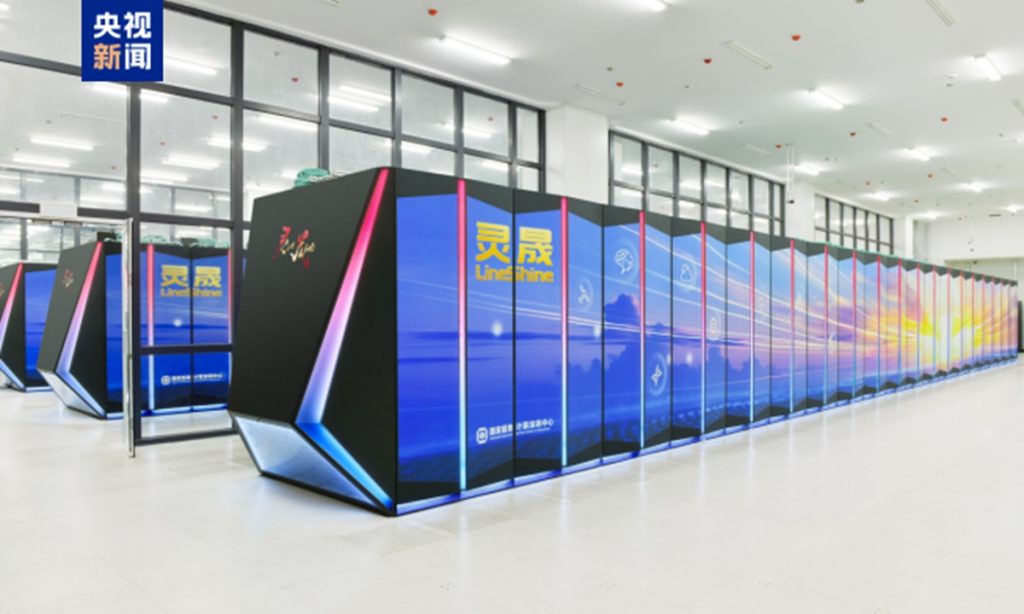
China's fully domestically developed "LineShine" supercomputer ranked first on the global TOP500 list with a sustained double-precision performance of 2.19EFlops (10¹⁸ floating-point operations per second), according to the ISC 2026 conference held in Hamburg, Germany, on Tuesday. The ranking marks China's return to the top of global supercomputing after nine years, China Media Group (CMG) reported.
Chinese experts said the achievement represents more than a performance milestone. They said LineShine's breakthrough and practical applications mark a major step forward for China's supercomputing industry in overcoming foreign technological constraints and building an independent, controllable hardware and software ecosystem.
At the ISC 2026 conference, China's National Supercomputing Center in Shenzhen announced that its new-generation "LineShine" supercomputer has achieved a sustained performance of 2EFlops, becoming the world's first supercomputer to surpass 2EFlops in sustained performance. The system is said to outperform leading E-level supercomputers in the US and Europe, marking China's return to the top of the global supercomputing rankings, CMG reported.
Performance leap
"LineShine" is positioned as a full-stack integrated infrastructure for scientific, engineering and AI computing, per CMG. At the chip layer, the in-house LX2 CPU integrates multi-precision and matrix acceleration capabilities, enabling tighter convergence of supercomputing and AI workloads, while also incorporating China's first domestically developed HBM memory, boosting memory bandwidth by 10 times compared with conventional CPUs.
The announcement has attracted widespread attention. US tech media Engadget said that "China's new machine was able to beat its US counterpart despite technology embargoes because it doesn't rely on GPUs like other leading models."
The New York Times quoted Jack Dongarra, an organizer of the TOP500 list, as saying that LineShine is "an impressive system." They upped us by developing a system that is not reliant on GPUs, he added.
Zhang Yunquan, a researcher at the Institute of Computing Technology under the Chinese Academy of Sciences, told the Global Times that the "LineShine" system's return to the top of the global rankings marks China's renewed leadership in the TOP500 list, following the success of the "Sunway TaihuLight" supercomputer. Unlike most current US supercomputers, which adopt a hybrid CPU+GPU architecture, "LineShine" follows a pure CPU-based integrated technical route built on the ARM architecture.
He noted that while this approach is more technically challenging to implement, it offers strong compatibility advantages in traditional supercomputing application scenarios such as scientific computing.
Chen Jing, a vice president of the Technology and Strategy Research Institute, told the Global Times that the most striking feature of the "LineShine" system is its pure CPU architecture, without the use of GPU acceleration cards. This, he said, reflects that China's progress in supercomputing is not driven by a single hardware breakthrough, but by comprehensive advances in system-level capability, including independent ecosystem development, architectural innovation, full-system integration, as well as improvements in storage and cooling technologies.
LineShine's test results were more than 20 percent faster than those of El Capitan, a system at Lawrence Livermore National Laboratory in California that has topped a twice-yearly ranking of supercomputer performance since November 2024, NYT reported.
China is no longer keeping a low profile and has returned to global "benchmark competition," Ma Jihua, a veteran tech analyst told the Global Times. He noted that earlier restraint was largely due to external sanctions and a cautious approach to disclosure, but with breakthroughs in indigenous supercomputing capabilities, China is now re-engaging in top-level competition, with performance reportedly ahead of Western systems by a significant margin.
He added that China's supercomputing sector has strong foundations, and although it has participated less in international rankings in recent years, capability development has continued.
Since deployment, "LineShine" has supported applications across atmospheric and ocean science, engineering simulation, materials science, drug discovery, brain science, scientific AI, and large-model inference.
"LineShine" reflects China's long-term push to build an indigenous computing system. By mid-2025, China ranked second globally in total computing power, with 14 national supercomputing centers approved, official data showed. Experts said its TOP500 result marks not only a performance breakthrough, but also a shift toward a more integrated national computing infrastructure.
Breakthroughs amid constraints
China first took the top spot on the TOP500 in 2010 and traded titles back and forth with the US and Japan until 2023, when China stopped submitting its systems after years of chip- and computing-related export controls from the US, Reuters reported.
Engadget wrote that "there is no single dominant technology path to leadership-class computing," while Reuters reported that the Chinese victory on the list more likely shows that China wanted recognition for its chip design efforts, which is a change from recent years.
Chen said China is now able to build exascale computing systems without relying on US' GPUs, Nvidia's CUDA ecosystem, or specific Western interconnect standards, indicating that a system-level technological framework is largely in place.
However, he also noted that underlying constraints remain in areas such as architectural licensing, advanced manufacturing processes, and parts of chip fabrication, meaning China's high-performance computing sector is still transitioning from external dependence toward full system autonomy.
Chen said "LineShine" reflects a system-level innovation path similar to that of Chinese tech firms under external pressure, echoing Huawei's "Tau Law." Both have shifted from single-point competition to system architecture innovation and engineering optimization. He noted that "LineShine" relies on a pure CPU architecture to achieve exascale performance, while Huawei advances through chip design, algorithms, and advanced packaging, with both representing a "change of path" rather than catch-up competition.
On January 4, China's National Supercomputing Internet Platform announced that its user base had surpassed 1 million, marking a key step in the shift of supercomputing resources from centralized supply to universal service.
Ma said China's supercomputing breakthrough should not be seen as a sudden "overtake on a bend," but as the result of long-term technological accumulation and capability rebuilding. He noted that this achievement represents not only success in technological innovation, but also China's institutional strengths and development model under sustained external pressure, underscoring the country's resilience.
China's State Council Information Office will release a white paper titled "More Just and Equitable Global Governance: China's Principles, Proposals and Actions" on Wednesday morning.
A press conference on the white paper will also be held.
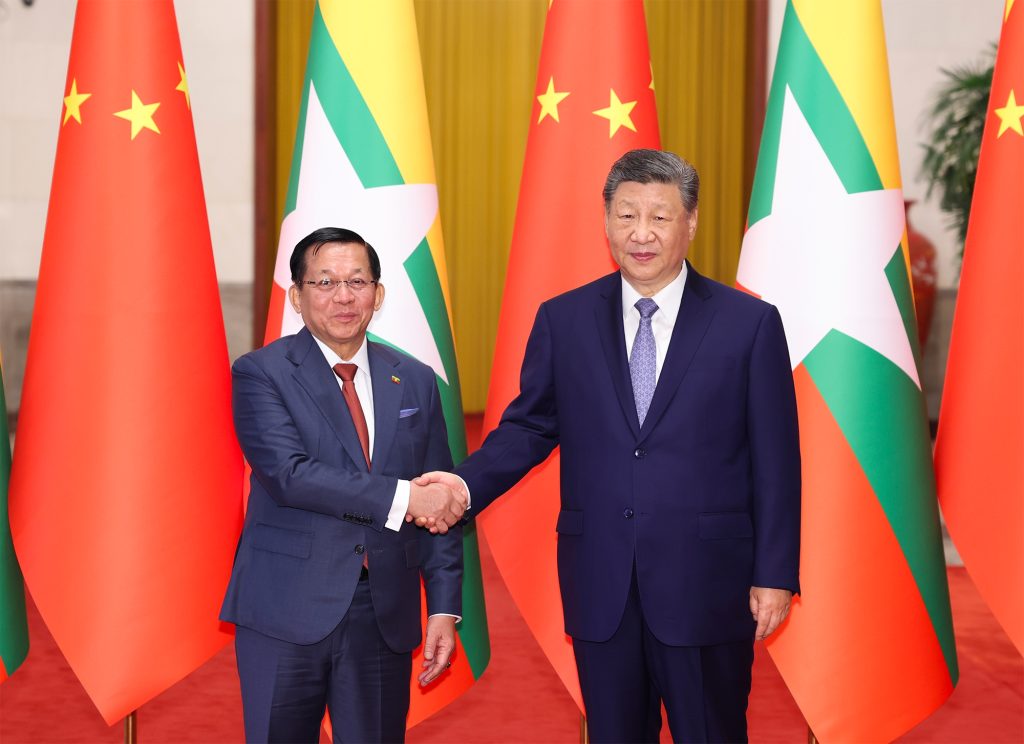
China places ties with Myanmar as a priority in neighborhood diplomacy, and supports the new Myanmar government in coordinating development and security imperatives to find a correct path of development that suits its national conditions and wins popular support, Chinese President Xi Jinping said on Tuesday during a meeting with President of Myanmar Min Aung Hlaing in Beijing, the Xinhua News Agency reported.
At the invitation of China's leader, Min Aung Hlaing is paying a state visit to China from June 15 to 19, his first trip to China since he assumed office as Myanmar's president in April.
The visit falls just one week after June 8, the 76th anniversary of the establishment of diplomatic relations between China and Myanmar. The Chinese Foreign Ministry earlier noted that this visit will serve as a vital opportunity to deepen bilateral cooperation.
Prior to the talks, the Chinese leader held a welcome ceremony for Min Aung Hlaing. Myanmar media outlet MITV described the ceremony as "warmly."
After the talks, the two heads of state jointly witnessed the signing of cooperation documents in areas including transportation and people's livelihoods, according to Xinhua. MITV said the two sides signed and exchanged 18 agreements and memoranda of understanding, including an MoU on cooperation to jointly advancing the Global Security Initiative (GSI).
Analysts said the top-level China-Myanmar engagement charts a clear course for bilateral ties amid a volatile global landscape. Centered on pragmatic cooperation that benefits both peoples, the summit bolsters strategic trust and lays a solid foundation for building a China-Myanmar community with a shared future, contributing to regional stability and development.
'Pauk-phaw' friendship
As Myanmar's neighbor with the longest shared border, China is a trustworthy friend and partner, Xi said during the meeting, calling on both sides to strengthen solidarity and collaboration in a changing and turbulent international landscape, per Xinhua.
The Chinese leader said that China adheres to the principle of non-interference in other countries' internal affairs, pursues a friendly policy toward all the people of Myanmar, and firmly supports Myanmar in safeguarding its sovereignty and territorial integrity.
China supports all parties in Myanmar in advancing peace and reconciliation through talks to achieve lasting stability in northern Myanmar, which serves the fundamental and long-term interests of Myanmar and its people, he said.
Hailing the time-honored "pauk-phaw" friendship between the two countries, Min Aung Hlaing thanked China for its long-standing and selfless support for Myanmar's development, stability, peace and reconciliation, adding that Myanmar will firmly adhere to the one-China principle.
Myanmar fully supports the four major global initiatives put forward by President Xi and stands ready to deepen multilateral communication and coordination with China, he said.
Following the smooth transition under Myanmar's new government, the visit highlights Myanmar's commitment to advancing China-Myanmar ties and underscores the bilateral relationship's weight in China's neighborhood diplomacy, sending a clear signal to the world of both sides' resolve to deepen strategic trust and cooperation, Song Qingrun, a professor from the School of Asian Studies at Beijing Foreign Studies University, told the Global Times on Tuesday.
Amid an international landscape fraught with intertwined turmoil and changes, the two leaders, through heads-of-state diplomacy, have set the course for bilateral ties ahead, laying a solid foundation for deeper all-round strategic cooperation and more fruitful progress in building a China-Myanmar community with a shared future, Song said.
"Development in Myanmar is directly tied to China's strategic security and development interests in the southwest," said Song, "A peaceful, stable and prosperous Myanmar is in the fundamental interests of Myanmar and its people, as well as the broader region."
Prior to his Beijing trip, Myanmar's state leader visited India. Some Western media outlets have portrayed his diplomatic engagements as an effort to break free from international isolation.
"China has consistently abided by the principle of non-interference in internal affairs when handling Myanmar-related affairs. What Beijing stands for is the peace, stability and overall development of Myanmar," Song said, adding that as a sovereign state, Myanmar is fully entitled to maintain normal diplomatic relations with other countries."
"Moreover, China and Myanmar are bonded by the time-honored 'pauk-phaw' friendship and shared interests. China has stood as a reliable partner for Myanmar throughout the 76 years of bilateral diplomatic ties," he said. "Pragmatic issues bearing on the vital interests of both peoples constitute the noteworthy essence of this visit."
Stability and development
Noting that this year marks the beginning of China's 15th Five-Year Plan (2026-2030), Xi told Min Aung Hlaing that China stands ready to share its development experience with Myanmar and jointly build a China-Myanmar community with a shared future, which is underpinned by political amity and mutual trust, win-win development, security coordination and people-to-people exchanges, Xinhua reported.
The Chinese leader called the China-Myanmar Economic Corridor a flagship project of the Belt and Road cooperation between the two countries, saying that both sides should steadily advance the safe construction of key projects to help Myanmar develop its economy and improve people's livelihoods.
He said China is willing to increase support for Myanmar's post-earthquake reconstruction, and the two sides should continue to combat criminal activities including online gambling, telecom fraud and drug trafficking.
Noting that China's implementation of the 15th Five-Year Plan brings important opportunities for its Asian neighbors including Myanmar, Min Aung Hlaing said that Myanmar hopes to deepen all-round cooperation with China, jointly build the Myanmar-China Economic Corridor and elevate bilateral trade and investment cooperation, according to Xinhua.
He noted that Myanmar attaches great importance to the safety of Chinese enterprises and personnel in Myanmar and will make every effort to ensure their security. Myanmar is willing to work closely with China to resolutely crack down on online gambling and telecom fraud and safeguard border security and stability, he added.
Per the Myanmar News Agency, ahead of the leaders' meeting, the Myanmar president on Monday visited Beijing Aerospace City, which serves as a base for astronaut training and as a mission control center. Welcomed by representatives from China Aerospace Science and Technology Corporation (CASC), he received introductions on China's spacecraft launches, space station construction, successful lunar landing missions, and cargo and material transport operations.
According to Gu Xiaosong, dean of the ASEAN Research Institute of Hainan Tropical Ocean University, China and Myanmar feature prominent complementarities in practical cooperation.
China's capital, technology and vast market align perfectly with Myanmar's geographical advantages and abundant natural resources, Gu said, adding that the China-Myanmar Economic Corridor connects Southwest China's Yunnan Province to Myanmar, unlocking new routes for China's energy shipments and cross-border trade.
Such cooperation not only boosts Myanmar's economic growth and improves people's livelihoods, but also broadens the scope of China's external economic cooperation, delivering genuine mutual benefits, Gu said.
According to the Chinese Foreign Ministry, China has long been Myanmar's principal trading partner. In 2025, bilateral trade between the two countries amounted to $19.4 billion, with a year-on-year growth of 19.1 percent. China's exports to Myanmar totaled $11.36 billion, up 23.3 percent, and imports were $8.04 billion, up 13.6 percent.
"The president's state visit to China will give a strong boost to Myanmar's further development… Closer ties and deeper multi-sectoral cooperation with China serve the shared interests of the two peoples and deliver promising opportunities for the two sides," read an editorial published by Myanmar's Myawady.net on Tuesday.
More than three months have passed since the US-Israeli strikes on Iran erupted on February 28. Over the past weekend, the US and Iran reportedly to have reached an agreement to end fighting and reopen the Strait of Hormuz, with a formal signing ceremony scheduled for Friday in Switzerland. Yet substantial progress, at least to date, has yet to be achieved.
While beyond the smoke and fury in the Persian Gulf and the standoff in the Strait of Hormuz, the situation on another "front" appears to have grown increasingly intense and complex.
Since the conflict started, the White House, according to reports, has posted on social media platforms AI-generated videos, some of which pair footage of US airstrikes with popular short-video effects in an apparent effort to underscore US military dominance. The videos were widely criticized by media outlets and netizens for using AI to commodify, and even make light of, the Middle Eastern battlefield and its victims.
"[I've watched] a little bit [of the videos the White House shared]. And what would be disturbing to me is if it's perceived as a gaming kind of event," said US Army veteran Karee White in a PBS program in March. "And I don't like to see it reduced to some sort of a gaming strategy type of event, if that's been in fact what's happening…"
When virtual effects dilute the brutality of artillery fire and meme culture obscures the human cost of conflict, how has the smoke of this digital battlefield spread? In this AI-driven information war of manufactured narratives, what dazzling "tactics" have both the US and Iran deployed? And what deeper dangers lie beneath this new form of public opinion confrontation?
An 'entertainmentized' contest
"Generative AI has made it cheap and easy to produce polished propaganda at scale, …packaging war in the visual language of entertainment makes conflict propaganda more likely to spread, regardless of who made it," Renée DiResta, an associate research professor at Georgetown University whose work focuses on how influence operates in the digital age, said in a TIME article published on April 2.
DiResta's concern was vividly borne out in the information warfare that has unfolded alongside the US-Israeli strikes on Iran. As generative AI has rapidly proliferated and low-cost, highly shareable AI-generated content has become an important weapon in the battle for public opinion. Some scholars observed that the US and Iran have turned to AI-generated memes, animated re-edits and game-style mashups to wage narrative offensives and counteroffensives, rendering the war in the Middle East, in virtual space, into what increasingly resembles an "entertainmentized" contest.
Since early March, the White House has frequently posted visually striking videos on social media, many of which have drawn heavily on iconic scenes from Hollywood blockbusters and kill-focused video games.
A video the White House posted on X on March 6 with the caption "justice the American way," for instance, included clips from superhero movies, as well as clips from films Top Gun and Braveheart, with electronic tunes underneath before clipping to video of strikes on Iran. It ends with a voiceover saying, "flawless victory" - audio from the video game Mortal Kombat, reported ABC News the following day.
More startling still, in a video that went viral after being released on X by the White House on March 6, footage of a US strike on Iranian targets was followed by a scene of cartoon image "SpongeBob SquarePants," asking: "do you want to see me do it again?"
A brutal military assault was packaged as a kind of "visual spectacle" through these videos, which, blurring the line between the virtual and the real, the entertaining and the grave, has drawn widespread criticism. "Has the White House account been hacked or are you guys really that immature and depraved?" an X user wrote under this post. "This is embarrassing," wrote another.
In response, Explosive Media, an account described by the BBC News as known for generating Lego-style satire videos against the US and Israel, has posted a series of rough-edged but highly imaginative Lego animations. Some of these videos use Lego figures to dramatize scenarios in which Israeli and US leaders collude to wage war and deflect domestic political pressure, while interspersing images of soaring oil prices and burning US dollars.
In an April interview, a representative of Explosive Media told the BBC that "the Iranian government is indeed a 'customer' of his company," and ahead of that, he said "his operation had been directly commissioned for multiple projects by Iranian officials," according to a BBC story on April 12.
Also in April, YouTube shut down the Explosive Media's account, reported Al Jazeera. On June 11, it was announced on X that the account was "officially back on YouTube."
Nevertheless, the company's AI-generated videos have given Iran enormous visibility on social media. According to a research by think tank Institute for Strategic Dialogue in April, by posting and forwarding such AI satire videos, in the first 50 days of the conflict, posts from Iranian embassy and official accounts collectively gained approximately 900 million views and 22 million likes - a 30-fold increase in likes compared with the preceding 50 days. "If Iran could manufacture destructive missiles at the speed with which it produces cutting memes, US Central Command would be coming out with its hands up by now," quipped an opinion piece by The Guardian on April 15.
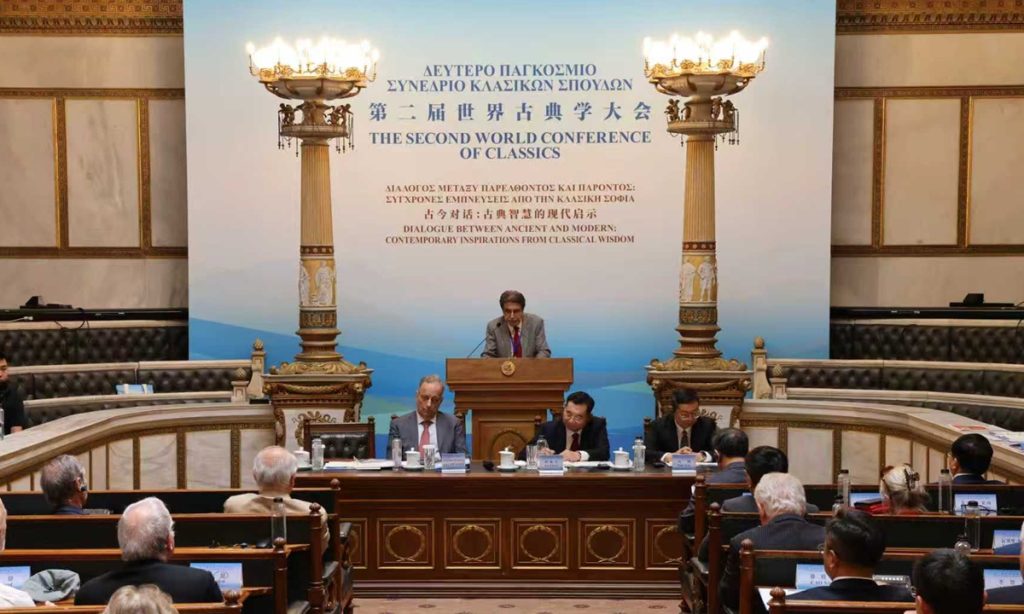
The Second World Conference of Classics opened in Athens, Greece on local time Tuesday, with discussions focused on issues related to classical civilizations and promoting academic exchanges and consensus-building in global classical studies, the Xinhua News Agency reported.
A gathering of over 200 scholars, diplomats and media representatives from across the globe, the two-day event was themed "Dialogue Between Ancient and Modern: Contemporary Inspiration from Classical Wisdom."
Scholars noted that in hosting the conference's first overseas iteration following its debut in Beijing in 2024, the Athens gathering stands as a powerful embodiment of China's earnest practice of the Global Civilization Initiative (GCI). It further cements the China-Greece civilizational dialogue as a model for equal exchanges and mutually beneficial progress among diverse global civilizations.
Wednesday also marked the International Day for Dialogue Among Civilizations.
Chinese Foreign Ministry spokesperson Lin Jian said at a regular press briefing on Wednesday that three years ago, President Xi Jinping put forth the GCI, highlighting the need for civilizations to live together in harmony. Establishing the International Day for Dialogue Among Civilizations is an important step to implement the GCI.
Ancient wisdom
George Katrougalos, former Greek foreign minister, told the Global Times on Wednesday that the Second World Conference of Classics arrives at a moment when the international community urgently needs the methodological wisdom that classical civilizations offer.
It is believed that classics, as a modern academic discipline, originated in Europe. It originally emerged as a discipline within the Western intellectual tradition, generally referring to the reading and study of the texts and literature of ancient Greece and Rome, per Xinhua.
Lou Lin, an associate professor of classical studies at the Renmin University of China, noted a striking proactive shift in this year's conference theme.
After attending the event in Athens, Lou told the Global Times that unlike the Beijing session's focus on the link between classical civilization and the modern world, the Athens edition emphasizes humanity's active pursuit of ancient wisdom to tackle contemporary challenges.
"Such a shift reflects not only the complexities of current global affairs, but also a broader, more inclusive vision for bridging ancient heritage and modern reality," Luo said.
Bai Gang, professor of classical studies at Fudan University in Shanghai, who also attended the conference, told the Global Times that classical traditions are never relics confined to the past, but timeless spiritual assets capable of guiding and reshaping present and future human development.
Bai recalled that the conference's opening ceremony, featuring keynote speakers from Greece, China, the US, Egypt and Russia, embodies a diverse and inclusive academic perspective that breaks free from single-civilization research paradigms.
Initiative in action
Since the inaugural World Conference of Classics was held in Beijing in November 2024, related departments and institutions of China and Greece have worked closely to implement the outcomes of the first conference and build networks to promote exchanges and dialogue in classical studies, Xinhua said.
The fruitful China-Greece civilizational collaboration extends far beyond academic conferences. The two nations have jointly launched a civilization exchange center, established a China School of Classical Civilization at Athens, carried out joint archaeological projects, and staged integrated China-Greek theatrical performances. Ongoing joint archaeological project, cultural exhibitions and academic dialogues have continuously enriched bilateral exchanges, enabling the two ancient civilizations to radiate new vitality through mutual learning, the People's Daily reported on Wednesday.
Scholars interviewed by the Global Times highlighted the inherent resonance between Chinese and Greek classical philosophies. Greek virtue ethics and Confucian benevolence, Plato's spiritual transcendence and Chinese self-governance philosophies all converge on the ultimate question of "how humans ought to live." Such inherent compatibility lays a solid foundation for the GCI's core spirit of inclusive dialogue and shared progress, they said.
Dario Famularo, an Italian sinologist from Sichuan International Studies University in Chongqing, told the Global Times that the GCI transcends Eurocentrism and cultural relativism, reviving marginalized classical concepts of cosmopolitanism to advocate mutually understanding global interactions.
Australian sinologist Gary Sigley echoed that the GCI provides an open, future-oriented modern framework for classical studies, guiding scholars to transcend civilizational hierarchy and focus on shared human challenges.
Wang Xianhua, dean of the School of Humanities at Shanghai University of Finance and Economics, explained that the GCI represents the creative transformation of Chinese traditional wisdom. It elevates classical studies from passive textual interpretation to active exploration of contemporary solutions, urging academia to understand modern society through classical heritage.
After visiting ancient sites in Athens, including the Acropolis, Lin Zhimeng, professor of philosophy at Zhejiang University, said he could feel the GCI is no longer an abstract concept, but has taken on tangible form on this historic land.
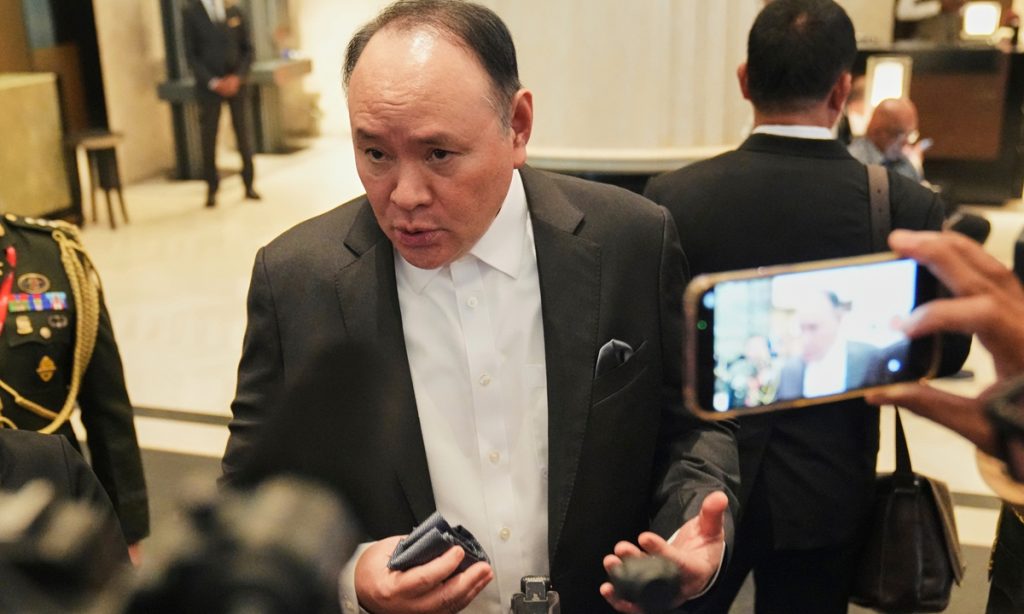
The Philippine side on Friday claimed China's sanctions against Philippine Defense Secretary Gilberto Teodoro Jr. and his relatives are "an unfriendly act," after Beijing imposed the measures over Teodoro's repeated irresponsible remarks concerning China, per media reports. A Chinese analyst said the Philippine side was distorting the truth and shifting the blame, noting that Teodoro has repeatedly misrepresented China's rights-protection actions in the South China Sea and China's assistance to the Philippines, causing serious damage to bilateral ties. The sanctions, the analyst said, also serve as a warning to certain Philippine politicians not to further sabotage China-Philippines relations.
On Thursday, the Chinese Foreign Ministry announced sanctions against Philippine Defense Secretary Gilberto Teodoro Jr. and his relatives. Teodoro repeatedly made irresponsible remarks concerning China, which undermines China's legitimate interests and sabotages China-Philippines relations, according to a statement from the ministry.
To uphold China's sovereignty, security and development interests, China has decided to prohibit Teodoro, and his spouse and child from entering the Chinese mainland, Hong Kong and Macao, and not allow organizations and individuals in China to engage in any transactions, cooperation or other activities with them, according to the statement.
The Philippines' Department of Foreign Affairs (DFA) claimed on Friday that "while the imposition of sanctions is China's sovereign prerogative, the Philippines views it as an unfriendly act that further complicates bilateral relations," according to Philippine media outlet GMA Network.
In a statement early Friday, Teodoro claimed he had been sanctioned for "speaking truth" and "I will just keep doing my duty," according to Philippine media outlet ABS-CBN News.
The claim from the Philippine side that China's sanctions are an "unfriendly act" completely distorts the truth and shifts the blame, Chen Xiangmiao, a research fellow at the National Institute for South China Sea Studies, told the Global Times on Friday.
Teodoro's irresponsible remarks — such as dismissing China's fertilizer aid as a form of "packaging and deception" — have damaged bilateral relations by thoroughly politicizing normal cooperation, Chen said, noting that ultimately, the responsibility for strained bilateral relations lies squarely with the Philippines and Teodoro's reckless grandstanding; they were the ones who showed unfriendly acts, said Chen.
Teodoro alleged at the Shangri-La Dialogue that China had provided fertilizer and fuel to the Philippines but did not show good faith on a long-term basis, and "no matter how they sugarcoat their assistance to us, it doesn't cut the mustard." He also claimed the Philippines were under severe threat territory-wise and politically too by China.
In response to Teodoro's remarks, China Foreign Ministry Spokesperson Mao Ning said on June 2 that this Philippine defense secretary is known to vilify China. His latest rhetoric shows his complete disregard of the welfare of the Philippine people and lack of appreciation for kindness. All he cares is selfish personal gains to the point that he would perform political theatrics even when people's well-being is at stake. What he does is seriously detrimental to China-Philippines ties and trust and not at all in the interest of his own country and people.
Chen noted that Teodoro shows no signs of reflection, maintaining this defiant posture for the past three years. Backed either by domestic factions or external, extra-regional powers, he has acted as a deliberate saboteur of China-Philippines relations, the expert stressed.
China's measured, proportionate countermeasures also serve as a warning to certain Philippine politicians not to trifle with China, exploit the goodwill of the Chinese people, or treat bilateral relations as a political game, said Chen, noting that when politicians treat state policy as a playground for personal agendas, their lies will ultimately inflict severe damage upon their own nation.
Huangyan Dao is China's inherent territory, and China has indisputable sovereignty over Huangyan Dao and its adjacent waters. Any activity China carries out on and around Huangyan Dao, including scientific research, falls within the legitimate rights of a sovereign state, Mao Ning, a spokesperson for Chinese Foreign Ministry, said at a regular press conference on Friday, when asked if China could provide more information on reports claiming satellite images showed the presence of a structure on Huangyan Dao, though later imagery suggests it is no longer there.
Chinese Vice President Han Zheng on Friday attended a plenary session of the 29th St. Petersburg International Economic Forum and delivered a speech on implementing the Global Governance Initiative and jointly working for a better future.
In his address, Han noted that momentous changes unseen in a century are accelerating across the world, and global challenges and governance deficits are becoming more prominent. The China-proposed Global Governance Initiative has won positive responses and support from nearly 160 countries and international organizations, he added.
The Group of Friends of Global Governance was established at the United Nations, sending a unified message for safeguarding the purposes and principles of the UN Charter, upholding genuine multilateralism and opposing unilateralism, Han said.
As the initiator of the Global Governance Initiative, China has delivered on its commitments with concrete actions to rally all parties and jointly advance the reform and improvement of the global governance system, Han noted.
As major countries and permanent members of the UN Security Council, China and Russia shoulder important responsibilities in the transformation of the global governance system, Han said.
He added that China stands ready to cooperate with Russia and all other sides to advance the implementation of the Global Governance Initiative and build an open, inclusive, equitable and just world of win-win cooperation.
Han put forward four proposals for advancing the Global Governance Initiative:
First, uphold equal cooperation and advocate a vision of global governance featuring extensive consultation, joint contribution and shared benefits. It is imperative to pursue genuine multilateralism, secure equal participation, decision-making and benefit-sharing for all countries in global governance, resolutely promote the democratization of international relations and raise the representation and voice of developing nations.
Second, stay committed to international fairness and justice and preserve the status and authority of the UN. All countries should safeguard international equity based on universally applicable international laws and regulations, oppose double standards and selective enforcement of laws, and back the UN in revitalizing its authority and vitality under new circumstances so it can serve as the primary platform for countries to coordinate actions and jointly tackle common challenges.
Third, boost common development to deliver greater gains for people across the globe. With the aim of improving well-being for all, countries should fully implement the UN 2030 Agenda for Sustainable Development to advance shared development and prosperity worldwide.
Fourth, strengthen coordinated actions to deliver more tangible outcomes. Countries, international organizations and multilateral institutions need to align development strategies and coordinate policies in a well-planned manner to create synergies in addressing global challenges and advancing shared development.
Han said this year is the first year of China's 15th Five-Year Plan. The plan charts an inspiring blueprint for China's development over the next five years and embodies China's aspiration for win-win cooperation with all nations across the world.
China is prepared to work alongside all sides to fully implement the Global Governance Initiative, build a global governance system that is more just and equitable, and jointly create a brighter future for humanity, Han said.
On the sidelines of the forum, Han also held brief exchanges with Uzbek President Shavkat Mirziyoyev, and Tanzanian President Samia Suluhu Hassan.