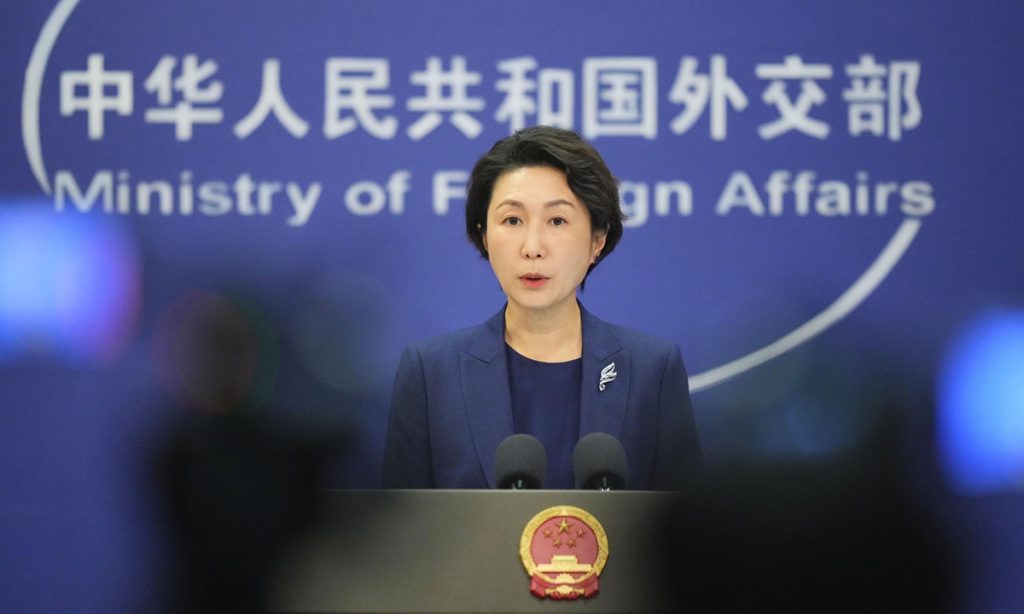
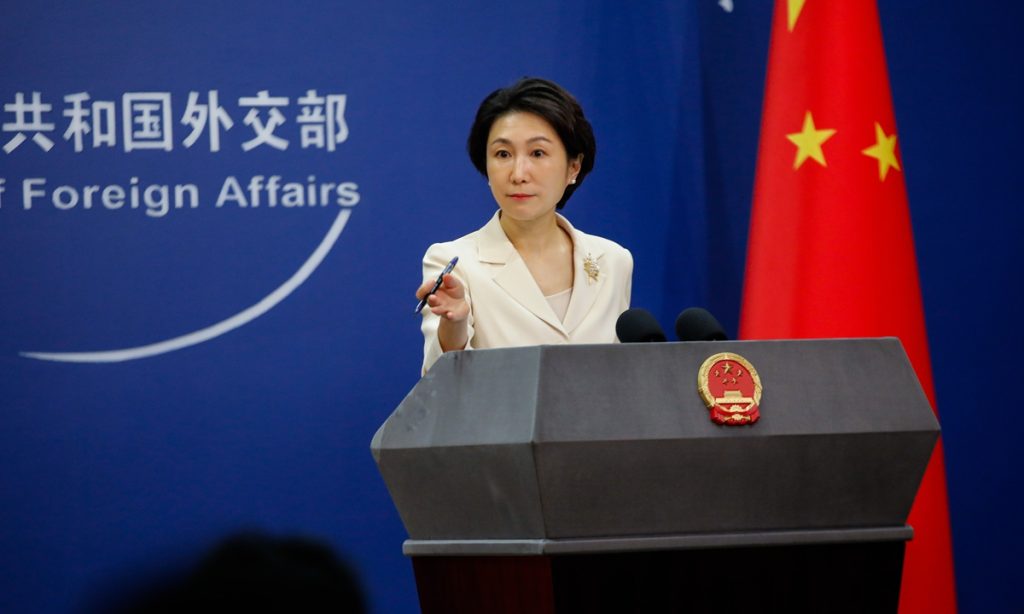
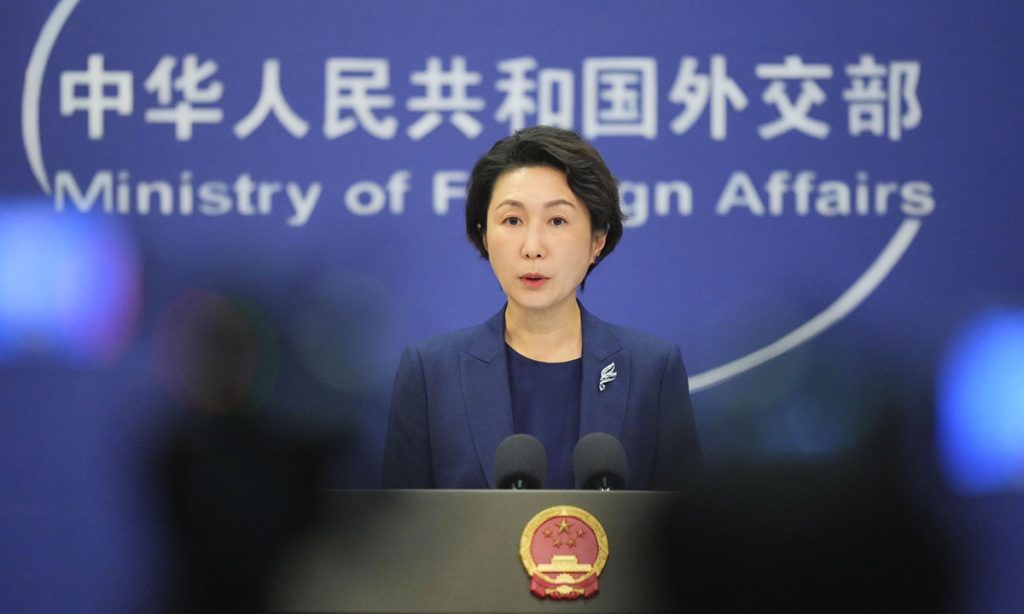
Huangyan Dao is China's inherent territory, and China has indisputable sovereignty over Huangyan Dao and its adjacent waters. Any activity China carries out on and around Huangyan Dao, including scientific research, falls within the legitimate rights of a sovereign state, Mao Ning, a spokesperson for Chinese Foreign Ministry, said at a regular press conference on Friday, when asked if China could provide more information on reports claiming satellite images showed the presence of a structure on Huangyan Dao, though later imagery suggests it is no longer there.
Chinese Vice President Han Zheng on Friday attended a plenary session of the 29th St. Petersburg International Economic Forum and delivered a speech on implementing the Global Governance Initiative and jointly working for a better future.
In his address, Han noted that momentous changes unseen in a century are accelerating across the world, and global challenges and governance deficits are becoming more prominent. The China-proposed Global Governance Initiative has won positive responses and support from nearly 160 countries and international organizations, he added.
The Group of Friends of Global Governance was established at the United Nations, sending a unified message for safeguarding the purposes and principles of the UN Charter, upholding genuine multilateralism and opposing unilateralism, Han said.
As the initiator of the Global Governance Initiative, China has delivered on its commitments with concrete actions to rally all parties and jointly advance the reform and improvement of the global governance system, Han noted.
As major countries and permanent members of the UN Security Council, China and Russia shoulder important responsibilities in the transformation of the global governance system, Han said.
He added that China stands ready to cooperate with Russia and all other sides to advance the implementation of the Global Governance Initiative and build an open, inclusive, equitable and just world of win-win cooperation.
Han put forward four proposals for advancing the Global Governance Initiative:
First, uphold equal cooperation and advocate a vision of global governance featuring extensive consultation, joint contribution and shared benefits. It is imperative to pursue genuine multilateralism, secure equal participation, decision-making and benefit-sharing for all countries in global governance, resolutely promote the democratization of international relations and raise the representation and voice of developing nations.
Second, stay committed to international fairness and justice and preserve the status and authority of the UN. All countries should safeguard international equity based on universally applicable international laws and regulations, oppose double standards and selective enforcement of laws, and back the UN in revitalizing its authority and vitality under new circumstances so it can serve as the primary platform for countries to coordinate actions and jointly tackle common challenges.
Third, boost common development to deliver greater gains for people across the globe. With the aim of improving well-being for all, countries should fully implement the UN 2030 Agenda for Sustainable Development to advance shared development and prosperity worldwide.
Fourth, strengthen coordinated actions to deliver more tangible outcomes. Countries, international organizations and multilateral institutions need to align development strategies and coordinate policies in a well-planned manner to create synergies in addressing global challenges and advancing shared development.
Han said this year is the first year of China's 15th Five-Year Plan. The plan charts an inspiring blueprint for China's development over the next five years and embodies China's aspiration for win-win cooperation with all nations across the world.
China is prepared to work alongside all sides to fully implement the Global Governance Initiative, build a global governance system that is more just and equitable, and jointly create a brighter future for humanity, Han said.
On the sidelines of the forum, Han also held brief exchanges with Uzbek President Shavkat Mirziyoyev, and Tanzanian President Samia Suluhu Hassan.
In pursuit of selfish political interests, the Taiwan regional Democratic Progressive Party (DPP) authorities have gone so far as to sell out the overall interests of the Chinese nation, betray their ancestry and abandon all bottom lines. This once again exposes that "Taiwan independence" forces have completely lost their national standpoint and degenerated into out-and-out scum of the nation. They will surely be spurned by compatriots on both sides of the Taiwan Straits and reckoned by history, Chinese Foreign Ministry spokesperson Mao Ning said on Tuesday.
Mao made the remarks when asked to comment that on May 31, in response to the Foreign Ministry spokesperson's earlier response on Japan and the Philippines announcing the launch of so-called maritime delimitation talks, the Taiwan regional authorities' so-called "external affairs" department issued comments expressing approval of the move by Japan and the Philippines and questioning the mainland's sovereign rights in the relevant waters.
Mao said that China has already stated its position on Japan and the Philippines' announcement of the launch of maritime delimitation talks. I would like to reiterate that the area the two countries announced they will delimit is east of China's Taiwan island. According to China's domestic law and international law including UNCLOS, China has exclusive economic zone and continental shelf in this area.
Under the UNCLOS, the delimitation of the exclusive economic zone and continental shelf between states with opposite or adjacent coasts shall be effected by agreement on the basis of the principle of equity.
Any delimitation talks involving waters east of Taiwan island must include Chinese side's participation. Japan and the Philippines' launch of so-called maritime delimitation talks while bypassing China seriously violates international law, including the UNCLOS, and the basic norms governing international relations, and seriously infringes on China's maritime rights and interests. China will never allow this, Mao said.
Both sides of the Taiwan Straits belong to one China. Safeguarding national territorial sovereignty and maritime rights and interests is the common responsibility of all Chinese people on both sides of the Straits, said Mao.
At the invitation of Member of the Political Bureau of the CPC Central Committee and Minister of Foreign Affairs Wang Yi, UK Foreign Secretary Yvette Cooper will visit China from June 1 to 3 and hold the 11th China-UK Strategic Dialogue.
Asked about the China-Brazil relationship and arrangements and expectations for Brazilian Foreign Minister Mauro Vieira's upcoming official visit to China, Chinese Foreign Ministry spokesperson Mao Ning said on Thursday that China and Brazil are the largest developing countries in the Eastern and Western Hemispheres, respectively, both are BRICS countries and important members of the Global South, and bilateral relations have long been at the forefront of China's relations with developing countries.
In recent years, under the strategic guidance of the two heads of state, China-Brazil relations have maintained a sound momentum of development, with smooth progress in the building of a China-Brazil community with a shared future and in aligning the two countries' development strategies, and fruitful results from pragmatic cooperation in various fields, demonstrating global, strategic and long-term significance of bilateral ties, Mao said.
During the visit, Chinese Foreign Minister Wang Yi and Vieira will co-chair the fifth China-Brazil Foreign Ministerial-Level Comprehensive Strategic Dialogue, the spokesperson said.
China looks forward to further consolidating political and strategic mutual trust between the two countries, continuously advancing the building of a China-Brazil community with a shared future, demonstrating the two sides' responsibility in promoting solidarity and cooperation among Global South countries, and contributing China-Brazil strength to world peace and stability, Mao said.
China's domestically developed turbofan engine F406, with a thrust rating of 600 kg, has completed its maiden flight test in north China's Inner Mongolia Autonomous Region on Saturday.
According to Aero Engine Corporation of China, its developer, the flight was conducted on an advanced meteorological drone in a twin-engine configuration.
The successful flight marks the first time China has achieved independent control and domestic application of a medium and small-thrust high-end turbofan engine in the general aviation power sector, the company said.
Developed by a technology subsidiary of the company, the F406 fills multiple technical gaps in China's medium and small-thrust turbofan engine capabilities.
According to the company, the engine will be used in a range of mission platforms, including high-altitude inspection drones, relay communication drones, and long-endurance high-altitude unmanned aircraft.
From county‑town coffee shops and rural homestays to livestreams helping local farmers sell produce and endeavors to revitalize intangible cultural heritage, profound transformations are reshaping the entrepreneurial and employment patterns of young Chinese.
In addition to traditionally seen "golden career" in big corporations or public service system, and striving for better future in top-tier cities, young Chinese are also increasingly favoring integrating personal passions, local endowments, digital technologies and lean low‑cost operations to explore more flexible, diversified and sustainable professional paths, in many cases in a modest town or rural areas.
Fresh ways
Citing official data, the Xinhua News Agency reported on February 24, 2025 that over 12 million people across China have launched diverse rural‑based ventures. In recent years, a growing number of young university graduates and urban white‑collar professionals have returned to or relocated to rural areas to start up their own business.
Peng Bailing, once worked in Nanchang, East China's Jiangxi Province, has returned to the Hubei village where she grew up, and opened the village's first coffee shop.
"Life here offers more freedom - it's the kind of life I wanted to live," Peng shared with the Global Times on Tuesday, explaining her decision to return to her hometown for work. She added, "Some of the villagers watched me grow up, and I also hope to create a space where they can try new trends and chat."
Now, during the week, the cafe has become the villagers' communal living room, where locals gather to chat and catch up over a cup of coffee. On weekends, the village - just a 40-minute drive from provincial capital Nanchang - draws scores of tourists, and the cafe has become a must-visit destination, selling around 200 cups on a single weekend day.
Apart from launching her new venture in the countryside, Peng has, with support from local authorities, encouraged more young people to return and start up their own business to become "new villagers."
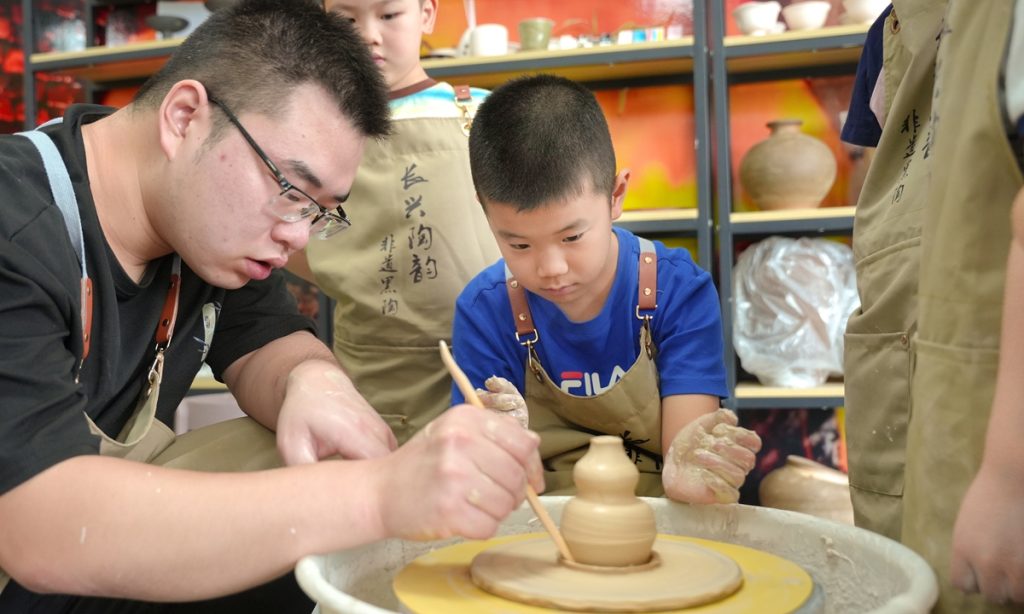
For instance, Liu Hanye, who was born in the 90s, rented an abandoned old house and renovated it into a handcrafted jewelry studio; Zhang Feihua, a young entrepreneur who once ran a coffee shop in a scenic area, brought his cafe business to the village, integrating pottery making and tie dye experiences. Other young innovators have repurposed idle structures in the village into bookstores, bakeries, dessert parlors, study‑tour bases and glamping sites.
These establishments also sell handcrafted artworks and local agricultural produce made and grown by villagers. Peng said that elderly residents no longer need to travel to fairs, as they can earn an income right on their doorstep.
The collective income of Hubei village reached 700,000 yuan ($96,000) in 2024, a 14-fold increase from 2016, local media outlet jxnew.com reported.
In addition to launching hometown startups, young people draw inspiration from short‑video platforms - one of their favorite pastimes - and pivot to become livestream hosts, fueling economic growth through digital and innovative approaches. Livestream host was officially listed among 19 new occupations announced by three authorities including the Ministry of Human Resources and Social Security on July 31, 2024.
Xu, born in Southwest China's Chongqing, earned her degree in computer science and stepped into the e‑commerce sector in Hangzhou in East China's Zhejiang Province, China's "hub of e-commerce, where she gained hands‑on live‑streaming experience. Drawn to the relaxed vibe of live‑stream interaction, she thought there was no reason not to give it a try, and thus returned to her hometown of Chongqing to embark on her journey of livestream sales for local produce.
Over the past two years, Xu has hosted or taken part in more than 100 rural revitalization livestreaming sessions, selling nearly 4,000 orders of local dried radish strips. She also mentioned that once, 55 jin (approximately 27.5 kg) of her family's yellow peaches had sold out in less than a minute after being listed. "A day of livestreaming can bring in more than 1,000 yuan in sales," Xu said. 'Lying flat' isn't youth's trait
While young Chinese are redefining work in a relaxed manner and generating social and economic values in a different way from previous generations, some Western media outlets smeared such career choices. For instance, the Associated Press claimed in a report on March 13 that a growing movement of young professionals opt to move to sparsely populated towns, amid a faltering property market and rising youth unemployment.
Xu and Peng, both of whom seemingly belong to the group some Western media falsefully labeled as "lying flat" - unanimously dismissed such reports as "utterly absurd." Xu said she did not return home to start a business due to unemployment. She gained valuable experience and enjoyed her life in a big city. "I simply wanted to see if there were more possibilities in my life….and embrace a new way of living," she said.
Addressing "lying flat" and "boomerang kid" stigma, Xu said she has not stopped working hard after returning to her hometown. She keeps thinking about how she can attract more viewers to her livestreams, engage with different groups to sell more, and better help local villagers earn higher incomes.
During live sessions, Xu estimates viewers' age and gender from their screen names to deliver tailored product explanations. "If I think a viewer is middle aged from their username, I will introduce preservation tips and practical cooking methods for farm goods. If I sense they are in their 20s or 30s, I incorporate internet slang to make my introductions lively and engaging," Xu shared.
Peng echoed Xu's views, saying that the "lying flat" has never been the inherent trait of Chinese young people. The Western anti‑China forces that hype up "lying flat" are, in essence, "distorting the choices of young Chinese through their own prejudice," she added.
"Our generation has never been afraid of hard work; We simply no longer blindly chase the monolithic equation that 'big city equals success.' Nor have we ever given up our passion for life. We can grow and succeed in places that suit us," Peng said.
"Those 'lying flat' labels can never define us," Peng said. Young people, through our efforts, bring a better life to ourself and our family, which also drives local employment and boosts consumption vitality - "this is our most powerful refutation against the stigma," Xu said.
At the foot of a mock "Five Elements Mountain," a "monkey" struggles with only half his body visible above the ground. Nearby, several visitors line up holding rice crackers, eagerly feeding him one piece after another. After swallowing a few bites, the "Monkey King" finally protests in mock frustration:
"This stuff is way too dry! I'm not eating anymore - it scratches my throat. Hurry up and get me something with soup or water!"
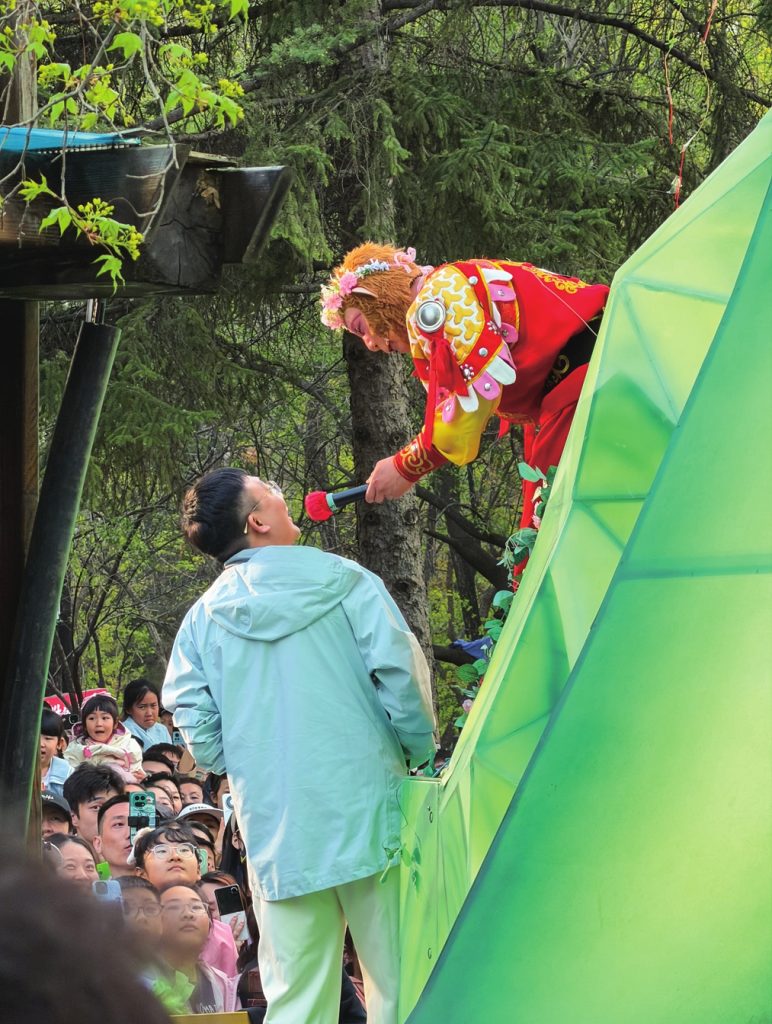
The scene, captured in a short video that has spread across Chinese social media, features the now-famous "Xuebing Monkey," or "Rice-cracker Monkey" at the Changchun Zoological and Botanical Park. During the just-concluded May Day holidays, performer Wang Tiezhu, who plays the Xuebing Monkey, won over crowds from across the country with improvised stand-up comedy routines and remarkably lifelike monkey impersonations.
What began as a viral performance quickly turned the zoo into one of the country's hottest holiday destinations, while also giving many visitors a glimpse into what people are calling the essence of the "Northeast Disneyland."
If traditional Disney parks are built on polished fantasy and highly commercialized Western fairy tales, then this homegrown version in northeastern China offers something entirely different: a rough-edged but heartfelt folk fairy tale filled with warmth, humor, and human connection.
There are no sky-high ticket prices, no overwhelming luxury spending, and no carefully manufactured influencer aesthetics. Instead, visitors find affordable admission, budget-friendly food and drinks, and staff members known for their warmth and sincerity. Across the park, a distinctly northeastern style of hospitality is on full display: workers patiently comforting tourists, performers enthusiastically interacting with crowds, and local residents eagerly recommending hidden gems and travel tips.
Blunt yet welcoming, lively yet deeply genuine, the atmosphere allows visitors to experience a unique blend of northeastern China's trademark boldness and tenderness - the very quality many believe has transformed the zoo from an ordinary attraction into an unlikely cultural phenomenon.
Cultural tourism ambassador
During the recent May Day holidays, Wang sat down for an interview with the Global Times.
In front of a stage packed shoulder-to-shoulder with spectators, Wang appeared dressed as the legendary Monkey King. However, unlike the traditional solemn and majestic portrayal of Sun Wukong, his version came with a thick northeastern Chinese accent, playful movements, and an irresistibly goofy charm.
Feeding rice crackers to visitors, improvising comic interactions, and exchanging blunt yet hilarious banter with the crowd, Wang's spontaneous and authentic performance struck a chord with millions of online viewers, who found both humor and warmth in his act.
A journalist from Jilin told the Global Times that during the five-day May Day holidays, daily visitor numbers at the zoo nearly reached 100,000, with many people coming specifically to see the "Xuebing Monkey."
On Chinese social media platform Douyin, Wang has now amassed more than 4.5 million followers. In his profile description, he calls himself a "Changchun cultural tourism ambassador."
Yet beyond the laughter and viral fame, many online users say they have been especially moved by Wang's difficult personal journey and by the resilience and optimism he has shown in the face of life's hardships. His ability to confront adversity with humor and perseverance has become just as inspiring to fans as the performance itself.
When asked how he would introduce his hometown to the world, Wang spoke with pride and confidence about Changchun's future on the international stage.
"In 2027, Changchun will host the 33rd FISU Winter World University Games," he told the Global Times. "I believe the event will allow friends from all over the world to truly experience the city's charm, as well as the warmth, passion, and sincerity of the people here."
For Wang, the upcoming international sporting event is more than just a competition; it is an opportunity for the world to better understand northeastern China through the character and hospitality of its people. 'Its own Disney'
Behind the viral success of the "Xuebing Monkey" lies a new formula for tourism in northeastern China. For years, the region's tourism industry largely relied on snow-covered landscapes and natural scenery to attract visitors.
This time, however, Changchun has charted a different course - one built on human warmth, locally rooted cultural icons, and an affordable, down-to-earth atmosphere.
There are no extravagant amusement rides or flashy marketing campaigns. Instead, it is the city's authenticity, humor, and sincerity that have captured the imagination of millions online. Many social media users have joked that "Northeastern China has its own Disney" - one that may be less polished, but far more comforting and relatable.
The spirit behind the phenomenon extends far beyond Changchun itself.
Across China's northeast, visitors encounter the same blend of warmth and vitality: outgoing locals, inexpensive yet delicious food, and simple, genuine hospitality. Combined with gentle spring scenery and the region's iconic snowy winters, northeastern China is gradually shedding old stereotypes and presenting itself as vibrant, humorous, and deeply welcoming.
Amid the tightly packed crowds, the wildly popular Xuebing Monkey frequently delivers unforgettable moments infused with unmistakable northeastern Chinese flavor. Dressed in a golden-and-red Monkey King costume embroidered with ornate patterns, he playfully twirls a bright red handkerchief emblazoned with the bold statement: "Revitalize Northeast China."
The fluttering red handkerchief is far more than a simple stage prop. It has become a striking symbol of the region's ongoing reinvention, embodying the grounded vitality of northeastern China and the people's sincere hopes for renewal and revitalization across the country's historic black-soil heartland.